Prelude to a Royal Death
Abrasive cries and wales screamed forth into the Andean skies as the sacred Apus, near and far, braced themselves, horridly anticipating more...
Not one observer could stand to watch. Even the birds, propped high on the church's façade had to turn away from the gruesome view surreally befalling so many stories below on the grounds in front of the Santo Domingo Church.
The brightest light had just been extinguished right as the last sawing sounds abruptly ceased.
I awoke in a sweat, wondering where I'd been. The clock read: 10:42 p.m., as I shook my head, fearing the vivid visions might have lasting effects.
It'd been three weeks since my arrival to the ancient capital. Since then, I'd been staying at Hostal Iquique on Calle Recoleta, right at the border between old and new town Cuzco. I opted for this location, mostly, given my familiarity with the neighborhood, following my previous two lengthy trips to the Andean city. If anywhere in Cuzco formed my haunts, Calle Recoleta, a 10-minute walk from the Plaza de Armas, would be my claim.
Hours before, I had solidified plans for a four-day venture along a route that defined an empire. More specifically, a route that, over time, resolved a conflict of two empires, between the reigning champions of both Old World and New.
In my many years of study and travel, I had read and heard about the tales of the legendary Sapa Incas following the 1531 Spanish incursion: Manco Inca and his many iterations in both Cuzco and beyond; as well as his three Vilcabamba-based sons, Sayri Tupac, Titu Cusi, and Tupac Amaru.
I'd also been told by my friend in Lima that the long road to Vilcabamba was one of the most fascinating trails and tales to be had whilst in the Cuzco Region; at least concerning the later decades of Incan existence and resistance, years following the initial Spanish conquest of Perú.
The interchange with José was integral in my decision to venture to the Last Refuge of the Incas.
"Si realmente quieres un viaje, no veo ningún lugar mejor para ir. (If you really want a trip, I don't see anyplace better to go.)" he affirmed.
Having my sights set on returning to Cuzco and the Sacred Valley but not much more, I responded, "Pero no entiendo por qué. (But I don't understand why.)"
José demanded, "Patricio! Recuerda las historias que te conté toda la semana pasada. Lo verás más claro! (Patricio! Remember back to the stories I told you all of last week. It'll become clearer!)"
My friend's message was clear. We'd visited the best museums in Lima, walked all over the capital city talking about Peru's history, ancient, modern, and present. We had eaten meals together, both in public and at his home, discussed even more history, myths, literature, and music. And now was the time to delve deeper into making all of this come fully alive. I knew he was right. For I simply needed to conjure the courage to venture beyond my cultural comfort zone.
But, first, I needed real rest. I hadn't been sleeping well for nights. So, after my first flash of nightmare, surely the result of a tale José once told, I had little choice but to succumb to my slumberous fate.
The brilliant, blue-skied morning in the former Incan capital was as marvelous as ever. Birds soared majestically from places infinitely high, while others used their legs to scurry about on the earth, at times playing; at others, hustling for crumbs there from human error. Still others took respite, propped on the shapeshifting building facades of the growing colonial Andean jewel. It was late September in Cuzco, 1572.
With all of this constant construction, it seemed that the newest rulers in town still weren't content. Four decades on, they continued to refuse to preserve any of the old rulers' buildings. Instead, like any veritable dominator, the Iberians opted to assert their control by destroying Incan structures and inserting hastened Old World architecture on top of the formidable foundations masterly built by their predecessors. Palaces, royal quarters, common buildings, and more, for the examples around the city were myriad and endless.

None, however, was more noticeable than the location at the hub of all the action: the Dominicans' noteworthy, towering church constructed abruptly atop the ancient foundations of Cori'cancha, the Incas' Temple of the Sun. This was the beyond-sacred Incan site which for centuries was the physical manifestation of the symbolic Belly of the Universe, or El Ombligo del Universo, the tethering point about which the rest of the Andean-long empire's sacred sites orbited, calibrated, and synergized.
Cori'cancha was, at its source, the place from which the Incas themselves, individually and collectively, tethered their souls. It was the symbolic location from which balance and guidance were drawn, and the depository to which their deepest woes and illusions were surrendered, during moments expansive or narrow, over durations wide or short.
At its core, Cori'cancha gave deepest meaning to the word "capital," for the entire history of Incan existence is rooted in and spans from the earth beneath this temple. It was the cosmological, spiritual, practical, and political hub of the Incan universe; the equivalent to Mecca or Medina for Muslims, Jerusalem for Jews or Christians, or the Vatican for Roman Catholics.
Circa 1572, howbeit, the only evidence of centuries' past unmistakably jutted out from the church's base. This most intricately formed stonework was probably the greatest surviving relic of architecture in the former Empire. Although keeping these lasting foundations could've been taken as a Spanish ode to the Incas and their high-level abilities, more probable was its placement as a purposive reminder to the natives (or any onlooker) of exactly who was in charge. Only being left with the solid-rock base, spanning church-width and -depth, must've felt utterly degrading to any Inca passerby of that age or any age.

As if losing their grand Temple wasn't enough for the native Andeans, a new edition only intensified Incan reactions to the site: Santo Domingo's imposing bell tower. It was a relative novelty which hung especially high over its courtyard and, noticeably, everything else. Needless to say, this was the overarching intention of Iberian architects and a physical result whose visual and auditory presence brought jubilance to anyone Spanish from the bordering Avenida del Sol back far over an ocean to the Motherland peninsula. To native Andeans, however, the bell tower just loomed, uncomfortably nudging at native memories and invariably altering their focus in the present moment.
Neverminding the traumas of present and past, the morning of September 24, 1572 was like any other in the high-propped Andean basin city. All except for one thing: the short-awaited date had arrived. It was the designated day of greatest grief, for their Sapa Inca was due to be dismissed from Earth. The ruling from harsh Spanish judges, in spite of fervent calls for fairness and impartiality, had been rushed, skewed, and definite: death to the Sapa Inca, Earth's embodiment of the Sun, by decapitation on the grounds in front of the Santo Domingo church. And, thus, at the foundational base of Cori'cancha, the Temple of the Sun, his symbolic and, formerly, literal home on Earth.
Thence, thousands of Cuzqueños hastily traveled from distances short and substantial. They needed no calendar to guide them, for they knew intuitively, in their tortured hearts, that today the tears would be unleashed. Many more than yesterday and, possibly, surpassing those of tomorrow. It was strange: they were eager to be present yet, understandably, forlorn and reticent to arrive.
Meanwhile, the stage was set. A scaffold with a black drape hanging over its platform had been erected in front of the church. As thousands of Incan bodies began to congregate, very quickly, little space was left to comfortably observe the scene. There were certainly more eyewitnesses present than could be assessed with the eye; these were those old souls now watching from the ethereal realm, holding hurt over the whole event and pity on everyone agonizing the royal loss before the loss.
The Sapa Inca was then led out from captivity by what appeared to be a hundred guards. That's when the cries to the heavens began. 10,000 native souls chaotically considered 10,000 or more ways to make this day simply not be, to rewind or forward time to a moment and place less tragic. The audible collective pain was so profound, its shrill soon became too much to take. It grew in such severity that it easily exceeded any decibel level of lament hitherto experienced in Incan history.
On that cool Cuzco morning, even the sacred Apus, those wise, knowing Andean peaks, anguished in the imminent loss of their ultimate son.
I awoke, this time, in a violent, second-long shake. The ear-piercing cries were, again, too much for me to endure. God! What was that?! I thought, as I tried to recollect the order of visions, while hoping to exclude the mood.
I needed my journal and pen. So I quickly rose to flip on the lights, eager to note every detail of my glimpse into Andean history. As I jotted down the important highlights, I began to piece together the storyline of my dream with tidbits based on what José had told me in Lima and any of my previous knowledge from readings about 16th century Perú.
Here's what I could tell so far:
 |
| The assassination of Tupac Amaru |
Inca Tupac Amaru was the last official Sapa Inca, who, in addition to his predecessors Manco Inca, Sayri Tupac, and Titu Cusi, was responsible for leading the loyalist Incas in their last decades of holdout from frequent Spanish offenses: military, clerical, and otherwise.
Following the conquistadors' taking of the city of Cajamarca in 1531, and subsequent conquest of Cuzco in 1532, the capital had been under Spanish control. Although Iberian rule was unstable, the loyalist Incas, nevertheless, needed to negotiate their new role as challengers to a new boss in town.
At first, most native Andeans were conciliatory, with many even joining the old-worlders. Then, circa 1535 and 1536, a number of formidable plans and rebellious actions yielded fierce, key engagements carried out so as to attempt to restart Incan momentum. This was the loyalist Incan movement.
I knew of some of these important back-and-forth conflicts between the Spaniards and loyalist Incas, but, even so, I couldn't recall many of them in that hazy, post-vision moment.
I did, however, remember José specifically mentioning the importance of the high-mountain niche of Vitcos and the lower-jungle retreats of Vilcabamba, days to the northwest of, and far from contact with, then-colonial Cuzco. This was the region where the loyalist Incas eventually took necessary refuge for approximately 33 years, and where a remarkable portion of the Spanish conquest of Perú's later history is held.
This time-span and place thoroughly interested me. And I, in spite of the limitless lessons with José and others, still needed to learn more. My impatience was running high at this late hour. So, before any kind of travel would be happening, I had to scurry my mind for more.
An insight from Bingham's writings shot back to mind:
After months of astonishing adventures retracing Simón Bolívar's road through Colombia and Venezuela in 1906-1907, Bingham had been ready to return to his intellectual fascination in South America. The 1908 proposal from the First Pan American Scientific Congress would allow the Yale professor to travel to Chile, after which he would embark on his second expedition through the continent: a retracing of the trade route from Buenos Aires to Lima.
This experience would open up to him the realm of the Southern Andes, and, in particular, the region of Bolivia and Peru. Nothing would ever be the same for the fledgling professor. Of this, Bingham wrote to his wife toward the tail-end of his 1908-1909 journey:
After venturing over the limitless pampas of Argentina, having now entered and felt the Andes like I'd never thought possible, there is now a question left burning brightly in my heart: where in these unending layers of topographic Andean wrinkles lays the true last capital of the Incas?
I'm certain that the "cradle of gold," or Choquequirao, is not this place, as Raimondi and others have theorized. In spite of the immensity and glory that is this ruin site, I know that there is much to be discovered to the area north of this location, in an area referred to as 'Uilcapampa'. The story of the last four Incas is held within this region. For this reason and more, I must return.
I also remembered something from the later years of loyalist refuge. The story of the pursuit of young Tupac Amaru, following the Spanish storming of the retreats at Vilcabamba. It was only after a many-week chase of him in the further reaches of the deeper jungle, there, that he and others were finally captured and taken prisoner by a small group of Spaniards. I was particularly fascinated by this story.
I knew that this spellbinding story began in the capital of Cuzco, entered into and along the magisterial Sacred Valley, and led up to and included the high-altitude glory of Vitcos and low-altitude lushness of Vilcabamba; these were the places where this plot unfolded during the last days and years of the Inca Empire.
And, coincidentally, as my tired eyes started to squint, this historic route would be the setting for my four-days' journey to, what Prescott called, "the remote fastnesses of the Andes." An adventure from high mountains to veritable jungle, and from purely present to ancient yet active past.
 |
| Peru and Cuzco city map, Antwerp, 1578 |
From the safe confines of Hostal Iquique, my short stint of inspired, wakeful study was interrupted by an impending return to sleep. Perhaps more clarity was on its way in the coming moments and days. Intriguingly, as would be the case from here forward, another vivid storyline was revealed during this two-hour delve into lucid dreaming, post-madrugada.
"Retirada! Retirada! (Retreat! Retreat!) screamed the coarse commander from the saddle of his valiant horse. "Su número es demasiado grande para que podamos luchar. (Their numbers are way too large for us to battle.)"
Despite the tens of conquistador horsemen, triple parts footmen, and hundreds of native auxiliaries being primed for battle, the Iberian's vigorous contingent discouragingly backed down. They, as hungry as ever, had wanted nothing more than to abolish the Sapa Inca at the base of the magisterial valley below.
This was the same leader, Manco Inca, who'd been the Spaniard's necessary, though at times, unruly Incan puppet leader over the past three years in Cuzco. The same leader, moreover, who had just promised gold treats, but who had instead been planning a rebellion.
Based on the mesmerizing, many tens of thousands of Andean soldiers dotting the deep depths of the river valley thousands of feet below, the event was clearly premeditated. The Spaniards, thus, had no other recourse; they had to retreat from their bird's eye perch overlooking the sacred Valley of Yucay and promptly return to the secure basin of their colonial capital.
Once back in Cuzco, Brothers Pizarro and other high Spanish officials engaged in a heated discussion. "Ese maldito traidor! (That damn traitor!)" Francisco exploded. Wasting no time, he turned angrily to his commander and brother, Hernando, "te dije, Comandante, que no creyeras su promesa! Nos la ha jugado a lo grande, ahora... (I told you, Commander, not to believe his promise! He's played us big time, now...)"
Hernando could only sink his head, as he stared into a void in the spacious palace. His older brother's rampage, however, was unrelenting. "Probablemente ha estado planeando esta rebelión durante años! (He's probably been planning this rebellion for years!) Francisco's ire inflamed. "Estamos jodidos. Completamente jodidos! (We're screwed. Utterly screwed!)"
Everyone present shuddered at the Governor's explosion. But they also knew that there was one main culprit in the matter. Hernando Pizarro was, after all, the one who allowed Manco Inca to leave Cuzco following the latter's promise of gold riches. This Pizarro was, like many conquistadors would be, up for the trade-off between risk and reward. However, this move was taking quite a chance, since it was known that the Sapa Inca still had formidable support all over the region. One key breakthrough, and a rebellion could occur.
Just what the Sapa Inca had in store was really only known to the Spaniards following their failed attempt to nip the rebellious Incan bud. Ultimately, this native bud was too big. Hence, the worrisome reaction and resulting lividity of leaders.
"Y ahora qué, Hernando? Qué demonios vamos a hacer ahora?! (Now what, Hernando?! What the hell are we to do now?!)"
Sweat poured from the brows of the conquistadors, as they lamented their strenuous sitch. Had the commander not been a relative, the Governor might've killed him. And everyone in the main plaza headquarters knew it, too.
The Iberians' precarious situation and anticipation of the inevitable, giant Incan incursion was perfectly summed up by Brother Juan Pizarro in two fitting, familiar words: "Estamos jodidos! (We're fucked!)"
My eyes shot open, as I gasped for air. "What the f#&^?!" I cursed, unnerved by the wild content of my dream. Though similar night-visions had visited me over the past couple of weeks, none had been more palpable and paranoid as this one. Is this what happens to others who overextend their stay? I pondered. Maybe I had been in Cuzco for too long, after all? Regardless, I knew that later in the afternoon I would have to travel, so I opted to get a head-start on my day.
Having spent the previous three weeks in the city and surrounding area, familiarizing myself with its present and past, these would be my last few hours in the former Inca capital. That is, until my return in four days' time. And, as I would find, my late-morning and afternoon of roaming around Cuzco would be time well-spent.
Call it a gift, or call it a debility, but having the ability to space out has always been a habit of mine. And, it's a practice I've enjoyed since I started my travels twenty years' ago. To me, it's the best way to have a direct experience with something new or even something familiar; a method of seeing the latter as if for the first time.
Hence, my walking in a trance through the fascinating narrow streets of the city-center was a perfect means of meditation. It was also an effective approach to enter the realm of history in a very ancient place.
"Patricio," José's voice shot through. "No olvides que los últimos cuatro incas no tuvieron acceso facil a Cuzco en un momento dado. Por supuesto, Manco Inca y sus dos primeros hijos vivieron allí durante años, hasta la rebelión que fue el Asedio del 36. (Don't forget that the last four Incas didn't have easy access to Cuzco at a certain point. Of course, Manco Inca and the first two sons lived there for years, up until the rebellion that was the Siege of '36.)"
"Pero (But)," José continued, as his passion fully shone. "Una vez que se estableció el estado en Vilcabamba, Manco Inca, Sayri Tupac, Titu Cusi y Tupac Amaru fueron en su mayoría o totalmente ajenos a un lugar que era parte integral de la existencia de los Incas. Y no hay que dudar de la angustia que esto causó a todos ellos. (Once the state in Vilcabamba was established, Manco Inca, Sayri Tupac, Titu Cusi, and Tupac Amaru were mostly or totally outsiders to a place that was integral to the existence of the Incas. And never doubt the distress this caused them all.)
"Aunque Titu nació en Cuzco y regresó un par de años después de los sucesos de 1539, se dice que el dúo hablaba de su sueño de tener algún día acceso a un lugar que sólo su padre y muchas generaciones de sus abuelos conocían íntimamente en su forma pura. (Even though Titu was born in Cuzco and returned for a couple years after the events of 1539, it's said that the duo would talk about their dream of one day having access to a place where only their father and many generations of their grandfathers intimately knew in its pure form.)"
Tropical birds trilled myriad lines of melodies, fusing to form a grand avian symphony of sound, which reverberated into the depths of the selva.
Walking through the verdant forests of vilca trees, the two boys wound their way on a trail back to the town center at Tendi Pampa. "Hurry Tupac, the ceremony's about to start!" Titu called to his little brother, who, circa 1555, had just turned 10.
It was the day of the summer solstice, or Inti Raymi, when the celebrations all over the Andes was never greater.
"Wait up, Titu! You're always going way too fast!" Little Tupac lamented.
When the crowds had all arrived at Vilcabamba's Temple of the Sun, the inseparable pair looked on in amazement as the hallowed sun disk, the Penchao, was revealed for the onlookers to see. A collective hush silenced the din of anticipation when the sun hit the etched mastery of the giant gold coin, the sacred symbol of the sun for the Incas.
Everybody knew it was the same Penchao that had been taken from its niche in the comforts of the temple of Cori'cancha, the true center of the universe for these Andean people, and transported with the Loyalists during their exodus from the capital.
"Our father used to talk about Cori'cancha. And, even though I never got to see it in its original form, he used to say how amazing it was to walk through its rooms." Titu said.
"Why? What was there?" little Tupac asked, mystified by the shine from the large disk.
"Everything was there, Tupac! The Penchao was there. All of the gold statues and figurines you see here and more were everywhere imaginable! There were even more mummies of our grandparents inside also."
"Wow!" Tupac marveled, as the 1555 festivities began, with Brother Sayri at the healm.
"The place was huge, too!" Titu whispered. "Not like the size of Tendi Pampa. Gosh...this place is so small compared to Cori'cancha. And that's not to mention the grandeur of all of Cuzco!"
Tupac's imagination flew. He wondered what this place called Cuzco must've looked like. His brothers, Sayri and Titu, had gotten to see it, but he'd been so far shut out from having access to it. Even with the place having changed so much for over two decades, with Spanish architecture taking the place of Incan constructions, the youngster would always yearn to be present in the sacred Andean basin.
"Don't worry, Tupac." Titu consoled his brother. "You'll be able to go there one day to see some of what's left from our history. Father used to always tell me: 'Son, Qosqo (Cuzco) is where all of us are from, and that's why we'll all return there one day'."
José's voice returned. "Tupac sólo podía soñar con este lugar que estaba tan cerca en su corazón y en su alma, pero que, desgraciadamente, sentía tan extraño a sus ojos y a su cuerpo. Aunque Titu había visto la capital dos veces, Tupac tendría que esperar mucho tiempo para una oportunidad. (Tupac could only dream of this place that was so close in his heart and soul, but, unfortunately, felt so foreign to his eyes and body. Even though Titu had seen the capital twice over, Tupac would have to wait a very long time for an opportunity.)"

As I strode along various streets all through the entirety of the ancient city-center, I could see what Tupac Amaru had been missing out on for the majority of his life. Even though he was brought back to this place, the heart of the Inca Empire, just prior to his last days, he wouldn't have had the opportunity to enjoy the sights that his two brothers and others had seen during their time in the capital.
Here, I figured it fitting: why not take in the sights as an ode to the last Sapa Inca, while enjoyed from a vantage point and perspective that he couldn't experience and, unfortunately, wasn't afforded.
While I walked the stone paths, the list of sites of historical intrigue seemed endless: Cori'cancha, "the Temple of the Sun" (Santo Domingo Church); Hatun Rumiyuq and the former palace of Inca Roca (the Archbishop's residence, where the 12-angled stone rests); Tuq'ukachi, "the opening of the salt" (San Blas neighborhood); the palace of Viracocha Inca (the Cathedral); Amarucancha, the palace of Wayna Qhapaq - Huayna Capac- (Church of the Society of Jesus, the Jesuit Church), among many others.
Tupac Amaru wouldn't have seen many of the original constructions of his ancestors; for only Inca foundations would've been used as bases for Spanish buildings erected atop. He, too, wouldn't have seen all of the mentioned Spanish constructions, since some were still in the process of being built, like the San Blas Church and the Cathedral. And others still hadn't even been initiated, circa 1572, like the Jesuit Church, a project that didn't start until four years' after Tupac's arrival and prompt assassination.
As I sat, watching the Plaza de Armas' action from my perch on a café balcony, I thought back to the fate of the late Sapa Inca's 18th-century namesake. José Gabriel Condorcanqui (1738-1781) had led a native rebellion in the Viceroyalty of Peru with the hopes of overthrowing what he saw as corrupt and abusive colonial rule. His fate, circa 1781, was to be quartered at the colonial center of town, the Plaza de Armas.
Inca Tupac Amaru's fate, circa 1572, had been death by severance in front of the Santo Domingo Church at the foundational base of Cori'cancha, the Temple of the Sun, the Incas' forever center-of-it-all.
I thought reluctantly back to the original dream from the previous night. The chilling cries and wales still uncomfortably subsisted in my mind. This, needless to say, added a sobering element to my afternoon, while I considered the last Sapa Inca's tragic final moments.
In spite of these darker days of history, my last hours in Cuzco had been mostly satisfying and complete, as I took in the cool Andean air and strong sunshine. I now necessarily anticipated my next move: on my new adventure, a mobile one, spanning the length and breadth of a good portion of the heart of the Cuzco Region.
Thus, an hour later, following the necessary preparations and my customary afternoon nap, the moment would finally be here. It would happen at 4 p.m., Peruvian time, crosstown at a new and unfamiliar departure point.
Fast-forward to then, approximately 4:10 p.m. And, there, in the modern comforts of a white Toyota minivan in the Santiago Barrio of Cuzco, where I was struck with the realization that in the coming hours and days my reality was to shift from the familiar to the foreign: in terms of geography, climate, history, and much more.
Withstanding, I sat, nervously anticipating the arrival of my carmates. An onslaught of anxiety flushed through my body. My perception trembled. My breath caved. My stare was blank, as residual images from the two rounds of dreams rushed through my mind, awing me to the prospects of this venture. To regain my wits, I desperately reassured myself that I was surely in the right place, and on the proper journey.
The words of José rushed back into my awareness: "Tienes que hacer que todo esto valga la pena! (You need to make this all worth it!) Then, proclaiming emphatically, "qué diversión tiene la vida sin aventuras, Patricio?! (what fun is life without adventure?!)"
I, once again, knew my Limeño friend was right.
Meanwhile, my wait for the others finally ended. Within minutes, the local Peruvian passengers began filing into the small vehicle. That is, all but one. Accordingly, five out of six of us silently waited, ready as ever.
Our departure point was fortunately in the Santiago Barrio, one of the last barrios just short of the Cuzco escape route up the hill and out of the basin to Chinchero, via that slow-climbing, slanted road. Lucky enough, I thought, at least we were assured of avoiding late afternoon Cuzqueño traffic.
From the advantage point of my throne in the backseat of the minivan, I relished in observing the to-and-fros of the local foot-traffic. Nothing like watching the movement of a people, a city, a country, and a culture that I deeply cherish.
I thought back to my three years as an undergrad at UC Davis. The freedom in its various facets, the new environment, the blank slate. There was also the remembrance of my intent on following my passion for history and culture. In particular, it was my love for Latin America that I was deliberate in following.
I sought taking any and all courses related to the history and anthropology of Mexico, Central America, and, most importantly for me, South America. I was lucky. Almost all of my professors specialized in Latin America, while a majority had a focus on South America, the Andes, and, notably, Peru. There were specialists in ancient history, colonial history, and modern history. Others had focuses in cultural customs, music, and dance. Another three instructors concentrated on a variety of emphases, be it Globalization, migration, society and social class, among others, either in Lima, Cuzco, or in the Amazon. My three years of classes at Davis I found to be simply fascinating, and were a perfect stepping-stone into the education that I'd always envisioned.
It was incredible. Here I was, traveling through landscapes that I'd really only reached through the reading of millions of words, the considering of thousands of ideas, the listening to hundreds of lectures, and the viewing of a handful of films.
As I savored this feeling, one of my favorite professors came to mind. Professor Charles F. Walker is considered the foremost authority on the history of colonial Cuzco, and its greater region. He's written a number of very important books about colonial Lima, colonial Cuzco, and the aforementioned José Gabriel Condorcanqui, or Tupac Amaru II, the rebel who led an eventually unsuccessful insurrection against local Spanish rule in the 1780s.
Professor Walker, or Chuck, is a vibrant, amiable, and hugely insightful person, generally, but, specifically on the histories of Latin America, Peru, and the Cuzco Region. He once said to our class at UC Davis that he could answer any query about colonial Cuzco, but he couldn't tell us how to balance a checkbook or much of anything else. The former was probably true. With regard to the latter comments: the test results are still pending.
Inside the increasingly comfortable minivan, I remembered back to a story Chuck recounted during one of our Latin American history courses. It was about the Siege of Cuzco.
Manco Inca's sabbatical from Spanish supervision, purportedly to gather gold riches for his "allies," had offered the loyalist Sapa Inca & Co. space to spawn a surprise. Both his years of playing puppet to the Iberian conquerors and tactful patience had finally paid off. After having waited in Calca for days to gather a sufficient amount of troops, the Incan attempt to reclaim the city of Cuzco from the Spaniards was initiated.
The rebellion happened on May 6, 1536:
Between 100,000 to 200,000 men had finally been organized by high Loyalist command. The time was now. Accordingly, the loyalist Incan Army marched from the Valley of Yucay (the Sacred Valley) on an ascent toward the highly-propped basin of their former capital, now into its fourth year of Spanish occupation.
 |
| Refer to the map on the right, Cusco, circa 1530s. |
The hordes of Andeans surrounded the basin city from various angles, though particularly from the heights just outside of Sacsayhuaman, Cuzco's principal and forever intimidating defensive fortress.
At this heightened elevation, the gigantic and still-growing Loyalist army assembled, as it intently awaited the final call. Once having received the cue, the mass of native soldiers ragingly rushed from the hilltop, descending on the mostly helpless Spanish soldiers in the depths of the city, below. 
The Spaniards, having only 190 soldiers, though many thousands of Indian allies at their disposal, still had little choice but to retreat from this heavy and ferocious incoming loyalist Incan assault. As a result, the Iberians and their allies took necessary refuge in a pair of enormous buildings located near the main plaza.
The loyalist Incan army, meanwhile, carried on with their barrage of the city, as they importantly claimed control over a majority of its blocks.
My focus returned back to the recesses of the minivan. How's that for an intro to Cuzco! I internally celebrated, impressed that my memory was proving to be fresher than I'd imagined.
I then briefly tuned into how the other passengers in the van were reviewing me. In light of this recounting of the Siege of Cuzco, I mused, who wouldn't react suspiciously to a foreign presence, especially in such a non-touristy location? After all, should I be surprised by their deer-in-headlights' stares and double- and triple-takes? Throughout the course of my many rough Andean ventures, I'd grown accustomed to similar shocked reactions by locals to gringo.
Now, more comfortable, my attention shifted back to the rest of the story of the 1536 Siege.
Over the course of a number of days, back-and-forth skirmishes occurred near the main plaza, where the Iberians were boarded. Needing to relieve their precarious, enclosed position, the Spaniards chose to launch an attack on the walled heights of Sacsayhuaman, the place from which the loyalist Incas had originally entered the city and, since that time, had been the official headquarters of the Loyalists.
Juan Pizarro, another brother of Francisco, thus, led fifty Spanish horsemen, along with hundreds of native allies, to scale up the steep hill, bust through the loyalist Incan lines of defense, and storm the exterior walls of the hilltop fortress to the city.
Though this attack was successful, the resulting fighting was long-lasting and brutal, yielding massive death and injury on both sides. Among the many injured was Juan Pizarro, who later died from his head injury.
Through the day, the fighting continued on full-bore. However, no real momentum shift occurred until the Spaniards sought the use of an arsenal of ladders, a move which helped them scale the giant protective walls of the fortress, where the majority of loyalist Incan soldiers were concentrated.

The Spaniards advanced up the heights of the fortress and furthered their attacks, which eventually forced the loyalist Incas to retreat into a pair of tall towers, towering high over Sacsayhuaman.
Later, subsequent to a long pause in fighting, a majority of the loyalist Incan soldiers were ordered to abandon their position in the tower enclosures. The soldiers who survived the escape, went on to retreat from the heights above Cuzco, eventually moving down to the loyalist safe haven in the Valley of Yucay, near Calca. There, Manco Inca and his high officials were calculating the next move, a new plan was being devised to gather more soldiers so as to bolster yet another barrage on the city. The loyalist Incas would seemingly stop at nothing to recapture their formerly-held capital.
 |
| Sacsayhuaman, Cuzco, Peru |
Notwithstanding this proposed rejuvenated push, within days, owing mostly to the slimmed-down loyalist Incan contingent, the Spaniards were able to seize control over Sacsayhuaman. With the main fortress now under Iberian control, the focus of daily fighting then continued intermittently in various parts of the city.
The Spaniards were now on the ascendancy, a trend that would continue over the short-term, especially when the second, large loyalist Incan attack on the city didn't happen. And, as the battle over the weeks and months went on, due to a combination of other factors, the long-term advantage decisively tipped in favor of the conquistadors, the eventual victors of the grueling 10-month affair.
Chuck's words came to me, clear as ever: "And so the Siege of Cuzco was formative in the tale of the two powers. In spite of a handful of attempts to mount other smaller attacks on the capital, the loyalist Incas eventually would have to accept their retreat and seek out lands away from the high Andes so as to maintain a semblance of their empire, their tradition, and their existence.
"It wasn't until Peruvian independence in 1824 that the Spanish would give up control over the city, though they would be threatened periodically by native revolts."
A transpiration in the minivan brought me back into my body. At long last, the long-awaited passenger had arrived. The girthy thirty-something year-old man promptly piled in, sitting heavily, smack-dab in between me and my former neighbor with whom I'd been cordially chatting.
It was the usual stuff: country of origin; reason for traveling; destination of current venture; etc. Intriguingly, the Cuzqueño did mention his work as an archaeologist and his having to return to Quillabamba to the new museum there. This grabbed my attention and interest and, needless to say, had me eager to know more.
However, for the time being, our abrupt physical split had led to an immediate conversational schism, since our new neighbor took the introverted approach, which put a silent damper on the formerly lively conversation and nascent rapport.
Reflection time thus commenced, yielding an opportunity to witness the simply astonishing landscapes along the ascending road to Chinchero, and beyond. Not only was I afforded the time to record the high Andean contours, textures, and colors, but I was able to memorize the myriad climbs, falls, twists and turns throughout this mesmerizing, mountainous region.
Just as we were making our way out of the basin of Cuzco, I remembered something that Hiram Bingham had observed when he was exiting the city back in 1911.
"At the last point from which one can see the city of Cuzco, all true Indians, whether on their way out of the valley or into it, pause, turn toward the east, facing the city, remove their hats and mutter a prayer...the custom undoubtedly goes far back of the advent of the first Spanish missionaries. It is probably a relic of the ancient habit of worshiping the rising sun. During the centuries immediately preceding the conquest, the city of Cuzco was the residence of the Inca himself, that divine individual who was at once the head of Church and State. Nothing would have been more natural than for persons coming in sight of his residence to perform an act of veneration. This in turn might have led those leaving the city to fall into the same habit at the same point in the road."
It seemed to me that Bingham was perhaps exaggerating when he said that "all true Indians" practiced this custom. Nevertheless, he went on:
"I have watched hundreds of travelers pass this point. None of those whose European costume proclaimed a white or mixed ancestry stopped to pray or make obeisance. On the other hand, all those, without exception, who were clothed in a native costume, which betokened that they considered themselves to be Indians rather than whites, paused for a moment, gazing at the ancient city, removed their hats, and said a short prayer."
Back in the minivan, my attention was immediately captured by a passenger sitting a row in front of me. He was voicing something in what surely had to have been Quechua.
"A Ausangate, Salqantay, Wanakauri...!"
Regardless of my incomprehension, his words felt authentic, intentful, and reverent.
"A Ausangate, Salqantay, Wanakauri, Pachatusan,
Saqsaywaman aukikuna!"
As we rode, I continued to watch the man. He was peering toward the mountain peaks, whilst whispering the words and constantly crossing himself in a Catholic way. It would only be years later, following an improvement in my Spanish and familiarity with Quechua, before I would recognize this utterance as a traditional prayer, honoring sacred sites and the sacred mountain peaks, or Apus.
("Oh guardian spirits of Ausangate, Salqantay,
Wanakauri, Pachatusan, Saqsaywaman!")
Diablos! I thought. It appeared that Bingham did know what he was talking about. And, from what I could tell, it looked like the man was just following a timeless local tradition.
The native man had stood out to me right away. Even though I'd been caught up in conversation when he boarded, I'd distinctly noticed him, given his adornment of native attire: alpaca-woven hat and bag, knickerbocker Andean pants, and leather sandals.
There was also something else about him. It seemed he was in a deep state of peace, and this, perhaps naturally, gave me the urge to want to find out more. But, for the time being, our awkward seat positions formed a logistical barrier to any real chance of comfortable conversation.
Thence, I reflected on how everything was coming together: the prayers, the landscapes, the dreams and insights from both today and night before. In fact, I realized that the second-half of my previous night's dream had been a prelude to the legendary Siege of Cuzco.
That's funny. I thought. I don't recall having ever heard about the Spanish preparations prior to the battle in Cuzco. Not to mention, the content of my first-half dream about the last moments of Inca Tupac Amaru, the tale that specially intrigued me.
As I continued to listen to the Andean man's subtle sacred whispers, I thought to myself: Evidently, that's lucid dreaming at its absolute finest.
 |
| View from Chinchero |
As we ascended from the niche that is the former capital of Cuzco (11,152 ft.), I reveled in this awesome touch of synchronicity, surely inspired by a tandem of José's recently-told tales from Lima and Chuck's historical insights and inspirations from my UC Davis years. I always knew down deep that none of the time, effort, and attention by way of education, travel, and reading would be wasted. Perhaps that's what trusting one's road is all about.
With the last views of Cuzco coming into sight, I momentarily spaced out, whilst reflecting on where I'd been.
Prior to going to Davis, the Andes had always intrigued me. As a child, I would revel in shows and programs based on the region. These were National Geographic, PBS, and History Channel specials which discussed the history of the Incas, their architecture, and Andean lifestyles, livelihoods, and societal customs.
One documentary I vividly recall showed the way in which Incan bridges were woven using rope made from ichu grass. The detailed, intricate patterns of weaving and knot-tying utterly enthralls me now, let alone those moments of viewing the art as a seven-year-old. Even though I didn't mention it much to others, images from these dated docs had lasting effect in my imagination, even up through present-day.
 |
| Chuquichaca Bridge |
Another documentary that will always stand out detailed the khipu, the ancient knot-tied corded instrument that the Incas used to tally important practical, societal, and political information from all over the empire. This genius creation was devised in lieu of an alphabetized writing system, and it was a principal way that the empire was able to be organized, function, and expand.
 |
| Khipu Keeper |
 |
| Khipu |
Added to watching video and film, I've read a lot. This started in 2002, and hasn't stopped for nearing 20 years. History, anthropology, sociology, novels, testimonies, travel narratives, you name it, I've either heard of it or read it. Book and articles about ancient Peru, the Incas, the pre-Incas, colonial Peru, modern-day Peru, and anything else about the country and region.
I've often told people: "In college, I studied cultural anthropology, but what I really wanted to study was traveling." So, after my graduation from Davis in 2004, I traveled to Peru. It was a two-and-a-half month stay that was so impactful that I've now been to the country on nine occasions in total. I've volunteer taught on two trips, including my inaugural visit. At one point, I almost started a travel agency. From 2005 to 2010, I visited the country six times. After that, I've taken four-year breaks, visiting Peru in 2013, 2017, and 2021.
Throughout that time, I've met a number of wonderful people, Peruvian or otherwise. I've even met a girlfriend or two. One girl, became my partner for nearly two years. This romantic relationship was invaluable in that it helped connect me even further to the culture, history, society, and, perhaps more than anything, the language. My Spanish skills exponentially improved having participated in this relationship.
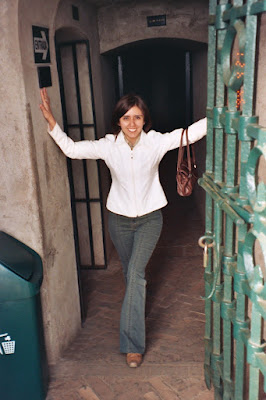 |
| Brenda |
The other girl, Brenda, was a good friend who acted as my Peruvian liaison, selflessly and lovingly orienting me to the country. She, after all, was my connector to Jose, her dad, who promptly took the reins from his daughter, while assuming the role of ambassador to the country and everything that goes with it. José's long-running series of episodes and lectures grounded me in Peru's past and present. For this relationship was so fruitful that it immediately acted as a springboard for my future and forever ventures to the country.
 |
| Jose and Brenda, Lima, Peru. |
The minivan's horn sounded loudly, as everyone onboard braced their armrests. While we prayed to avert Cuzqueña catastrophe, the driver swerved to avoid a pair of straggling sheep still in the roadway.
Following the pilot's successful maneuvre, I couldn't help but think: How's that for a swift return from my internal landscapes of learning, love, and language to the external ones immediately up and outside of the Cuzco basin.
Up on the sacred perches of Chinchero (12,343 ft.), one observes the quintessential Andes. In my extensive travels through the majority of this continent-long mountain range, it's safe to say that there's simply no place like here.
All throughout greater Chinchero, green grass, red clay, and brown dirt divinely blend into heavenly hills of fields that expand and extend out infinitely, forever undulating away into distant valleys on the horizon. I, once again, could see why my choice to come back was the right one. After all, I'd been here twice before, with pictures to prove it, and each and every time I come, I sincerely, passionately want to stay. Forever.
 |
| The blending of Chinchero hues |
Smoothly flowing along the Chinchero heights, my memory caught hold of a story I'd once read. It was about Hiram Bingham, and how, circa 1908, his first venture through the region had all come about.
The invitation came to his Yale office on the morning of Tuesday, the 22nd of February, 1908.
We sincerely hope you receive this letter in good health.
Our previous correspondence from months back had hinted at plans of organizing a formal gathering of the most educated and prominent of social and hard scientists in one place in the Americas.
He immediately perked up in his seat:
Now, after several months of planning, such an occasion has finally been set in motion.
Thusly, we'd like to cordially invite you as a specialist to the First Pan American Scientific Congress, which will take place in Santiago, Chile in December of this year - 1908.
Your attendance would be nothing less than an honor, given that we see your expertise and insight lending brilliantly to the experience at the inaugural conference.
The First PASC organizers
 |
| Hiram Bingham at work |
To describe Bingham's emotions in that moment would be futile, since this opportunity was really just a result of the last 15 years of his academic life, probably longer. As a pioneer of Latin American Studies, Hiram Bingham had an impressive CV: he completed his undergraduate studies at Yale, earned his Masters at UC Berkeley, returned east to Harvard for his Ph.D., and went on to be a lecturer in Latin American History at Princeton; then, a few years later, at Yale.
South America was his expertise and passion. The time was now for this rising academic star.
"Hola, qué tal? (Hi, how are you?)" A voice cut through. It's cordial tone effectively "woke me" from my daze. I found it was the same native man sitting by the window in front of me.
I guess our distance hadn't been too great to get acquainted, after all. He next voiced something that I couldn't quite make out. "Way-naya kakuy-nis, ama-pony machu-yachis..."
It was obviously in Quechua, as my confusion was real.
The neighbor with whom I'd been chatting on the other side of the van looked over with interest. And, in seeing my shock, he decided to intervene. "He said, 'waynalla kakuynchis, amapuni machuyachischu'."
My look continued to speak.
My neighbor continued, explaining, "'waynalla kakuynchis, amapuni machuyachischu'. In Quechua, this means 'always be young, never grow old'. It's a blessing that Andean people say to one another. It's a kind of well-wishing."
I nodded in recognition to the native man's kindness. "Gracias. Gracias por decirlo. (Thank you. Thank you for saying that.")
He nodded back, now, with an even brighter smile, as he asked me in Spanish, "ya has estado en Pisac? (have you been to Pisac yet?)" He referred to a principal city in the Sacred Valley, a destination for the majority of travelers to Cuzco.
"Sí, estuve allí los dos últimos años. (Yes, I was there the last two years.)" I said.
"Wow! Tantas veces ya? (Wow! That many times?)" The man awed. "Y por qué? (And why?)"
I had to think for some time. His question was complicate, after all. And he deserved a complex, complete answer. "Bueno, esa es una muy buena pregunta. Veamos que Perú y la región de Cuzco, en particular, siempre me ha llamado la atención y me ha provocado el deseo y la necesidad de saber siempre más. (Well, that's a very good question. Let's just saw that Peru and the Cuzco Region, in particular, has always called my attention and caused me to want and need to always find out more.)"
The native man gave a thoughtful response. "Lo entiendo. Es un lugar muy hermoso, no? (I understand. It's a very beautiful place, isn't it?)" His contentment on even further display by way of his jovial reaction.
"Sí, es muy hermoso. Quiero seguir regresando más y más. (Yes, it's very beautiful. I want to continue returning more and more.)"
He then mentioned another place. "Fuiste a las Tres Lagunas, en lo alto de Pisac? (Did you go up to the Three Lagoons, high above Pisac?)"
I had to pause a second to comprehend his question, after which I eventually formed a sufficient response. "No... nunca he escuchado de ese lugar. (No, I've never heard of that place.)"
His face lit up, as he explained, "Las Tres Lagunas están entre 4,000 a 4,250 metros (14.000 a 15.000 pies) de altura. Aunque vivo con mi familia en la primera, las tres están muy conectadas. Tenemos todo lo que necesitamos allí arriba. El pescado de las lagunas, las llamas de nuestros rebaños, y la quinoa, las papas, las verduras y las hierbas de nuestras chacras. Deberías visitarlas algún día. (The Three Lagoons are between 14,000 and 15,000 ft. Even though I live with my family at the first one, all three of them are very connected. We have everything that we need up there. Fish from the lagoons, llama from our herds, and quinoa, potatoes, vegetables, and herbs from our farms. You should visit there, someday.)"
"Gracias," I said, awed by his description, "me parece muy interesante. (Thank you, that sounds very interesting.)" I then added, "siempre busco lugares así. Lejos de todo. (I always look for places like that. Away from everything.)"
The native man continued, now with a certainty to his voice. "Es un lugar sumamente bonito, realmente alejado del ruido. Un lugar que puedes visitar para ver una manera muy distincto de vivir. (it's an extremely beautiful place that's really far from the noise. A place you can visit to see a very distinct way of living.)"
He then said something that shocked me, albeit in a good way.
"Si piensas que Chinchero es increíble, las vistas del paisaje, las chacras y los lagos, entonces realmente no querrás dejar las Tres Lagunas. Te animo a que vayas. (If you think that Chinchero is incredible, the views of the landscape, the farms and lakes, then you'll really never want to leave the Three Lagoons. I encourage you to go.)"
I was blown away. His mentioning of my not wanting to leave from here. How would he know those were my exact thoughts? I wondered. Of course, these reactions to Chinchero's landscape are probably normal for most people who visit. But, he said it in such a clear, matter-of-fact way, as if he'd read my mind.
"Mi nombre es Celestino. (My name is Celestino.)" He affirmed.
We shook hands. "Yo soy Patricio. Un gusto conocerte. (I'm Patrick. It's a pleasure to meet you.)"
"De igual manera, amigo. (Likewise, my friend.)" Celestino said.
He then turned forward to tend to his young daughter who sat next to him. She was hardly able to keep awake, as her little-human head bobbed at the mercy of the minivan.
Celestino's vivid description of the Tres Lagunas really caught my attention. His promise of the Lagoons' close connection with Nature, and all that goes with it, sounded very alluring, like something I had to investigate along the road. Surely my intrigue also owed to this man's fascinating mystical mystique. Through the course of it all, from his state of calm, to his prayers, to his words about the Three Lagoons, he seemed to be as genuine as they get.
Notwithstanding any future plans, our present road, however, swiftly continued on, as we ever-so-slowly witnessed ground altitudinally give way, leading us down. Down. Northerly down to the home of Heaven on Earth: El Valle Sagrado, the Sacred Valley.
And it was here, on this subtle downward climb along the Valley's southern wall of eternity, that another tale of UC Davis or, perhaps, Lima origins entered squarely into mind, eventually spiraling open in my imagination.
"Muévense! Los españoles seguramente nos están siguiendo ahora! (Move! The Spaniards are surely trailing us by now!)" yelled the general as the harried pace of loyalist Incan feet sped along even quicker.
The escape from the twin towers at Sacsayhuaman had been a relative success, for the loyalist Incas knew their chances had certainly been dwindling and would've been dangerously slim had they stuck around Capital Hill much longer. Thus, the race through the night was on to reassemble at Calca, the place from which the native Andeans proposed to ramp up an even larger, more vigorous contingent.
Hurriedly descending the mountainside, the weary warriors made their way along the ancient trail; just one of many that connect the capital to its corn. As the line of soldiers marched, the majority of them surely intuited the nearing junction whose road extended out toward the distant, sacred, spherical gardens of Moray. Using this crossroads as a distance meter, the loyalist soldiers knew that the core of the Valley at Yucay was within a quarter-night's jaunt. After that, the main headquarters at Calca would be reached a half-day later, while journeying easterly along the Urubamba River.
"Apúranse! Tendremos poco tiempo para descansar. Los refuerzos estarán listos para partir a nuestra llegada. (Hurry up! We'll have little time to rest. The reinforcements will be ready to depart upon our arrival.)" The same, singularly-focused general affirmed, unaware in that moment of any proposed Plan B.
If clocks had been available in 1537, one would've read: 1:35 a.m. If thermometers had been around, one's mercury would've fallen to 7 degrees F (-13.9 degrees C).
The time, circa the 21st century, was 5:30 p.m. And we, fortunately, still had daylight to work with. From here, the Andean landscape, more than ever, wonderfully opened up to us all, as our minivan plowed along at its forever schedule-dependent, brisk pace.
The praying commenced anew. "A ancha hatun illariy ruraqe! A Pachamama!" He repeated it several times, producing a similar effect to that of the first prayer.
After a drawn-out pause, Celestino turned back to me. "Esto significa, 'Oh, Creador supremamente resplandeciente! Oh, Madre Tierra'! (This means 'Oh, supremely resplendent Creator! Oh, Mother Earth'!)"
I smiled. His description seemed a perfect match to what unfolded outside our window. I could only imagine what it was like for the loyalist Incas during their retreat from Cuzco, circa 1536. They, too, had journeyed along this same magisterial high Andean plateau, with its mixture of greens, reds, and browns, which was now accentuated by our entry into the golden hour, as the shadow-and-light play was simply on stunning, glorious display.
Minutes later, I heard some fussing going on next to Celestino. Apparently, his toddler had just woken from her afternoon nap. After some back and forth, the father finally sought resolution by asking his daughter to salute me.
"Cómo te llamas? (What's your name?)" I broke the ice.
Her eternal black eyes looked up, stunning me right away. For in just one glance, I'd been gifted the universe.
Her red cheeks popped off of her face, as she turned away from me in embarrassment. "Ah, por favor, Chaska. No seas asi! (Oh, please, Chaska. Don't be like that!)" Her father laughed, as she continued on with her endearing antics.
Celestino, having already let her name out of the bag, then explained. "Su nombre es Chaska Flor. 'Chaska', en Quechua, significa 'estrella'. 'Flor' significa 'flor', en castellano. Ella es 'mi flor de las estrellas'. (Her name is Chaska Flor. 'Chaska', in Quechua, means 'star'. 'Flor' means 'flower', in Spanish. She is 'my flower of the stars'.)"
I hadn't known that such utter beauty could be summed up so magnificently in just two words.
I then contemplated Celestino's name. It seemed that the heavens played a role in his name as well. 'Celestino' in English means 'celestine'. This immediately guided me in my memory to the popular spiritual book, The Celestine Prophecy.
I was blown away by the synchronistic nature of these connections. Perhaps I was living out the "Celestine Prophecy" itself?! I mused. For everything, in that moment, and, so far along this journey, felt so fluid and right, reminiscent of a state of consciousness and theme discussed in this 1990s' best-selling book.
As I would find, this beauty on display in synchrony, in human-beings, and in their names would, once again, translate back over to landscapes just outside of our window. It was considerably prior to the profoundest point, along the slowly descending Andean heights just past the turnoff to Maras and Moray, that we caught the first glimpses of what is, for me, the prettiest valley in all of Perú.
I thought back to José's talk about this incredible place. I could, once more, feel the humid air of Lima coming over me anew, as I felt encouraged to recall the plenitud of information shelled out by the Professor in one of his many impassioned lectures from the coastal capital.
I'll never forget what he said. And, particularly, the way he said it. "Cuando vayas allí, Patricio, sólo tendrás que ver la grandeza de esas montañas, 'Las Paredes de la Eternidad', me gusta llamarlas, y sentir el aire andino.... y entonces lo sabrás. (When you go there, Patricio, you'll only have to see the greatness of those mountains, 'The Walls of Eternity' I like to call them, and feel the Andean air....and then you'll know.)"


"'Las Paredes de la Eternidad'" I whispered to myself, caught up in the overwhelm of these staggering mountains, like I'd never seen. That is, until two years before. Then, again the year after. Now, for the third time through the minivan's present perspective. Oh, how this place just never gets old!
 |
| a view from the ruins at Pisac |
The Sacred Valley is the source of integral historical towns such as Pisac, Calca, Yucay, Urubamba, Ollantaytambo, and, eventually, western-most Machu Picchu. These places, to paraphrase Professor José, were, at their root, just some of the hubs whose produce, primarily maize, was responsible for feeding and providing chicha (that sacred, fermented corn drink of the Andes) to the bodies of souls in the heart of the Incan empire.
 |
| corn farmer at work |
The legendary Urubamba, or Vilcanota, River, now and forever viewable from this high-altitudinal perch, was and is the great water-source, flowing east to west, connecting Pisac to Machu Picchu. A scant, westerly hour from easternmost Pisac (photo above), sits the town of Yucay, hitherto the heart of this mighty valley. In fact, what's today known as the Sacred Valley was up until recently referred to as the Valley of Yucay.
Yucay was principally significant for being the location of the enormous estate of Manco Inca (seen above), an heirloom of his father, Huayna Capac (ruled from 1493-1524). Ruling the Incan empire from 1533-1544, Manco Inca was an example of a savvy, tactful, and prideful leader.
 |
| Manco Capac |
Upon the arrival of the Spanish, Manco Inca worked with the Iberians, becoming an ally (read: puppet) in the first months of Spanish-controlled Cuzco. After sensing leverage points during the latter part of three years, Manco, little by little, stretched his boundaries and, eventually, as discussed above, went on to rebel against the Spanish, as evidenced in his leading of the Siege of Cuzco.
There was another event that occurred subsequent to the Siege that would be part of shaping the next few decades for the Loyalists.
The mood inside of Manco Inca's abode was as tense as ever. Amongst the din of voices, one cut through the rest. "We need to decide which option is better."
The room of high officials, military and otherwise, fell utterly silent after the Sapa Inca's interjection. So silent, in fact, that even a pin would not dare drop.
"Realistically, what is our best move forward? Intip Churin, the Son of the Sun, asked, looking around to his fellow decision-makers. "Could this be it? Could it be the time to let go of Cuzco?"
This was a question that only a few were willing to consider, since, after the Loyalists were suffering from an acute case of tunnel-vision due to months of preparation, strategizing, and fighting.
A response finally appeared from Manco's closest confidante. "How about we battle them here in the Valley of Yucay? The especially clear thinker proposed. "After all, we could force them to have to come to us."
Whispers filled the space as those both for and against the question of "should-I-stay-or-should-I-go" laid into one another. This was a topic few were willing to contemplate hitherto. However, now, and from here, there would be only one way through. It was clear: a choice had to be made.
José reappeared in proceedings. "Aunque los incas leales sufrieron una derrota en la capital, su resultado ayudó a aumentar la moral y el impulso de los incas. Y, a la hora de la verdad, Manco Inca sólo quería que ese impulso creciera. Por lo tanto, desde el corazón del Valle de Yucay, los leales se dirigirían al oeste a lo largo del Urubamba, con la intención de manifestar una nueva batalla con los españoles. Esta vez, a principios de 1537, sería en sus términos y en su terreno. (Although the loyalist Incas suffered a loss in the capital, its result helped build Incan morale and momentum. And, when it came down to it, Manco Inca just wanted that momentum to grow. Therefore, from the heart of the Valley of Yucay, the Loyalists would head west along the Urubamba, intent on manifesting a new battle with the Spaniards. This time, circa the start of 1537, it'd be on both their terms and on their terrain.)"
 |
| Yucay, Cuzco, Peru |
"Patricio, escucha! (Patrick, listen up!)" José's voice was now emphatic. "Respecto a la Encomienda de Yucay, se convirtió, durante el Estado Neo-Incaico (1537-1572), y debido a su gran tamaño y alto valor, en una fuente de disputa de larga duración entre los incas leales y los españoles, cuyo botín acabaría reclamando esta última potencia... (As far as the Yucay Estate goes, it became, during the Neo-Incan State (1537-1572), and due to its expansive size and high value, a source of long-running contention between loyalist Incas and Spaniards, the spoils of which the latter power would eventually claim...)"
José then took particular pride in the last part. "...aunque la sangre incaica seguiría y, por tanto, estaría siempre presente. Siempre! (...although Incan blood would still and, thus, forever be present. Always!)"
"Fascinante, José. (Fascinating, José.)" I remarked. "Cuando yo vaya allí, quizás haga un saludo a los incas de tu parte? (When I go there, maybe I'll give a salute to the Incas for you?)"
Catching my tongue-in-cheek intent, the Limeño laughed like only he does. "Muy amable, Patricio. Muy amable. (Very nice, Patrick. Very nice.)"
Journey to the Sacred Valley: A Blast from the Profane Past
"Muy gracioso, Patricio. Te agradecería mucho que me honraras cuando pongas tu alma en el Valle Sagrado. Sin embargo... (Very funny, Patrick. I would very much appreciate your honoring me when you set your soul in the Sacred Valley. However...)" the Limeño confessed, whilst smiling, "...la historia aún no ha terminado. (...the story still hasn't finished.)"
 |
| View above Maras, looking down toward the Sacred Valley |
My focus returned.
"It was somewhere around the Yucay Encomienda, circa 1537," the Professor cleared his throat and continued, "that the same rhythm of harried, constant footsteps still scooted along, now, upon the moist clay of the Urubamba riverside. This uniformity of sound endured against the river's current for the entirety of the early morning."
If one looked carefully, a long-stretching line of soldiers, like an infinite trail of marching Andean ants, could be seen from here, at river's base, all the way back up the gargantuanly-walled mountain side. The ones at the tail were the last of the retreating loyalist Incan soldiers making their way down from Cuzco to the eventual rallying point in easterly Calca.
Only moments prior to now, it had been decided that the majority of troops would next move to westerly Ollantaytambo, on the other side of the long valley. Therefore, the military masses would trace along the western flows of the Urubamba River. And, sometime around dusk, they'd arrive to the well-fortified, formidable citadel, the setting and scene of an impending battle.
It was a viewpoint almost unanimous in Incan circles: given the numbers of embedded Iberians and native allies in Cuzco, opting to advance anew on the Spanish-held city wasn't a safe option. Ollantaytambo, by contrast, was perceived to be a perfect place for potential loyalist Incan glory. Of this, the Sapa Inca & Co. were optimistic, if not certain.
"Sabes que los españoles vendrán. (You know that the Spaniards will come.)" Manco Inca's main general intuited. "Esta es nuestra oportunidad de reducir su número... (Here's our chance to dwindle their numbers...)"
Manco Inca nodded, now convinced that the tense discussion days' prior had paid off. Despite the outliers to the plan, the strong majority of loyalist leadership were in-step with the Inca.
That evening, as the Loyalists prepared their many thousands for an entrenched battle with the Iberians the following day, a growing, palpable tension dominated the camp. Once again, this time at and around Ollantaytambo, they knew that destinies would be determined.
José kept on with his Lima lecture. My mind, however, drifted back to present day and then away to another time. My imagination was enlivened by an experience I'd had a couple of years' prior to my minivan journey into this area of the Sacred Valley, when I'd spent ample time here and knew Yucay for something very, very different.
During that trip, I had with me a worthy copilot, a Peruvian man aptly named Jesús. The flamboyant Limeño-living-in-Cuzco, principal of the language school I volunteered at, and self-admitted descendant of Divinity, was my travel partner for a four-day trot through various sacred Andean towns.
Our untrusty 1987 Nissan Sentra, rented from a contact in Cuzco, offered us a precarious freedom to venture to whichever places we desired. Precarious, due to its questionable mechanical shape and shaky structure. Freedom, since the car was an imperfect provider of an alternative to a schedule-ruled taxi or bus, the more popular options of Peruvian transport.
From the prop at Chinchero (12,343 ft.), we descended to Maras (11,060 ft.), an ancient town known for its salt mines four kilometers from the town center. Bypassing on the chance to check out the 5,000+ polygons of mountain salt, Jesus and I roamed through the village, onto and over somebody's extensive farmland, and exhaustingly up a hillside that seemed to stretch forever in the four directions of the former empire. Thereabouts we found a place to rest, as we promptly set up camp.
 |
| Maras, Cuzco, Peru |
This late afternoon truly had the makings of a memorable experience, given our choice to pitch our mobile home on this magnificently-perched plot, one that simply provided a most spectacular of high-Andean vantage points.
 |
| Maras, Cuzco, Peru (with the Sacred Valley in the distance) |
"Qué vista, Jesús! (What a view, Jesus!)" I celebrated.
His response was fitting. "De nada, Patricio. (You're welcome, Patrick) A few seconds on, he asked, facetiously, "qué harías sin mí? (what would you do without me?)"
"Yo haría todo sin ti, amigo. (I'd do everything without you, buddy.) I responded, straight-faced and sarcastic. "Pero... (But...)" I returned back to my original intention, "...con todo esto, parece que la caminata hasta aquí no fue para nada. (...with all of this, it looks like the hiking up here wasn't all for not.)"
Our silence matched the early evening's sheer stillness. Fittingly, Jesus pulled out a bag of goodies he'd purchased at the store prior to our exit from Cuzco. Opening up a white cloth to reveal a mix of materials, he'd brought roman candles, coca leaves, a stick of palo santo, pictures of the saints, and dried flowers, among other objects.
When I asked what the meaning of the fuss was all about, the Limeño responded, emphatically, "Patricio. Sabes que soy de Lima, pero mi sangre es incaica hasta la vena, la arteria y el corazón. ¿No se nota? (Patrick. You know I'm from Lima, but my blood is Incan to the vein, artery, and heart. Can't you tell?)"
I nodded, especially entertained by Jesús's theatrics, which were so typical of the man.
"Bueno. (Well.)" He continued. "Aquí en los Andes, esto es lo que hacemos. Es una bendición tradicional que se hace cuando y donde sea. Esta ofrenda es una forma no sólo de limpiar la energía de la zona, sino también de pedir que vengan cosas buenas, así como de dejar ir las cosas del pasado. (Here in the Andes, this is what we do. It's a traditional blessing - "ofrenda"- that happens whenever and wherever. This offering is a way to not only cleanse the energy of the area but also to ask for good things to come as well as to let go of those things of the past.)"
"Ah, como una oración? (Ah, like a prayer?)" I reasoned.
"Claro, Patricio. Claro! (Exactly, Patrick. Exactly!)" He exclaimed. "Así que con esas cosas que quieres dejar ir en mente y con las cosas del futuro que te gustaría crear, sigamos adelante. (So with those things you want to let go of in mind and with the things of the future that you'd like to create, let's go forward.)"
As we enjoyed the niceities of the ofrenda in the heart of Andean golden-hour, the cordillera breeze started to pick up. This element added a synchronistic sensation to the stunning spectacle, as my imagination, meanwhile, began to drift to a time nearly five centuries in the past, when yet another conflict between Old- and New-World was precariously brewing.
The first of the Spanish allies were making their push toward the crossroads at Urubamba. From there, the scouts had informed leadership that the few hours leading up to the citadel of Ollantaytambo would officially be the start to the chaos.
"Tenga cuidado, comandante. (Be careful, commander.)" The scout warned. "Tienen puestos de avanzada para tratar de impedir que lleguemos a la ciudadela. Recomiendo enviar primero a los aliados como primera línea. (They have outposts set up to try and stop us from even making it to the citadel. I recommend sending the allies first as a frontline.)"
"Bueno. Algo más? (Okay. Anything else?)" Pizarro sternly asked.
"Sí, señor. Suárez me informó que las escarpadas de Ollantaytambo son más inclinadas de lo que había pensado. Tendremos que romper infinitas líneas de soldados si queremos salir victoriosos. (Yes, sir. Suarez informed me that the steeps of Ollantaytambo are more inclined than he'd thought. We'll have to break infinite lines of soldiers if we are to be victorious.)"
The commander resettled himself. "Percibo dudas, Arias? (Do I sense doubt, Arias?!)"
"No, señor. (No, sir.)" The scout coiled. "Es...es sólo una preocupación que tengo sobre lo que dijo Suárez. (It's...it's just a concern I have about what Suarez said.)"
"Suficiente, Arias. Vete. (Enough, Arias. Leave.)" The commander scalded.
The warning hadn't been the first to Commander Pizarro. The other scouts had relayed information of what to anticipate on the tasking road ahead: "infinite honda-slung balas, spears, and other melee weapons" would be employed by "an infinity of Loyalists" looking to cause havoc on the Old-Worlders and their friends.
"Por Dios! (God!)" The Trujillo man implored the Divine. "Que sea el momento de librar a la tierra de estos infieles. Le pido a Ud. que nos ayude en nuestro camino y en nuestra lucha. (Let this be the time that we rid the earth of these utter infidels. I ask of You, assist us in our road and in our fight!)"
Hernando Pizarro unquestionably had more riding on the result than anyone else in the Viceroyalty of Peru. But would he find solace?
In spite of not having slept sufficiently on the cold lookout over the Sacred Valley, the next day, our road led us to Urubamba. Here, we stopped for breakfast and a brief look-around the main plaza, which was as peaceful as could be, a setting standing in stark counterpoint to what Spaniards & Friends surely experienced nearly a half-a-millennium before.
From the hub of the Sacred Valley, we headed east, for a five-mile drive to the leisurely town of Yucay (9,380 ft.). While Jesús mixed with a couple of horses posted up on the roadside, I decided that I needed a respite from it all. So, just down the way, I found an empty park just up from the Urubamba, where I took a well-needed siesta.
Whilst wading peacefully in the grass, I opted to take a break from the lessons of history, as I reflected on this inaugural trip to the old Valley of Yucay. It'd only been a day or so since the start, and it'd already been remarkable and memorable for many reasons, most principal among them, my choice in travelmate.
Jesús was a man that defined style. He stood out from the rest not only given his impeccable fashion-sense, but by way of an attitude that was impossible to match. My best description of Jesús would be one part RuPaul, two parts Juan Gabriel (the famous Mexican singer/songwriter), and three parts puma. He was as flamboyant as the first two, and as feisty and primed as the latter; like the wildest of felines, Jesús seemed to always be lurking, waiting, and ready to pounce, when pressed.

Previous to my first trip to Peru, a man with such floridness was the last thing I thought I'd come across in the former Incan capital. After all, I had for years been fed a montage of images of native Andean people, the illustrious ruins of Machu Picchu, the intricate Incan roads, herds of llamas and alpacas, and grandiose architecture of the highest kind. Add to that, the sacred traditional dress, music, and dance, and I thought I had Peru, and, more specifically, the Cuzco Region completely figured out. Or so I thought, prior to my initial touchdown in the 11,000-foot hideout in the mountains.
Given that Jesús was one of the first people whom I met at the Cuzqueña school I volunteered at, every one of these common images of quintessential Andean Peru would be temporarily placed on hold, while having to wait to be discovered. On that unforgettable first day at the language school, I had to accept and assimilate the glory which graced my immediate reality only steps away. I remember it via a combination of recalled visions, emotions, and, fascinatingly, olfactory memories.
Waiting nervously inside of the Andinos Language School just up from Calle Zaguan del Cielo, I graciously received a cup of coca tea offered to me by Juan Carlos, one of the assistants at the school, and the first Cuzqueño I ever met.
Minutes passed, while I inspected the decor of the small comfortable classroom in which I sat. There, I noticed the cleanliness of the establishment, particularly, the white paint of the walls, ceiling, tables and chairs as contrasted with the bright orange of the window curtains and miscellaneous items decorating the tabletops. Surely, I surmised, the work of a fashion-sensible woman.
Next thing I knew, a fabulously floral yet borderline pungent perfume strongly wafted in through the door through which I entered. Perhaps, I mused, one of the female teachers had arrived early to prepare for her morning class.
Just seconds later, the sound of boot to tile floor commenced, greeting my ear as I propped up and out of my early-day daze, post-10-hour bus ride. Perhaps this would be the first Cuzqueña (woman from Cuzco) I would have the honor of meeting, I celebrated.
"Hello." Came the voice, sounding more masculine than my expectations. "You must be Patrick."
I got up to meet the still-shadowed person who spoke. I came to find not a woman, but a 30-something Peruvian man with strong Andean features.
"Welcome to Cuzco," Jesús said, with a bright smile, a clear match to the portrait picture I'd seen on the school's website.
"Thank you," I responded, as I continued to observe what stood in front of me.
The details were utterly amazing: purple fuzzy sweater. Dark blue tight designer jeans. Beautiful black zip-up elevated boots. Black leather jacket. Mousse- or gel-styled thick black Andean hair. Primped eyebrows and, surely, other features. And, as alluded to earlier, the most stunning and feminine of perfumes overwhelming my senses on that early-morning day.
The scent of the cordillera de los Andes was a mixture of everything natural: a plethora of trees, plants, and bushes, omnipresent smoke, and high-mountain chilled air, and you had a certain stimulant to accompany the coca being masticated, circa 1537, by thousands of allies to the Crown.
Aside from the sound of footsteps and horse gaits, the morning was eerily quiet come the five o'clock hour. The night before, the Spaniards & Co. had camped on the southern wall of eternity, on a prop a couple of hours short of Urubamba.
Whilst jaunting at the pace of the foot soldiers, both countrymen and local, the Spanish horsemen talked amongst themselves.
"Qué loca la vista, eh? (What a crazy view, huh?)" Brigidier General Diaz commented. "Creo que nunca he visto una mañana como ésta. (I don't think I've ever seen a morning like this one.)"
"Merece la pena el viaje sólo por esto. (It's worth the trip just for this.)" Ordóñez responded, then explained. "No quiere decir que no vayamos a tener una buena pelea. Pero, no creo que sea tan grande como lo que los exploradores han estado diciendo. ("Not to say that we're not in for a good fight. But, I don't think it's as big as what the scouts have been saying.)"
"Pues, tendremos que esperar y ver, Ordóñez. (Well, we'll just have to wait and see, Ordóñez.)" Diaz confessed, as the horsemen rode on in the light of dawn.
So, while keeping Jesús's style and tone in mind, let's transfer it later in the afternoon, post-siesta, during our time spent at the Yucay Hotel, the Incas' former Sacred Valley abode.
Jesús's method was to always cause a stir wherever he went, which quickly earned him the status "Diva" in my assessment. This was especially the case when the equation included another man. Since he and I could've been considered a traveling duo during our ventures through the Sacred Valley, Jesús thought it entertaining to shock waiters, taxi drivers, merchants, and anyone else as he invariably introduced the question of whether he and I were a romantic item or not. I'll never forget our entrance into the impressive property of the Yucay Hotel, on the site of the former Sapa Incas' estate.
As we strolled along, we were witness to perfectly constructed Spanish-style buildings and courtyards, impeccably mowed lawns and pruned gardens, with majestic mountains gracing our view, infinitely visible on either side of the Sacred Valley concourse.
 |
| Yucay Hotel |
We approached the lobby area of the hotel, where Jesús thought it fitting to start his glamorous fashion-show strut up the long, exterior walkway (read: runway) and, subsequently, up the steps to the hotel's front doors. From the prop on the doorstep, he elegantly grabbed the metal handles, then, looking back and abruptly forward anew, he emphatically thrusted the giant doors open.
From there, in illustrious style, he continued his dazzling dance into the interior of the hotel. I couldn't help but explode into laughter as I not only watched him sashay in all of his absurdity, but also as the flocks of shocked onlooking guests wondered what the puma had brought into the Sapa Incas' retreat on that day. Even Manco Inca would've been shocked by the entertainment on display.
Arriving to the village of Pachar, the Spaniards realized they would be entertained by something else. Hundreds of Loyalists hurled objects of trauma and death at the Iberians and others, who were shocked into a battle for which no amount of informants' alerts could have properly forewarned or prepared them. It was here that the newest conflict had officially begun.
"Maldita sea! (Goddamn it!)" Pizarro cursed, as the fighting exploded.
"Mierda! Hay más a la izquierda! (Fuck! There are more off to the left!)" Pizarro continued. "Ramírez, baja a tu contingente y acaba con ellos! (Ramirez, take your contingent down and finish them off!)"
The battle started exactly on beat to the timing the scouts had intuited. Although the nature of the fighting was expected by the Iberians to be sporatic, short-lived, and, at most, pesky, it was, in reality, serious from the outset, foreshadowing much of what was to come further east along the valley plain.
 |
Hernando Pizarro
|
Commander Pizarro, in spite of the noise, would tail off in his mind from time-to-time and reflect on his station. 'Qué he hecho yo? (What have I done?)' He wondered.
'Si sólo hubiera evitado que el Inca se fuera. Nada de esto podría haber ocurrido. La fuga. La acumulación. El ataque a Cuzco. Yo aquí ahora, liderando a todos estos malditos hombres! Mierda! Si me hubiera quedado en casa. Por qué tuve que seguir a los otros? No tenía que venir aquí, después de todo. Esta maldita búsqueda de significado, riqueza y notoriedad en el Nuevo Mundo! No valía la pena. No vale la pena!
(If I'd only kept the Inca from leaving. None of this could've ever happened. The escape. The build-up. The attack on Cuzco. Me here now, leading all of these Goddamn men! Shit! If I'd only stayed back home. Why did I have to follow the others? I didn't have to come here, after all. This fucking search for meaning and riches and notoriety in the New World! It wasn't worth it. It's not worth it!)'
But Pizarro and his half-brothers were here. And he and they couldn't live in the New World without enduring the consequences of conquest, however uncomfortable and toilsome they may have been.
"Tienen reserva? (Do you have a reservation?)" The lovely hotel attendant cordially asked.
To this, Jesús looked over to me, briefly. Then, rolling his eyes, he returned his view back to the attendant. "Si tenemos reserva preguntas?! (Whether we have reservations, you ask?!)" he pluckily responded.
"Somos los duenos de este hotel! Por que tendriamos que reservar a-l-g-o?! (We own this hotel! Why would weee ever need to reserve a-n-y-t-h-i-n-g?!" He declared.
The attendant gave a perplexed look. She then responded in astonishment, "Pues... (Well...)."
To which Jesús unleashed a line of hilarity heretofore yet to be surpassed.
"Mira! Lo que queremos es un suite matrimonial para poder celebrar nuestro primer mes juntos. Y, obviamente, esperamos compartir muchos, muchos más... (Look! What we want is a matrimonial suite so that we can celebrate our first month together. And, obviously, we hope to share many, many more...)"
To this, the girl couldn't help but snicker at the surreal show she beheld before her eyes.
I matched her restrained outburst. But I desperately needed to clarify my position as a straight man. And one being held conversationally hostage by surely the most flamboyant male in the entirety of the Andes mountains.
"No, no, no, no...!" Came my response. It was a message, clear in any language.
Delighted in having me temporarily stuck in a linguistic conundrum, Jesús cackled away.
Later that evening, from the comforts of our plush twin-bedded suite, I laid in my personal bed. As I did, I remembered that I'd forgotten to give Jose his proper ode, like I'd originally proposed. I couldn't help it, for the only thing I could do was mentally revisit Jesús's strut, his words, and the hilarious sensations that had colored and textured the day.
I started subtly shaking my head in amazement, stunned by the antics of the afternoon, for they'd been too overwhelming to even remember my promise to the Professor.
And, with that in mind, I questioned just how the Sapa Incas of antiquity would've reacted, while fully aware that such an unabashed Diva was present within the walls of their sacred Andean realm. How would Manco Inca have reacted to this dramatic display? And what about any of his three Sapa Inca sons: Sayri Tupac, Titu Cusi Yupanqui, or Tupac Amaru?
Would the patriarch of the encomienda, Grandpa Huayna Capac, have kept his cool?! And, how about Beatriz Clara Coya, the daughter of Sayri Tupac and ultimate heiress of the estate? What would she and her husband of Spanish blood have thought of such a theatrical modern-day trespasser?!
 |
| Yucay Hotel |
As this selected stream of Jesús experiences at the Yucay Encomienda-turned-Estate started to wane, my mind shifted to yet another scene from José's telling of Peruvian history. Not surprisingly, these vibrant details from the past would lead me comfortably away to sleep.
Days' before, Hernando Pizarro had been chosen by his half-brother Francisco to lead the Spanish attack. This, if there ever was one, was his moment for atonement, following the debacle of Hernando's permitting Manco's departure, an act which led directly to the Sapa Inca's rebellion on Cuzco.
"Te apuntas, Hernando? (Are you up for it, Hernando?)" The Governor asked.
"Claro que sí, Francisco. (Of course I am, Francisco)." The commander hit back. "No crees que no me pesa esta culpa desde hace un año? (Do you not think that I haven't been weighted by this guilt for the past year?!)"
Francisco looked on in silence.
 |
| Francisco Pizarro |
"Pancho! No te das cuenta?! (Francisco! Don't you realize?!) Hernando frustratingly hit out. Seguramente entiendes que es un infierno estar en estas botas! (Surely you understand that it's hell standing in these boots!)"
The Governor stood tightlipped.
The younger brother continued. "Si pudiera volver atrás y cambiar mi decisión, lo haría. Cómo iba a saber que se iría para iniciar una rebelión de cientos de miles?! (If I could go back and change my decision, I would. How was I to know he'd leave to start a rebellion of hundreds of thousands?!)"
Francisco Pizarro and his commander starred tensely at one another. The former only carried on when there was little more to be discussed. "Pues ahora es tu momento, entonces. (Well, now is your time.) Then added, in a show of unity, "y, también, eso significa que es nuestro momento. (and, also, that means it's our time.)"
If conquest ever requires such a thing, the Iberians had their justification for obliteration of the Loyalists given Manco Inca's breaking of his word and continued sedition. This battle would be, ultimately, the Pizarros' and the Spaniards' chance to brush the loyalist Incas off the edges of the map. And, as ever, the Old-Worlders were ready to rumble, intent on finally making the Incas a relic of reality and of history, once and for all. Surprisingly for some, however, it wouldn't be an easy stroke, by any stretch, for the veteran warriors.
Notwithstanding the tall task ahead, a solid, driven base of 100 conquistadors, as well as 30,000 indian auxiliaries, including Cañaris, Chachapoyas, and Wankas, continued their lock-step march along the Urubamba trail. To any onlooker of the time, the sheer quantity and constant flow of multi-ethnic and tactically-diverse soldiers were a formidable, forbidding sight to behold.
They now made their early-evening approach to Choqana, a tiny village a scant mile-and-a-half short of the menacing gates of Ollantay. From its outskirts, Spaniards-and-Friends could see, once more, that the Loyalists had formed yet another line of defense. These stumbling blocks were quickly proving difficult to penetrate, and were becoming taxing on the invaders' resolve, morale, and all-integral troop-count. That's not to mention the Iberians' building stress as they and their allies anticipated the immient last line of Loyalist defense at the giant terrace-stacked inclines of the Sacred Valley citadel.
For days, the conquistadors and company had been incessantly informed by their scouts of this heavy task awaiting them. But, in the end, would this warning be enough?
A Crossroad's Moment at Urubamba
Like the two great armies of centuries' past, the mighty minivan would also venture westward. But, before we'd continue to retrace the Old- and New-World champions' trail, we'd make a quick stop at the nucleus and most populace of modern-day Sacred Valley cities, Urubamba.

Just a couple miles before our pause at the valley hub, I could hear a voice softly whispering the following prayer:
"Pachamama much napin
yuya rinchis mama tay tay-ta
wasin chista allun chista
munas canchis kow sai nin chista."
("Mother Earth, on the altar with reverence,
we remember you, mother, and father sky,
our home, our family,
we love you, for giving us our lives.")
The feeling from these words was ineffable. Regardless of any intellectual incomprehension, it seemed there was a timelessness to it, which felt broad and omnipotent, for I sensed that this same mantra had been uttered in the Andes for the better part of human history. Intriguingly, a vision arose.
A breeze this soft could hardly be expressed by words.
As I sat back upon the earth, I revelled in the landscape that enveloped me.
I knew I was somewhere far away. Away from everything. Almost everything.
 |
| Puma Qocha, Pisac |
A lagoon, comfortably settled into its niche, calmly reflected to me my current state of being. An amphitheatre of stone, carved gloriously into this high Andean canyon, rose sublime and surrounded me completely. Cold sky blue served as the perfect complement of color to the beiges and browns of the dazzling mountainscapes.
Seamlessly, a voice sounded from nearby. Its texture was soothing and pure. Its text formed a song, which guided a ritual, leading my senses, away, and at once closer.
Chaskamanta allpaman kutimuni (From Star to Earth, I fall and return),
Amarupi yakumamapi saruni (In Boa and Anaconda, I tread),
Ch’allwakunapi wampuni (In Whale and Dolphin, I swim),
Ank’api kunturpi phawani (In Eagle and Condor, I fly),
Pomapi otorongopi kawaqni (In Puma and Jaguar, I vision),
Llamapi paqopi paqarini (In Llama and Alpaca I birth),
Pachamamapi hampini (In Mother Earth, I heal),
Nunapi kawsani (In Soul, I live).
A light cloud of smoke wafted over me; it seemed a blessing from its bearer, who was still anonymous.
As the plume fully enveloped me, I intuited images of things to come over that very same evening.
A strange brew of plants.
And infinite trails to explore in myself, in the sky, and everywhere in between.
I then turned to the flame-bearer to check for familiarity.
But, at once, everything went black.
The minivan slowed its pace, as it readied to stop. That's when Celestino turned about. "No dejes de visitarnos en Las Tres Lagunas, amigo Patricio. Creo que lo encontrarás agradable y beneficioso. (Be sure to visit us at the Tres Lagunas, Patrick, my friend. I think you'll find it enjoyable and beneficial.)"
"Gracias, Celestino. (Thank you, Celestino)" I affirmed, shaking his hand. "Muy amable, amigo. (That's very nice, my friend.)"
 |
Note from Celestino
|
The Pisacan handed me a piece of paper. "Ponte en contacto con nosotros cuando quieras. Aquí está mi información. (Reach out whenever you want. Here's my information.)"
I took it into my hand. "Lo haré. (Will do.)" I said, promptly stowing it away.
At the roadside just west of the ancient crossroads, "La Gente del Cielo" ("The People from the Heavens") hurriedly exited the van.
As we drove away, Celestino and Chaska Flor saluted from the sidewalk. Once again, I could see Celestino giving a blessing with the same Catholic mudra he'd been intimating throughout the course of the road to the Sacred Valley. Meeting them had truly been a pleasure, and I knew that it wouldn't be the last time we'd meet.
From Fields of Corn to Citadel of Stone
While we made our way along Highway 28B, his words struck powerfully in my memory: "Waynalla kakuynchis, amapuni machuyachischu! (Be young always, never grow old!)" And, even though I couldn't quite voice the phrase in Quechua, I could hear it still; its cadence and rhythm even more soothing than before. It was on this enjoyable, healing note that we recommenced our journey west with sights set intently on the illustrious Incan citadel of stone.
Waynalla kakuynchis, amapuni machuyachischu!
 |
| Temple Hill, Ollantaytambo, Peru |
A firm voice called forth: "Enorgullece a los ancestros, sólo somos una continuación de su ejemplo y sacrificio. La hora se acerca. Sus fuerzas deberían estar aquí antes del amanecer. Asegúrate de estar preparado para ello. Porque nuestro futuro depende de ello. (Make the ancestors proud, we're just a continuation of their example and sacrifice. The time is nearing. Their forces should be here before sun-up. Make sure you're ready for it. For our future depends on it.)"
The commander's aim was to guide the Loyalists' collective focus. For the time was, once more, approaching.
The scene at Temple Hill was surreal, as huge, wild clouds of burn aerially inundated the giant mountain of terraces. The smell of fermented corn was only disguised by the barrage of campfire smoke wafting through the Loyalist encampment.
Tens of thousands of soldiers were being fed before the next morning's anticipated fight at Ollantay. Thusly, other scents accented the camp, too. Llama meat was one. Its boiled offering followed the customary sacrifice of many herds. Potatoes were another. This sacred staple, forever valorized in the high Andes, added an essential starch to the men's intake.
In addition to a few other foods, there was that endless flow of chicha, not only the source of a strong fermented odor, but the sacred drink offered as an ode to life in all of its forms. After all, it's customary in these parts, before any consumption takes place, to pay homage with this beverage.
To the Apus, those brilliant peaks of perfection, invariably watching and protecting. To the ancients, be them known or unknown, and to any and all of the other inhabitants of the stars. To the sun, the soil, the rivers, the lakes, and anything else related to the earth. Authentic, constant reverence is part of the Andean prayer equation. At least that's what tradition teaches, anyway.
If these soldiers were worth their weight in practice, thence, 30,000 or more prayers were proffered that evening throughout the Ollantay area. Though the selected mantras must've run the thematic gamut, there was certainly one, rooted similarity to them all: a humble acknowledgement to the Pachamama for providing life, sustaining it, and, hopefully, continuing it here in the high Andes of the Cuzco Region.
If not verbatim, the Loyalists' intent and tone that night went similarly.
"Pachamama much napin
yuya rinchis mama tay tay-ta
wasin chista allun chista
munas canchis kow sai nin chista."
("Mother Earth, on the altar with reverence,
we remember you, mother, and father sky,
our home, our family,
we love you, for giving us our lives.")
In spite of these prayers, as few of the soldiers at Ollantaytambo that night would've confessed, there was something else present. Though the prospects for victory were good, pulsing through the veins of each man as they ate their aliment, was the deepest of fears. Its common thread of concern was clear: that life as they and their ancestors knew it, based so profoundly in the beauty and bounty of the Andes, could be at once obliterated in battle the following day.
As such, even the cadence and rhythm of Pachamama's pulse itself was noticeably unsteady at that late hour. For destinies agonizingly hung in the balance.
 |
| Mountain opposite Temple Hill, Ollantay |
While we rolled just up from the flow of the Urubamba, between miles of endless former estancias of corn, my attention shifted from "La Gente del Cielo" back to the time I'd visited the gorgeous, quaint Tambo of Ollantay two years' before.
And with whom was it spent? The details would clearly tell all. The thick (red) sweater. The tight designer jeans. The firm, loud clocker boots. The model-styled hair. And, impossible to miss, that always pungent perfume. Guess who? The one; the only: Jesús!
It's as if it was yesterday...
Our car labored up an extended cobblestone-inclined ramp, whereby we made entrance to what appeared to be an entirely fortified town. This was a notable break from the uniform landscapes of corn we'd witnessed over the past hour of road from Urubamba.
The Caribbean rhythms of Juan Luis Guerra blasted from our mobile CD stereo, as that same rented 1987 Nissan Sentra sedan, with now even shabbier shocks and struts, awkwardly and barely gained us entry via a stretch of absurdly rocky roadway. If not for the mercy of merengue, I bemused, perhaps we wouldn't have even passed the threshold into the citadel at all.
Hundreds of years-old buildings and homes greeted our view from left-to-right, as we slowly puttsed along the main boulevard. The invariably stone architecture was surely the work of a municipal designer who'd wanted to make the surreal town that much more so. I couldn't help but think, this town was a tourist's dream: clean, calm, uniform in shape, single-hued stone buildings and roads, and seemingly always open for business.
Jesús then started exaggeratingly bouncing on his passenger's seat, embellishing the effect of what seemed the incessant barrage of bumps as only he could. The high-tempo merengue rhythm was no match for the Diva as his knack for the theatrics proved once again that he would forever win first-prize as talent-show queen.
In spite of the smooth-turned-violent-turned-smooth-again course, prompted by more than periodic deep holes in earth, we were rewarded when we finally entered into Ollantaytambo's Plaza de Armas. Calm and ancient as ever, the main plaza boasts quintessential Andean from its every side and angle.
When the Yale Expedition arrived to the westerly citadel of invincibility, they marveled in what they saw, circa 1911, as most visitors do.
"Esta visión nunca pasa de moda, verdad, Carrasco? (This view never gets old, does it, Carrasco?)"
Bingham observed. "La segunda vez es aún mejor. (The second time is even better.)"
"No." The sergeant smiled, delighting in the view before their eyes, as he continued, "he estado aquí treinta veces o más, y lo disfruto cada vez, Hiram. (I've been here thirty times or more, and I relish it every single time, Hiram.)"
Let's let Bingham set the tone, furthermore:
"The next day down the valley brought us to romantic Ollantaytambo, described in glowing terms by Castelnau, Marcou, Wiener, and Squier many years ago. It has lost none of its charm...there are flower gardens and highly cultivated green fields. The brooks are shaded by willows and poplars. Above them are magnificent precipices crowned by snow-capped peaks. The village itself was once the capital of an ancient principality whose history is shrouded in mystery. There are ruins of curious gabled buildings, storehouses, “prisons,” or “monasteries,” perched here and there on well-nigh inaccessible crags above the village. Below are broad terraces of unbelievable extent where abundant crops are still harvested; terraces which will stand for ages to come as monuments to the energy and skill of a bygone race. The “fortress” is on a little hill, surrounded by steep cliffs, high walls, and hanging gardens so as to be difficult of access...."


Bingham knew that, for the Incas, Ollantaytambo was an estate of Inca Pachacuti. And, even though the architecture that he and his company saw had been both colonialized and modernized, the ancient citadel provided some of the best architectural examples the Incas had to offer.
As the Expedition strode along the narrow streets, they were also keenly aware of and surely spoke of the epic battle that took place here between the forces of Manco Inca and Hernando Pizarro, in January of 1537.
"Qué espectáculo habría sido ver eso! (What a sight that would've been to have seen!)" Carrasco reflected, awed by the scene of the citadel. "Tan surrealista como puede ser, Hiram. (As surreal as it gets, Hiram.)"
"Exactly, my friend!" Bingham celebrated.
The pair of men looked to catch up to the others who were somewhere over by the base of the infinite terraces.
When the duo arrived at Temple Hill, they witnessed as the other members of the Yale Expedition stood, dazzled by the spectacle on the offer, stretching up the length and breadth of the mountainside.
With Jesús now on full-bore performance mode, acting as one of Juan Luis Guerra's 440 back-up singers, I opted, however, to take the Sentra through the main plaza, venturing further down the hill toward a place of distinct interest.
And it was there, at the base of the hallowed mountain of giant terraces, that my imagination exploded. Blazing memories of Jose's retelling of the battle that transpired here, 470+ years before, shot ragingly back into my awareness, whilst bypassing all of the incessant antics of that Diva sitting in shotgun.
"Empuja más, Horacio! (Push further, Horacio!)" called the Commander Pizarro from just behind the front of the brigade. His intent eyes ceaselessly analyzed the happenings up the heights of twilit Temple Hill, the Loyalists' baseline of defense.
In spite of the Iberians having made it through the easterly lines at Pachar, Choqana, and beyond, they now faced medieval madness. An insanely heavy and constant barrage of objects were being hurled forth from terraces of varying altitudes, all seemingly from high above, as the leading bunch of horsemen and foot-fighters courageously advanced into the 16th century storm.
Spanish soldiers and allies were immediately rocked, picked off by the second, as honda-slung stones and arm-slung spears overwhelmed them wherever and whenever it mattered most. That's not to mention clubs and other deadly melee weapons in perpetual use by Loyalist foot-soldiers steadfastly defending their sacred hill.
The defense was so overwhelming that many soldiers of the invading force wanted to turn back, but few dared. For they knew that first and foremost, was both loyalty to the Crown and to God. To retreat would mean to be outcast, exiled on Earth and in Heaven.
The Diva's tone was sassy and emphatic. "Y ahora sabes cómo me siento cuando me enfrento al mundo, Patricio! Soy demasiado para la mayoría de la gente, lo sé. Pero sabes qué?! No lo tendría de otra manera! (And now you know how I feel when I go up against the world, Patricio! I'm just too much for most people to handle, I know. But you know what?! I wouldn't have it any other way!)"
Back at modern-day Temple Hill, I was having a hard time focusing; I'd been caught in a pickle between the memories of a real battle and a real present-day conundrum with the Diva himself, who couldn't stop raising hell on the terraces of Ollantaytambo.
He incessantly kept talking about how the security guards were watching him and how they really just had an issue with his unsurpassed knowledge about the Incas. "Confía en mí, Patricio. Ellos creen que les piso, pero me niego a dar dinero a un guía turístico normal cuando la simple verdad es que me tienen para ser no sólo su guía y especialista. ¡Ja! Sino también su animador descarado! (Trust me, Patricio. They think I'm stepping on their feet, but I refuse to give money to a regular tour guide when the simple truth is you have me to be not just your guide and specialist. Ha! But also your ideal entertainer!)"
It seemed the Diva was having one of his moments when he was clearly impossible to quell. Didn't Jesus ever need time to relax the engine and consider his sitch, be it present, past, or future? I wondered. As I consider it, I'd never known him to just stop to be silent, rest and reflect. You know: like normal human beings do!
After all, we were in such an important site of history. A timeless place. A citadel that even preceded the Incas. One that was accentuated and expanded by Pachacuti & Co., and even more so by his successors, up through the centuries. It was a setting that was simply hard to miss.
Meanwhile, the sounds of injury were so loud and frequent that every layer of the massive Spanish contingent was eventually stunned into a hard reality. Although this battle of January, 1537, like the one in Cuzco, was rough and barbarous, there was notably one difference to this conflict, which became evident to the attackers throughout its course. Unlike the battle in Cuzco, the hordes of 30,000+ Incan conscripted soldiers had been so expertly-organized along the route and so well-fortified up the steep terraced heights of Temple Hill that their loyalist Andean fervor, faith, and force drove the Iberians utterly mad.
No matter where the 100 Spanish soldiers plus 30,000+ native allies went, their native foes had them blanketed. Literally. The sheer quantity of Incan soldiers, with their altitudinal advantage and deep entrenchment, gave the Iberians & Co. little chance to gain any semblance of foothold during this arduous day-long battle.
The situation was quickly becoming untenable for the invading forces. To add insult to injury, the Loyalists had just opened the literal floodgates that they'd so rapidly and masterfully built prior to the battle. So intense were the Urubamba tides upon the Spaniards, that the water levels, at their zenith, approached the girths or cinches of the Iberian horses, not to mention, the chins of the most diminutive of invaders.
At a certain point during the late evening, the going simply got hopeless, as the brigadier general haplessly called back, "es demasiado, Comandante! (it's too much, Commander!)"
To this, an overwhelmed Hernando Pizarro took pause, watching as the evening Andean aerial barrage unleashed yet an even fiercer round of attacks. The calls of anguish coming from his force were reaching the point of unbearable, the manifestation of one's worst nightmare.
Commander Pizarro was beyond fearing the worst; he was seeing it.
My attention then shifted back to present day whilst in the throne of the minivan's caboose. Lucky, I thought. Not only did I need a respite from this vivid tale of violent transpirations at Ollantaytambo, circa 1537, but, moreso, from the mental barrage of memories of the Diva himself, circa two years prior. I really didn't get it: I just couldn't seem to kick Jesús from my mind. Howbeit, in spite of my dilemma, I vowed to stay rooted in the present moment.
As we traveled roughly upon the last cobblestones of road on the north-side of the ancient Andean citadel, our inevitable return to cornfields commenced. This was a welcome relief from the literally and historically fractious ground we'd just traveled over and through. Of course, there would be more to tell about Ollantaytambo, but those stories would have to wait until later on in this journey.
In the meantime, the highway's smooth, waving road continued on as such for what seemed to be hours, though probably only lasted about ten minutes in real-time. This temporal illusion, however, yielded just the right mood for our imminent arrival to a critical crossroads at the North-West junction at Phiry.
In reality, the minivan pilot chose our only suitable option: veering north, while seamlessly continuing on Highway 28B. Unlike the unsuitable western-running dirt-road option, this route would climb us away from the course of the Urubamba and its infinite concentration of corn, up the northern Sacred Valley wall of eternity, along a steep incline of whirling switchbacks that cuts through several small villages.
Prior to our reaching the veritable heavens, around a quarter-way up the twisty, turny wall of roads, I remembered Bingham had mentioned some ruin sites up on the higher perches of the mountain.
One he knew about was referred to by the explorer Wiener as a "granite palace." which was most likely a structure that operated as a storehouse to feed and supply official passersby to the Panticalla Pass. Another ruin was thought to be a tambo, or inn, which was a place for those same officials of the Inca Empire to stay and rest. Bingham didn't actually visit these sites, but his mentioning of them, and especially the first, would prove enlightening for reasons to come.
Just then, a memory came back to me, nudging me to search frantically through the myriad groves of eucalyptus for a place I'd previously visited.
"Dice que está construyendo un castillo. (He says he's building a castle.)" My girlfriend called back to me from the front passenger's seat of a rickety Saab station-wagon. "Debe estar por aquí en alguna parte. (It should be up around here somewhere.)" She assured me.
Rafael. That's his name. Architect, civil engineer, sculptor, painter, musician, and more. At least that was the description that my girlfriend from Lima provided me upon asking her. We could also add: driver of the disheveled Saab.
Magaly, my translator and girlfriend, had met the great Rafael on a dating site before she had met me. The two of them originally connected due to Rafael's and Magaly's common profession in architecture. From there, their virtual friendship spawned, leading us on our current venture to finally meet the man in the flesh. Rafael had agreed to meet up with Magaly and me around the main plaza in Ollantaytambo.
Once there, he informed us of his urgent need to travel across the Sacred Valley, back to Pisac, over an hour away. In spite of our hunger for a late breakfast, we decided to join the man on the cross-valley jaunt.
Fast-forward through Urubamba, Yucay, Calca, to Pisac. Our longed-for breakfast-cum-lunch was delayed even further by our atrociously-long wait for the Duke (Rafael) as he tended to his business at an internet cafe in the town's quaint main plaza.
"Dónde está?! (Where is he?!)" I complained from the Saab's backseat. The heat at that point was overwhelming. And the unexpected wait had officially caused my patience to reach its boiling point.
After my girlfriend's silence had fully expressed her matching frustration, finally, the first sight of lost-man-found had occurred. The spectacle was fascinating to watch unfold, as the Duke leisurely strode out from the cafe, while coolly waving, smiling, and joking with local passersby. Was he known around Pisac? I wondered, perplexed at the sight. Or, more probable, was this just the persona he wanted to display to the world? You know the type: celebrity, showman, self-important, ego-maniac.
Of more pressing and practical concern for us: our "host" was an hour late, and clearly still in no rush to return to his patiently waiting guests in the overheating confines of his piece-of-shit car.
Once having approached the described car, he joyfully affirmed: "Vamos a comerrrr! (Let's go eat!)"
My girlfriend and I looked at one another in utter disbelief, equally stunned by the human spectacle. Choosing to continue on this strange foray, we resolved to follow the Duke to his restaurant of choice: a second-story, plaza-bordering eatery named "Don Francisco."
At lunch, Rafael was to fully live up to his nickname. Inside the impressively rebuilt colonial room of the restaurant, the Duke sat stiffly, as if in a royal throne. From his seated perch, he dictated to the owner exactly what he desired for the meal, irrespective of his guests' preferences, as he strictly determined what the plates should consist of and exactly how the food was to be prepared.
The audacity of this fool! I screamed to myself. What had we gotten ourselves into?!
Once the Duke's orders were clearly comprehended, the first thing he asked of his lunch guests was a personal inquiry intended for me. His delivery was ridiculous, preposterous. "Bien. Y cuál es tu profesión? (Okay. And what is your profession?)"
My God! I scoffed. This level of pretension was hardly suitable for even the largest of State dinners, from Buenos Aires, to Washington D.C.; from Shanghai, to London, to Brussels! Who was this guy?! I uselessly contemplated.
My delayed reply was surprisingly calm: "Yo soy cocinero. Trabajo en un restaurante italiano. (I'm a cook. I work at an Italian Restaurant.)"
The Duke subtly snickered to himself as he looked up and away, opting to shift onto other matters. He then called over again the owner of the establishment, presumably Don Francisco, who'd been hovering on stand-by in the near distance.
"Queremos muchas patatas. (We want a lot of potatoes)." The owner nodded affirmatively, as the Duke continued. "La última vez no hubo suficientes. Mira, no quiero tener que volver a quejarme. Sería la última en este lugar. . Asegúrate de que lo sepan. (The last time there weren't enough. Look, I don't want to have to complain again. It would be my last at this place. Make sure that they know.)" The Duke mandated, with straight-faced severity.
Returning his gaze to me, he lamented, "ahh, eres cocinero... (ahh, you're a cook...)" He looked over to Magaly. "Uh huh..." he uttered, as if to chide me for my lowly form of work.
What the fuck?! I nonverbally threatened, only managing a faint laugh so as to keep my nerve from attacking this man in broad Andean daylight.
The rest of lunch went on as such. It was like watching the most entitled of the Entitled demand his surroundings and subjects to be as only he saw fit.
Once the food had arrived, the issues grew. First, the chicken wasn't right; it was returned to be fixed. Then, there weren't enough potatoes; more arrived soon after. Next, he was apparently bored with the conversation, so he would ignore proffered external topics and only talk of himself or entertain topics relating to himself. Goddamn it! I complained. When will this end?!
Leaving Pisac in his Saab of horrific health, we puttsed our way through the same towns of the Sacred Valley, though in a reverse direction from what we'd already seen earlier. Our destination would be on the far side of Ollantaytambo, past the crossroads, above Phiry. I thought this straight shot of road cutting through the valley the perfect time and place to space out and chill my emotions, letting the fierce, cool winds flush in through the shitty car's windows.
Whilst momentarily panning the grand Incan citadel and the apocalyptic battle taking place as if in slow-motion, the Commander could sense what the tide was telling. "Dios, maldita sea! (Goddamn it!)" he muttered to himself before barking hasty orders of retreat to his weary subordinates.
When would this misery end?! He internally questioned the Divine, wondering how he could do away with this guilt that had tormented him so madly for a solid twelvemonth.
Retreat was the last thing that Hernando Pizarro wanted. It was the last thing that the Spaniards expected. They, however, had no other choice but to hastily pull back and commence their late-evening withdraw, back to the safe niche in the basin of Cuzco.
Unfortunately, even after the fall-back orders came, scores of Iberians, unloyal Incas, and native-ally soldiers were picked off by objects hurled from the high-terraced heavens of the citadel. The atrocious sounds of this battle were hard enough to take; the lofty tallies of injury and death hurt that much more.
In spite of this clear-cut loyalist Incan success, the victors collectively knew, however, that their fate would lead them elsewhere. Their future home wouldn't be based on the inclined terraces of Ollantaytambo, nor anywhere else in the Valley of Yucay (the Sacred Valley) for that matter. Instead, their destiny lied somewhere in the rural, jungly retreats of the Northwest Territory.
"Thunk-a, thunk-a, thunk-a, thunk," came the unnerving noises from the Saab's worrying shocks and struts. Along this obscenely bumpy bounce on the pot-holed heavy roads of old Ollantaytambo, I, too, had cause for concern. No, there wouldn't be a revisit to the colonial battle scene, nor the diva scene, as before. This current mood was purely related to our current venture. And, I was to find that this emotional chaos would carry through to, and beyond, our arrival at the Duke's estate.
Word was out that the Duke's level of architectural expertise was substantial: high-rise structures; government buildings; celebrities' homes; rural estates; even skyscrapers. These, according to Magaly, were the scope, breadth, and product of the Duke.
Must we bow? I humorously posited as we turned off of Highway 28B, onto a steep, stone-covered driveway ascent up to the construction site.
When the first view of the project finally came into view, it then-and-there hit me. The house's two high, dueling towers bookended the rest of the structure. Per the Duke's description, there were three stories, five bedrooms, a large garage, and two family rooms or living areas. Stylistically Andean in terms of materials and method; decidedly European in terms of grandeur, pomp, and vision. One could also see this man's passions and personality embodied in this audacious construction.
As the man spoke, I cynically mused, ah, all properly fit for the great Uruguayan's vacation getaway. Or, better yet, the place of his future harem or whatever his eccentric quirks dictated.
Nevertheless, with critique aside, I was convinced that the Duke was in the process of achieving a near master-level product. Beyond the odd character traits of this man, Magaly and I were both awestruck at the work that'd been done thus far. Although the entire project was perhaps only 40% completed, the majority of the structure had been erected, with roof attached, and the interior job on the way.
There was a notable shift that occurred, when the Duke's ego calmed and receded. It was then that "Rafael" returned. His demeanor humbled, as he guided us through every room, bathroom, and storage area, covering every corner, angle, and nook. The tour actually became pleasant, as we observed the completed aspects of construction and his prospective visions, which were relatively clear to understand and very-much impressive, especially with this new-found tone and attitude.
It was then that I thought back to Bingham's mentioning of what Wiener referred to as a "granite palace." Although Rafael's construction wasn't made of stone and was most certainly not an ancient ruin, perhaps his modern-day project just followed in a line of tradition of architecture in the region spanning centuries. With this in mind, I mused: How would the Incas of the day have perceived Rafael's endeavor? And, much later, how would Hiram Bingham have reacted upon seeing a castle hidden away in the eucalyptus niche of Phiry, just up from his view aside the tides of the great Urubamba? What about the 18th and 19th century explorers who journyed up this same route? What would've been their reactions?
My humble contemplations were bluntly interrupted, however, when I noted a strange, yet unsurprising shift in Rafael. He'd instantly, and inexplicably, reverted back to embodying "the Duke." This was evidenced by the Uruguayan's visible soaking up of his achievements.
It was also evident in his words, as he conceited. "Soy un soplo de aire fresco para esta zona. Tal vez un regalo. (I'm a breath of fresh air to this area. Perhaps a gift.)"
I paused, awed by the transpiration. Then I asked, "Por qué? (Why?)"
"Por qué?! (Why?!)" He scoffed. "Mira lo que he creado, Patricio! ¿No ves que no se ha hecho nada parecido en siglos? (Look at what I've created, Patricio! Don't you see that nothing like this has been done in centuries?)"
His alter-ego was at it again, in full-force, as he unloaded, unabashedly delighting in the current stage of the mansion and the next proposed structural steps to come.
When the novelty and allure of the grand showcase had finally run its course, I officially tuned out. At this point, my girlfriend and I were collectively ready to move on. From then forward, we stood on stand-by, taking in the Duke's seemingly infinite self-centered mutterings.
In this newly-assumed zone of detachment, I noticed a shift in tone in myself, as I leisurely and critically reflected: He was European-educated, east-coastal South American, and relatively newly grounded in the Andes. Clearly an interesting fusion of influences.
Notwithstanding, now as my inner-cynic came fully into play, this also begged the question: what would the mighty Incas think of this ego-crazed Uruguayan's work? But, really. What would the pan-Andean empirical masters who built Ollantaytambo, Pisac, Machu Picchu, Sacsayhuaman, and the city of Cuzco think of this outsider's modern architectural attempt to fiddle with traditional Andean architecture, all of these centuries' later?
My imagination delectably delved into what came next. Would Rafael's ideas, vision, and project be a keeper if they were proposed to his Incan masters? Or, more probably (at least I hoped), would the Incan bosses, or the Intip Churin, the Son of the Sun himself, outright deny poor Rafael's plans and have this egoic eccentric properly dismissed from imperial society, entirely? Or, even tastier a proposition: maybe the Incas would've just outright handed over little Rafael to the conquistadors themselves?
I reveled in considering these questions, and, specifically, in the vision of the egotistical Duke being abruptly and harshly outcast from the group and subsequently disappeared by his Incan masters. Needless to say, as is evident through my commentary, Rafael and I didn't mesh well. Not from the start. Not now. Nor probably ever.
Despite our incongruence, the Duke, fittingly, wanted to put on a musical show for what appeared to be anyone willing to listen. Although his aims could be interpreted in various ways, I was convinced it was his last attempt to woo my girlfriend into his arms, his domain, his prospective harem, or whatever. Though I hadn't mentioned any of this before, his flirtatious intentions were an unmistakable feeling in the air and were prevalent from the start. This occasion, lamentably for him, would be his last dance prior to Magaly's and my return to Ollantaytambo and our move onto more pressing plans.
So, as ever the embodiment of charisma, the Duke switched gears from world-class architect/civil engineer to traveling troubadour and romantic. As such, he effortlessly grabbed his acoustic guitar with his left hand and swiped a bottle of red wine off the table with his right. He, then, unabashedly ordered his twenty-something (or teenage?) newlywed wife to cook up some snacks, after which he started in on a Spanish-tongued sonata.
The Rafael Show, this barrage of endless show-and-tell display, had summarily reached its swan-song. We, in that moment, urgently needed to leave the Duke's castle; it really was time to evac.
 |
| The Duke's Castle, Phiry, Peru |
Thus, once the shock and discomfort of my verbalized truth had been accepted, the three of us soon after commenced our walk away from the maniac's mansion. We strode down the same long-stretching driveway of stones, through the grove of eucalyptus, and out to the highway.
One Last Hurrah: Interlude of Modern-day Reality
From there, we opted to walk it out, en route to downvillage Phiry, while staying closely attentive to a taxi, bus, or any vehicle with wheels bound for Ollantaytambo, our veritable means of escape and ultimate savior from suffering.
Weeks' later, Manco Inca and his high officials began their exodus from the site of giant terraces at the site of the victory in the Battle of Ollantay. His officials, like the Sapa Inca, knew that there would just be too much exposure at the west-end of the Valley of Yucay, and, for that matter, at any end of the Sacred Valley.
Despite the Iberian failure in the latest battle, it was known that a much larger contingent would be hurriedly assembled in Spanish-controlled Cuzco for a near-future rematch. So, with this in mind, the royal loyalist Incan caravan made their way west from Ollantaytambo, all the way to the glorious jungle heights of Machu Picchu, a marathon away, in anticipation of the next move.
At the respite point upon the divine Old Mountain, Manco intensely discussed strategy with his commanders. Retreat, as everyone intuited, was certainly being set in motion. Thus, for benefit of the practical present, an update on road conditions, a solidifying of supply lines, and a determining of deterrents in any shape or size were the topics of the hour.
"Listen. The next two days are integral for our cause," the first commander announced. "Aside from external guards and messengers, everyone needs to be west of the Chuquichaca Bridge by noon the day after tomorrow."
Manco Inca was completely in agreement, as the commander continued, "after the demolition of the Chuquichaca Bridge, in addition to a handful of others, the perimeter to our confines shall be safe and secure. This'll make it next to impossible for the invaders to pass."
The loyalist Incan royalty and high officials knew thereafter that their contact with the Sacred Valley and Cuzco would be significantly reduced. Essentially, though it wasn't explicitly verbalized, the renegade Andeans were subtly conceding their former capital and its external valley and corridor of corn to the conquistadors. Their new niche would now be established in the Northwest Territory, in the rural region of Vilcabamba.
In the meantime, Manco Inca and his wife, Cura Ocllo, would have the rest of the afternoon and evening to relax high atop the gardened terraces of the great citadel. While the late afternoon had been enjoyable, it was in the sweet-spot of the golden hour that the verdant wonder of their favorite abode came majestically to life.
Birds flew by the flock along infinitely improvised airways. Even the bats, mischievously got involved as they arrived to begin their day. There was a stunning void of silence, naturally pocketed between the Old Mountain and those surreal, distant mountains, each with fog-flirting peaks. Huayna Picchu, the Young Mountain; Putucusi, the zucchini-shaped mountain. And the myriad others, assuming their place and purpose. What a perfect setting for the two royals to take in the clarity and calm for what would probably be their last hours ever spent at their leisurely retreat.
 |
| Machu Picchu |
The Sapa Inca, in that bittersweet moment, had some choice, fitting words, as he commented to his wife: "Amazing, isn't it?" Awed by the natural and man-made surroundings, Intip Churin, the Son of the Sun, continued, still asking rhetorically: "So all of this and nothing?"
Reality had clearly kicked in for the great leader and, surely, for his beloved wife. From now, forward, mostly second- and third-hand stories, tales, and missives would be the only offering to the Royals & Co. to gain any inkling of the goings-on in the higher elevations of Cuzco, that great source and tethering point of their empire; that longed for, yet soon-to-be forever estranged, soul-of-their-existence.
Our safe-haven of freedom couldn't come fast enough while we witnessed only a herd of sheep on an otherwise desolate highway. Miraculously, whilst in this physical open space surrounded on all sides by corn, I sensed what I deemed to be the first open space of silence during our entire time with the Duke.
Finally! I self-exclaimed, pouncing at the chance with a ferocity that would've even made the feisty Jesus proud. At first, I basked in the novelty of the stillness, after which I boldly affirmed my interest in venturing the following year to Vilcabamba, along this very same route.
To this, the Duke ecstatically declared his having already made the two-hour, Sacred Valley-to-high jungle journey over Abra Malaga only weeks before.
Ah, not surprising, I sarcastically scoffed, under my breath.
Then, Rafael gravely cautioned, "Cuidado, amigo. Cuidado si vas a Quillabamba... (Be careful, friend. Careful if you go to Quillabamba...).
"Por qué? (Why?) I asked, knowing full-well what he meant but sensing the makings of yet another Uruguayan dictatorial diatribe.
Rafael, as expected, filled the space immediately. (For sake of brevity, translated in English from Uruguayan Spanish):
I was with my wife while we made the late-evening ride over Mt. Veronica and descended into the jungle through Santa Maria, Chaullay, all the way to Quillabamba. When we finally got to the city, it was around 11 p.m. Police were out in numbers as only a few civilians were in the streets.
My wife asked about getting a late dinner, but it looked like the town had closed for the night. We were staying with my friend who had businesses throughout the city. Once we got to his place, he said it would be best if we stayed in and ate there. He said his wife had cooked quite a bit extra anticipating our late arrival.
We were all sitting at his dining-room table, when Tito explained the reason that the town had closed up shop so early.
"Earlier in the evening, down around the local market, an argument ensued between one of the food-stall owners and a customer. The two heatedly argued about the price of the bill, with the customer denying that he'd drunk eight beers, protesting that he'd only had four.
It got to such a point that the customer outright threatened to shoot the owner if the bill wasn't immediately corrected. However, the owner was adamant, refusing to relent one bit. The customer stayed true to his promise by shooting the owner, killing him in plain-sight, as a group of thirty or so looked on. With the gunshots, these people as well as many others subsequently scrambled to escape the market.
They say the gunman wasn't captured, so, while the police search for the perpetrator, the town shut down early."
I asked Tito if this kind of thing happened often. He said there's some kind of violent crime every week or two. And I'll never forget his words, since they still concern me, today. He said, "as long as there's a demand for the white stuff, we'll always have this problem."
And he wasn't done. Tito went from saying something scandalous to confessing something heartbreaking: "About a year ago, my wife's father was killed in the main plaza. He was shot by one of these narco-clowns just for not answering to a cocky, drunken man spouting off about all the money he had and how he should've been crowned King of Quillabamba for all the good that he brought to the community. I guess you could say the King shot my suegro for not officially recognizing his holy drunkenness for the garbage that he really was."
The Duke ominously warned, "Quillabamba y toda la zona está llena de narcotraficantes y cocaína y mucho más! No voy a ir, nunca más! (Quillabamba and all of that area is full of drug dealers, cocaine, and a lot more! I'll never go there again!)"
I pounced anew on more conversational space, as I clarified, "Pero no me interesa Quillabamba. Quiero ir a Vilcabamba. (But I'm not interested in Quillabamba. I want to go to Vilcabamba.)"
"Y primero tendrás que pasar por Quillabamba! (And you'll have to go through Quillabamba, first!)" he sniped back.
So I did, too, as I affirmed strongly, "Lo sé! Pero iré a Quillabamba por poco tiempo y... (I know! But I'll go to Quillabamba for a short time and...)"
"Quillabamba no es seguro! (Quillabamba isn't safe!)" He interrupted me in my verbal tracks, as he vehemently declared, "yo no iría, si fuera tú. Y si vas, no salgas de noche. Puede que no vuelvas! (I wouldn't go, if I were you. And if you do go, don't go out after dark. You might not come back!)"
Despite the tense back-and-forth, that last statement stuck. Strongly. And the conversation was left at that.
The Duke's warning mentally persisted, flitting annoyedly in my inner-ear, as Magaly and I loaded onto a small bus destined for Ollantaytambo. We saluted el uruguayo loco from the discomforts of the back seat of the local combo, as I peered back at his late-afternoon silhouette posted on the road's edge.
Well, my trip to the jungle won't be for another year, Payaso (Clown), I frustratingly responded, rationalizing my temporal and spatial distance from my proposed high-jungle journey the following year.
My annoyance stuck one year forward during the mighty minivan's labored quest out of the Sacred Valley. Payaso! I scoffed under my breath, as we passed the eucalyptus grove shading the Duke's castle from view. Even though I knew that Rafael had good reason for his caution, given his friend Tito's vivid relation, I was clear, too, that Quillabamba was not my desired destination.
My goal, all along, was to explore the Last Refuge (and Capital) of the Incas, the realm of Vilcabamba, an area significantly to the west of the notoriously busy drug-trafficking city.
 |
| Hiram Bingham and local guide |
Journey to the Northwest Territory: On the Heels of the Ancients
Just as the minivan made its way past a ruin site or two, up the wildly looping ascent toward Abra Málaga, a voice hit me.
"Me llamo Juan Esteban. (I'm Juan Esteban.)"
My neighbor from before had decided to move seats to the formerly vacant seat where Celestino's shadow still sat.
Shaking hands, I replied. "Un gusto. Soy Patricio. (It's a pleasure. I'm Patrick.)"
"Qué interesante, ese Celestino, no? (How interesting, that Celestino guy, right?) The man said.
I nodded in agreement, as Juanes (Juan Esteban) went on to tell me of his work in archaeology in the region. Though he only kept the extent of his projects at a minimum, he did mention his experience and expertise of the Vilcabamba Region.
"Quizá haya oído hablar del profesor Bauer, el antropólogo? (Maybe you've heard of Professor Bauer, the anthropologist?)" Juanes asked.
"Me suena, sí. (It sounds familar, yes.)" I responded.
"Bueno, he trabajado en muchos de sus proyectos recientes, desde Andahuaylas, hasta Vitcos, Vilcabamba y más allá. (Well, I've worked on many of his recent projects from Andahuaylas, to Vitcos, Vilcabamba and beyond.)"
My intrigue had reached a point of no return. He was an anthropologist, he had experience and connections in the region, and he'd worked with Professor Bauer, a well-known specialist from North America.
"Por desgracia, últimamente ha habido muchos problemas con nuestras excavaciones. (Unfortunately, lately there have been many issues with our digs.)" Juanes continued on another note. "No sólo se ha enfrentado a los ladrones habituales de ruinas, sino también a varios narcos de la zona. En realidad, a veces es difícil distinguir entre unos y otros. (Run-ins with not only regular ruin thieves, but also a number of narcos in the area. Actually, sometimes it's difficult to tell the difference between the two.)"
I didn't really know how to respond to Juanes's words. I was now wrapped up in a mileau of ambivalence. Utter rapture in terms of this man's work, though plain fear in terms of his shady assessment of the criminal side of things.
To add insult to injury, he continued in an exact tone. "Independientemente de que sean ladrones o narcotraficantes, saben lo que hacemos en nuestras excavaciones. Lo que significa que esos tipos están siempre cerca, esperando para cogernos por sorpresa. (Regardless of thief or drug-dealer, they know what we're up to on our excavation sites. Meaning that those guys are always close-by, waiting to take us by surprise.)"
In spite of my fright, I was captivated. He continued, "Uno de mis amigos cercanos fue tomado como rehén por el principal grupo narco de la zona de Quillabamba. En realidad el lugar está cerca de Kiteni, en la selva más profunda. Yo había estado trabajando con Julio en una excavación y, después de que todos fuéramos a comer, sólo hubo un antropólogo que no volvió a la sesión de la tarde. (One of my close friends was taken hostage by the main narco group in the Quillabamba area. Actually the place is close to Kiteni, in the deeper jungle. I had been working with Julio on a dig, and, after all of us went to lunch, there was only one anthropologist who didn't return to the afternoon session.)"
I was stunned by his description, as thoughts of Rafael's story of Tito, and the latter's relation about his unlucky father-in-law, came back to me.
Juanes continued: "Por desgracia, tuve que informar a su mujer de su desaparición. Fue lo más duro que he tenido que hacer. Encontraron su cuerpo una semana después en un estado que no debería repetirse para nadie, en ningún lugar. (Unfortunately, I had to inform his wife about his disappearance. It was the toughest thing I've ever had to do. They found his body a week later in a state that should never be repeated to anyone, anywhere.)"
My look probably said it all, since Juanes then clarified. "No quiero matar del todo tu entusiasmo, Patricio. Por supuesto, no todo es pesimismo. Pero de vez en cuando pasan cosas. Todo comenzó probablemente después de que Hiram Bingham abriera esta zona no sólo a las hordas de arqueólogos sino, simultáneamente, a esos ladrones informales de ruinas. Y, últimamente, están ocurriendo algunas más aterradoras. (I don't want to totally kill your enthusiasm, Patricio. Of course, it's not all doom and gloom. But things do happen from time to time. It all probably started after Hiram Bingham opened up this area to not just hordes of archaeologists but, simultaneously, to those informal ruin robbers. And, lately, some scarier events have been going down.)"
I didn't really know how to take Juanes's heavy dose of realism. He, likely sensing this, then said something that he probably knew would recapture my deeper interest. "He trabajado en un sinfín de excavaciones a lo largo de mi carrera. Pero lo que realmente me intriga es la parte del "por qué" de la ecuación. Por qué los incas y los que les precedieron construyeron su red de huacas, o sitios sagrados, y cómo navegaron por estos sitios. (I've worked on endless digs throughout my career. But what I'm really intrigued by is the 'why' part of the equation. Why did the Incas and those before them build their network of huacas, or sacred sites, and how did they navigate these sites.)"
It was these last words especially which shifted my attention. They made me think immediately back to Hiram Bingham, and what I'd read had motivated him during his travails in these lands, almost a hundred years' back.
The large Yale Expedition had spent many days, tracing the westerly flow of the Urubamba. They'd taken respite in the Valley of Yucay, after their majestic descent along the Chinchero road. First, they spent the night in the town of Urubamba and, days' later, marveled in the glory that is Ollantaytambo.
From the quaint confines of his Ollantay hostel, Bingham relaxed while recollecting a conversation he'd had back in Cuzco, weeks' before.
"Recomiendo tomar la ruta por el Urubamba. (I recommend taking the route along the Urubamba.)" His friend affirmed. "Es el camino menos transitado y el hogar de muchas rarezas y novedades, tal vez una o dos ruinas que anhelan ser encontradas. (It's the road less-traveled and home to many rarities and novelties, maybe a ruin or two yearning to be found.)"
Bingham took the famous professor's words to heart, since the Cuzqueño, in spite of not having any real funding for his expeditions, probably had more experience than anyone in the world traveling through the Cuzco Region.
"Gracias por decirlo." Bingham said. "Según mis estudios, parece que la mayoría de los otros exploradores importantes han pasado por el Paso de Panticalla o entre Salcantay y Soray. Ninguno, que yo sepa, tomó la ruta fluvial del Urubamba hacia y a través de la puerta de Salapunco. (Thank you for saying that. It looks like from my studies that most of the other major explorers have either gone over the Panticalla Pass or between Mt. Salcantay and Mt. Soray. None that I know of took the Urubamba River-route to and through the gateway at Salapunco.)"
"Sí, es cierto, Hiram. (Yes, it's true, Hiram.)" The Cuzqueño confirmed. "Pero recuerda: el camino es mucho más intenso. (But remember: the road is much more intense.)"
 |
| University of Cuzco patio |
Thus, passing on the option to climb northerly up the hill in Piuray, the Yale men then and there broke from the traditional route, which would've taken them high out of the Valley of Yucay and high up to the Panticalla Pass (Abra Malaga), near the formidable Mt. Veronica.
Instead, the Expedition opted to follow aeternum the course of the Urubamba on a mostly tricky and treacherous trail. This decision was in-line with the local specialist's suggestion, as well as one that carried through with Bingham's all-important "why": his unshakable insistence on always seeking out the known unknowns in this only partially-known region. This was the sure-fire method to his madness, which would yield certain discoveries and rediscoveries.
"Are you certain we can pass here, Carrasco?" Prof. Bowman asked.
"It looks like it, Isaiah. If the Incas did it, we can do it." The Sergeant affirmed.
The Assistant Geologist-Geography Professor smiled. "Boy, I really like your optimism, Carrasco! You're the right man for the job!"
About eight or so miles past Piri (Phiry), Bingham & Co. had negotiated some tough terrain, at chich point they'd arrived to an integral ruin of note. It was said by a local guide to be "Salapunco" ("Sala," meaning "ruins." "Punco," meaning "gateway.") To Bingham, the construction using a series of large ashlars reminded him of Sacsayhuaman, the fortress protecting Cuzco. One difference was notable, however: Salapunco was in a precarious position, given that it skirted the mountainside just up an ominous cliff from the mighty Urubamba.
Years' later, the Yale professor explained their find:
"Salapunco is the natural gateway to the ancient province, but it was closed for centuries by the combined efforts of nature and man. The Urubamba River, in cutting its way through the granite range, forms rapids too dangerous to be passable and precipices which can be scaled only with great effort and considerable peril. At one time a footpath probably ran near the river, where the Indians, by crawling along the face of the cliff and sometimes swinging from one ledge to another on hanging vines, were able to make their way to any of the alluvial terraces down the valley. Another path may have gone over the cliffs above the fortress, where we noticed, in various inaccessible places, the remains of walls built on narrow ledges. They were too narrow and too irregular to have been intended to support agricultural terraces. They may have been built to make the cliff more precipitous. They probably represent the foundations of an old trail."
The going was getting precarious for the audacious North American contingent. But the results were and would be becoming more and more intriguing as the resilient, focused group continued their path forward through these ruralest of Urubamba parts.
Back to modern-day, the "why" question that Juan Esteban sought truly enthralled me, as I continued to hear the Cuzqueño out. "Personas como Celestino y otros chamanes o curanderos tienen acceso a esos mundos y conocen las respuestas que yo quiero buscar. (People like Celestino and other shamans or healers have access to those worlds and know the answers I want to seek.)"
 |
| Chavín de Huántar |
He then carried on in English, which was only a second in our conversation. "Patricio, there are many ancient buildings throughout the Andes that were created with the explicit guidance of shamans. Probably all of them were. And one distinct, profound interest of mine is Chavín de Huántar, a place that goes back to 1200 BCE.
I was blown away; not just with Juanes's high-level of English ability, but also something else: he'd just mentioned the site of intrigue for me ever since my visit to the pre-Incan ruin-site in central Peru the year before.
"I've been to Chavín." I had to respond. "I was there last year, actually."
"Really?" Juan Esteban responded, surprised.
I smiled, as the archaeologist continued on. "My hypothesis is that shamans like Celestino, either with the use of hallucinogens, like ayahuasca or San Pedro, or without them, are able to access the energetic realms of anything and anywhere, depending on their level of ability and, of course, their point of focus or intention in any one moment. In this case, we're talking about the general area and realm of Earth. But they can surely go farther away, too."
 |
| Inside Chavín de Huántar |
My attention was full, as I responded: "But, how?! How is this possible?"
"I'm not sure exactly how it works, but the shaman's ability to perceive is his or her greatest asset. And, through this connection to the Divine, and knowledge of how to navigate Earth and the universe, the ancestors of centuries' past knew what to build, where to build, and what purpose and use their structures would be for."
His words were curious, reminding me of one of my deep-rooted criticisms of science. "I always hear about the 'religious uses' of temples, shrines, etc. That's always the shallow explanation coming from anthropologists and archaeologists who never go any further in their descriptions and understanding of what shamans actually really do. These scientists only focus on the social role that shamans assume, and not on anything more in-depth, into the true ability and gift of many shamans."
"That's right." Juanes smiled. Then, peering at me with a bold look, he smiled. "Pero entenderemos lo que hacen los chamanes! (But we will understand what shamans do!)"
I, too, knew that whatever would come by way of my explorations, either with Juanes or not, would yield discoveries of world-expanding significance. I wasn't sure where things would go with him, but my excitement was surely captured, captivated by the possibility of exploring a realm that'd always fascinated me.
Perhaps some of the structures the Incas built were portals? I wondered. Or, perhaps they were not. Notwithstanding the spiritual, a veritalbe physical threshold observed during the early 20th Century shot back to my attention, as I further considered Bingham's journey along the Urubamba.
From the gateway of Salapunku, the men were mesmerized by the "why" question that drove the Incas to build such a ruin on such unsuitable rock and terrain. However, from this ancient threshold separating mountain from jungle, it was time for the scientific contingent to move on.
Here forward, the Yale Expedition would frequently be tested by both element and environment. They, in spite of their hardship, were inspired to find whatever ruins were to be had. Fortunately for them, along the stretch of several miles, they were able to see a number of sites of note, as they passed through Q'qente (Kente), Patallacta, and Torontoy, among others.
 |
| Salapunku (Salapunco) |
It was particularly at Torontoy, where the magic of the high jungle first struck Bingham, as he giddily detailed his observances of the area:
"Torontoy is at the beginning of the Grand Canyon of the Urubamba, and such a canyon! The river “road” runs recklessly up and down rock stairways, blasts its way beneath overhanging precipices, spans chasms on frail bridges propped on rustic brackets against granite cliffs. Under dense forests, wherever the encroaching precipices permitted it, the land between them and the river was once terraced and cultivated. We found ourselves unexpectedly in a veritable wonderland. Emotions came thick and fast. We marveled at the exquisite pains with which the ancient folk had rescued incredibly narrow strips of arable land from the tumbling rapids. How could they ever have managed to build a retaining wall of heavy stones along the very edge of the dangerous river, which it is death to attempt to cross! On one sightly bend near a foaming waterfall some Inca chief built a temple, whose walls tantalize the traveler."
 |
| Urubamba Canyon |
Along the way, they'd continuously lose their footing, be forced to ford the fast, fervid rapids, and be frequently rain-drenched. Despite their dilemma, there was clarity in their goal: to find the place known as Manco Inca's and the last three Sapa Incas' veritable refuge home. For Bingham and the group, this was a place referred to in the literature of the day as "Uiticos," in the region of "Uilcapampa." Once there, there was also purported to be a Temple of the Sun, known as "Chuquipalpa," which would be evidenced by a large "white rock over a spring of water."
As noted in Bingham's letter to his wife from his original trip to the Andean region, this was the unknown he'd wanted to see and passionately yearned to explore.
The vagueness operative on Bingham's second venture to Peru, circa 1911, would eventually clear up. So much so that the leads, investigations, and insights gained would in due time yield discoveries of worldly importance. This expedition would forever alter not only Bingham's life, but the entire Cuzco Region and the country, at-large.
"Scientists, social or hard, don't have a concept of the Divine!" Juanes complained.
I nodded, as I thought back to this same concern I'd had for some time. It related to a general experience I'd had with one key aspect of science and its limitation.
During my studies at UC Davis, I'd taken a couple of anthropology classes on Shamanism and Religion in native societies. Invariably, I would find myself frustrated with these classes, given their limited scope and depth of the course reading material and lecture content. In fact, at one point, I even got into a disagreement with one of the student-teachers.
It was for a project on analyzing a religious or spiritual community, my proposal was to interview a healer/shaman friend of mine from California. This is where I ran into issues. Since the student-teacher considered herself an atheist and, thus, didn't even consider the spirit realm of "the beyond" as a possibility, she shot down my proposal topic. I expressed my position by explaining that my friend had decades of experience as a healer and a very successful record with her clients. In spite of my argument, I found it difficult to defend my position, for atheists need hard evidence. And I, in that moment, couldn't provide it. My life experiences, however, had shown me otherwise.
And they'd continue to show me otherwise.
In-step with the Timeless: Descent to Chaullay
Whilst the minivan flirted mischievously about the lofty heights of yet another sacred Apu, the majestic Mt. Veronica (19,334 ft.), Celestino's calm voice mysteriously sounded from his now vacant seat in the second row.
"Oh espíritus guardianes de Ausangate, Salqantay, Wanakauri, Pachatusan, Saqsaywaman! (Oh guardian spirits of Ausangate, Salqantay, Wanakauri, Pachatusan, Saqsaywaman!)"
His voice was as reverent as ever, as a vision came clearly to mind.
I observed while Celestino peered up toward the encapsulating peaks, which closely surrounded our location at the third and highest lagoon. His same focused intent and power now even more evident than before.
As I continued to sit blissfully upon a traditional woven blanket, I could sense that my presence far above Pisac was exactly where I needed to be. The smoke-blessing from moments before had offered the benefit of a cleansing to all that it touched. As far as I was concerned, there were no thoughts, no worries, and complete clarity in the wonderful now, while I sat only a few feet from the still shores of Puma Qocha.
"Patricio." Celestino calmly asked. "Estás listo para seguir adelante? (Are you ready to go forward?)"
I intuitively knew that the time was right, as I nodded to my friend and guide.
One of Celestino's friends, Orlando, promptly opened up a large container, unveiling a substance whose appearance I'll never forget, for it was as vivid a memory as one could have. The greenest of green was the medicine's color. The thickest of thick was its consistency. An onset repulsion was my reaction, whilst my imagination ran wild with what lay ahead for my friends and me.
That's when a montage of images, insights, hardships, and lessons coursed vividly and frantically through my mind. More smoke flushed over me, a drinking and swallowing of the sacred potent, and a hellacious bout of sickness followed. Then, what came next was out of my control.
The Universe unfolded. Stars and planets communicated. And so did everything between and beyond them. I could see my present and past collide, producing the potential for a future via this profound process of necessity and, probably, destiny.
I, at once, popped back into my body, as the sound of the Pisacan's sacred words still rang sacred.
"Oh, espíritus guardianes de Paru Paru: Kinsa Qocha, Azul Qocha y Puma Qocha. Protégenos para siempre del ruido inferior de lo profano y lo menos divino. (Oh, protective spirits of Paru Paru: Kinsa Lagoon, Blue Lagoon, and Puma Lagoon. Protect us forever from the lower noise of the profane and less-than-divine.)"
The subtle trails of that same vibrant music from before sounded calmly, as I reflected back on the mystery of what I'd just dreamt and my chance meeting with La Gente del Cielo. What a trip, I awed. But how were these impressions coming to me?
Mystified, I knew one day that I'd be going to visit Celestino, physically. And that It'd be the right thing to do. However, that experience up to the Three Lagoons would definitely have to wait for another trip.
So, regardless of any future visits, and for the benefit of the present, I just wanted to continue to enjoy the resulting meditative trance. His prayer and the hallucinogenic vision at the lagoon had, fascinatingly, been especially apropos given my still cluttered headspace from the year-old drama with Rafael. And, as I was finding, given the increasing stress of this uncomfortable road, high up "the Wall of Eternity" of Highway 28B, around the ancient Panticalla Pass, at modern-day Abra Málaga.
At this near-glacial elevation, the driving surface was not just wet but slick as snot. In fact, my minivan cohorts and I lamentably witnessed a few luckless cars whose tire-tread had lost the frozen roadway, having been slung violently into the deep concrete trenches of the road's shoulder. These large gutters must've been cause for quite a painful result, no doubt leading to certain injury upon impact. But, thanks to their presence, the certainly much lesser desired flight from the road and off of the mountain side could be gratefully avoided.
This frightening and still threatening possibility spawned innumerable prayers, in Quechua or otherwise. As they infinitely sounded off in my mind, in that moment, alleviation in any form was solely what I sought on this precipice of potential peril.
I remembered Celestino had left me with a note. So, I instinctively opened my guidebook, which promptly revealed the weathered piece of paper. Whilst eagerly investigating its contents, I found, to no surprise, that he'd, too, left me what appeared to be a list of traditional Andean prayers.
As I scurried through the lengthy list, I found myself instantly awed when I realized that an English translation had been provided. Deciding to give the words in Quechua a whirl, at first, I struggled...hilariously. "A anch... A ancha... A ancha hatun...."
I paused, as I remembered that Jose had told me that Quechua has Spanish-phonetic spelling. This insight brought me memorable relief and, I was to find, success in pronouncing the foreign-tongued words.
"A ancha hatun illariy ruraqe! (Oh Supremely Resplendent Creator!)
A qhapaq apu Inti! (Oh Lord Sun!)
A Mama Killa! (Oh Mother Moon!)
A sumaq Apu Illapa! (Oh great Lightening Deity!)
A Apu Qoa Choquechinchay! (Oh deity of the Feline Star!)
A Pachamama! (Oh Mother Earth!)"
I continued for a second, third, and fourth go-around, each time reading only in Quechua. During the recitation of the mantra, my voice increasingly began to feel smoother, almost resembling the tone and texture of Celestino. This yielded a comforting mood during a particularly discomforting stretch of road. After about the fifteenth utterance of the above prayer, interestingly, a welcome development had bechanced: a memorable feeling of calm and trust that magically helped to quell my already frayed nerves.
That's when my imagination took me deep into the Urubamba Valley, past Torontoy, where Hiram Bingham related the following story. It was a precursor to an experience that would eventually shock the world.
"On the afternoon of July 23d we reached a hut called “La Maquina,” where travelers frequently stop for the night. The name comes from the presence here of some large iron wheels, parts of a “machine” destined never to overcome the difficulties of being transported all the way to a sugar estate in the lower valley, and years ago left here to rust in the jungle. There was little fodder, and there was no good place for us to pitch our camp, so we pushed on over the very difficult road, which had been carved out of the face of a great granite cliff.
"Dusk falls early in this deep canyon, the sides of which are considerably over a mile in height. It was almost dark when we passed a little sandy plain two or three acres in extent, which in this land of steep mountains is called a pampa. Were the dwellers on the pampas of Argentina — where a railroad can go for 250 miles in a straight line, except for the curvature of the earth — to see this little bit of flood-plain called Mandor Pampa, they would think some one had been joking or else grossly misusing a word which means to them illimitable space with not a hill in sight. However, to the ancient dwellers in this valley, where level land was so scarce that it was worth while to build high stone-faced terraces so as to enable two rows of corn to grow where none grew before, any little natural breathing space in the bottom of the canyon is called a pampa.
"We passed an ill-kept, grass-thatched hut, turned off the road through a tiny clearing, and made our camp at the edge of the river Urubamba on a sandy beach. Opposite us, beyond the huge granite boulders which interfered with the progress of the surging stream, was a steep mountain clothed with thick jungle. It was an ideal spot for a camp, near the road and yet secluded."
After spending a comfortable night on a sandy plot near the riverside, a man approached the Yale Expedition's campsite.
"Buenos días. Qué hace Uds. aquí? (Good morning. What are you doing here?)" Came the voice.
"Pensamos que este era el mejor lugar y el menos invasivo para acampar. (We thought this the best and least-invasive place to camp.)" The response came.
A puzzled look marked the native Peruvian man's face. "Una cosa... (One thing...)."
"Dime, señor." The Yale professor said.
"Y por qué su grupo acampó en la orilla del río en lugar de quedarse en mi casa? Sabes que es costumbre que cualquiera que viaje por aquí se quede conmigo. (And why did your group camp at the river's side instead of staying at my home? You know it's customary for anyone traveling through here to stay with me.)" The man asserted.
Taken aback, Bingham looked over to Sergeant Carrasco, who provided a calculated response. "Señor, perdónenos. Nuestra intención no era ofenderle. Al final, simplemente no queríamos imponernos con un grupo tan grande. (Sir, forgive us. Our intention wasn't to offend you. In the end, we simply didn't want to impose with such a large group.)"
"Está bien. (That's ok.)" Arreaga asked, pointedly. "Entonces, qué están haciendo por aquí? (So what are you up to around these parts?)"
"Estamos en una expedición para encontrar ruinas específicas. Conoces un lugar llamado Uiticos? O quizás Chuquipalpa? (We're on an expedition to find specific ruins. Do you know of a place called Uiticos? Or perhaps Chuquipalpa?)" Carrasco inquired.
The local man thought for a second, after which he shook his head. "No, no por aquí. (No, not around here.)" Arreaga pivoted. "Pero, si buscas ruinas, hay un lugar en la montaña Huayna Picchu con algunas impresionantes. También hay otros en Machu Picchu. (But, if you're looking for ruins, there's a place up Huayna Picchu mountain with some impressive ones. There are others on Machu Picchu as well.)"
In recognizing the names of these ruin sites from a contact in Cuzco, Bingham stepped out. "Señor, mi nombre es Hiram Bingham. Soy de los Estados Unidos de América. Y estaríamos interesados en ver las ruinas cuando sea posible. (Sir, my name is Hiram Bingham. I'm from the United States of America. And we'd be interested in seeing the ruins whenever possible.)"
"Soy Arreaga. (Hi, I'm Arreaga.)" the local man said.
"Encantado, señor." replied Bingham.
The Expedition had just met the man who'd guide them up from his humble hut at Mandor Pampa to these ruins of interest. It would occur the very next day, in fact.
Perhaps Celestino's prayer and vision had served its purpose? It, after all, acted as a guide as well, inviting in an atmosphere of calm and good fortune along the slippery road down from Abra Málaga. Was that why his voice had appeared from the ethers? Given the fortuitous nature of our minivan ride thus far, I wouldn't doubt the message's arrival for nothing less than exactly that reason.
Luckily for us, the road ahead promised to be less precarious. According to my neighbor, subsequent to another hour of looping, whooping turns of icy-turned-drenched asphalt, we'd next descend precipitously, while making a transition from dangerously cold to much warmer climes. Once in the small town of Santa Maria, we'd rejoin the northern course of the Urubamba River. Then, from there, I fancied, on to our first destination: the high jungle of Quillabamba (3,440 ft.).
This, in theory, would be our journey of descent. Though before we'd be welcomed to the humidity of the jungle, we'd have to endure the still dry, chilly environs just below the high Andean perch of Abra Málaga.
Moreover, it was here that I discovered this would be an especially long journey. There were others would flashed through my memory while I considered the complicated climate about the highest point of Highway 28B.
"Patricio, no olvides que serás sólo tú quien recorra esta famosa carretera. Hubo muchos otros que la recorrieron. El comandante Arbieto y el capitán García en 1571, el general Miller en 1835, Castelnau en 1842 y Wiener en 1875. (Patricio, don't forget that it'll be just you who travels along this famous highway. There were many others who journeyed there. Commander Arbieto and Captain Garcia in 1571, General Miller in 1835, Castelnau in 1842, and Wiener in 1875.)"
The Professor's words, like always, included a consideration of those who passed through before. "Esta mezcla de contingentes militares españoles y expediciones de exploración añade textura y alma a este lugar. Verá que los rincones, las grietas, las pendientes y las ondulaciones de la montaña están acentuados por las experiencias de quienes pasaron por su paso de forma constante a lo largo de la historia. (This mix of Spanish military contingents and exploratory expeditions adds texture and soul to this place. You'll see that the mountain's nooks, crevices, slopes, and undulations are accented by the experiences of those who passed its pass consistently through history.)"
"Y eso por no hablar de los siglos de nativos andinos que pasan por esta carretera todos los días de cada año. Nunca hay que olvidarse de ellos y del ejemplo que son! (And that's not to mention the centuries of native Andeans who pass along this road every day of every year. Never forget them and the example that they are!)
Jose's last message stuck with me sharply: "Deja que sus ejemplos te hablen cuando estés allí. Deja que te sirvan de consejo cuando los tiempos parezcan demasiado difíciles de superar. (Let their examples speak to you when you're there. Let them be counsel when times seem too much to overcome.)"
How timely. I thought. Although I had psychophysically toughed the exhausting twenty-two hour bus ride from Ayacucho, southeasterly to Cuzco a few weeks earlier, I had substantially underestimated the high levels of stress and uncertainty associated with what waited for me in the South-Central Peruvian jungle.
Most of this sentiment owed, regrettably, to Rafael's alarm, which still rang rampant through the background of my every thought, stoking my deepest fears. Whilst these wily memories wrangled in mind, annoyingly ploying for my attention, I internally asked for relief or release in the best way possible.
The immediate response was nothing less than miraculous. And, it seemed to have come fresh from the future.
"Asegúrate, Patrick, de pedir que la Huachuma te traiga todo lo que necesitas ver y entender. (Be sure, Patrick, to ask for the Huachuma (San Pedro brew) to bring you all that you need to see and understand.)" Celestino declared.
"Todo? (Everything?)" I asked.
"Sí, todo. (Yes, everything.)" My friend smiled. "Recuerda que la medicina sabe dónde necesitas ser llevado para sanar esas partes de ti, o qué imágenes alimentar para que la claridad pueda llegar. (Remember that the medicine knows where you need to be taken in order to heal those parts of you, or which images to feed to you so that clarity can come through.)"
I queried, still unsure. "Debo tomar alguna nota? Tengo mi diario. (Should I take notes? I have my journal.)"
"No." Celestino affirmed. "No lo necesitarás. Cualquier cosa que experimentes ya está contenida en tu ADN, tu ADN energético/espiritual. Así que confía en que lo que se supone que debes ver se mostrará. (No, you won't need that. Anything you experience is already held within your DNA, your energetic/spiritual DNA. So just trust that whatever you're supposed to see will be shown.)"
Those same calming sacred sounds from before continued to flow through my ear, forever grounding me in the course of my experience.
Waking up from the vision, I decided to return to Celestino's prayer, now as intently as ever.
"A ancha hatun illariy ruraqe! A qhapaq apu Inti!" I pointedly declared, demanding this foreign wisdom be made mine.
A sumaq Apu Illapa!
A Apu Qoa Choquechinchay!
A Pachamama!"
I noticed marked relief come about yet again, though, this time, it came much earlier than before: around the fifth time through. I was mystified by not only the prayer's result but the lucid images of the lagoon and of Celestino himself.
Why were these visions appearing to me? And from where were they coming? I hadn't even seen the geography high up past the ruins of Pisac. But, somehow, I was able to see clearly his home from 14,000+ feet and experience a ritual at the lagoon as well. Were these nothing more than hallucinations? Or were they truly experiences from a future I'd yet to experience?
Notwithstanding my active imagination, I opted to keep this momentum alive, as I began to explore my guidebook. Interestingly, the first page I fixated on offered me old images of the magisterial Machu Picchu. In addition to showing various angles of the ruin site on the Old Mountain, there was, curiously, a picture of Hiram Bingham that I'd not seen before. His image elicited even more from a century's past.
The trail up the mountain of Huayna Picchu was as rough as it gets. Infinite layers of thicket, each one wetter and broader than the previous, irritated not just the natives on the front lines of machete duty, but also those carrying up the rear. All men had to get involved if any progress was to be made on the day.
The committment paid off, however. By midday, the Yale Expedition had reached the outskirts of what seemed to have been a substantial clearing, resembling perhaps a large plaza. A few more minutes of walking, and the men were brought to an area near a clump of trees. There, they all intuited something hidden within, as the anticipation grew.
It was then that Arreaga fiercely began clearing bushes with his machete. The other natives followed suit. And after a good five minutes of toil, what was produced offered the North Americans their first look at ruins at the site. It was an intricately-built stone structure, squared in shape, and, aside from its whithered roof, still well-intact.
"Not bad, huh, Hiram?" The Sergeant observed.
"It seems this area is substantial, Carrasco." Bingham replied, sensing something big in the making.
"Judging by the topography and foliage cover, it looks like it, my friend!" The Peruvian confirmed.
Arreaga had a number of spots to show. Thus, the Expedition strode on to each location, as the process became rote after a while. It required that machetes get busy and sweat be shed. But, invariably, the reward would be worth it. Invariably, the men were gifted discovery in the form of stone structures again and again being revealed to them.
It started to feel like a game; perhaps, even like an Easter-egg hunt. With each new form, the men's collective excitement would light and perk their imaginations into considering what the overall site actually looked like. It felt like playing an enthralling version of connect-the dots high atop a large hilltop or two, an archaeologist's dream.
After having been shown the two Picchus, over the course of the afternoon and early evening the Yale professor and his men took ample notes, some measurements, and profuse photographs. They promised to return soon to the site of discovery on the Old Mountain, since, plainly put: they were enthralled by what they'd seen.
Bingham wrote to his wife.
My Dearest,
The road thus far has been a fascinating one. We're currently treading on terrain that is surely less-traveled, home to precarious trails and rare finds. These finds have been in the shape of ruins of particular note. There, actually, have been too many from all along the Urubamba Valley.
Huayna Picchu was promised to be the most interesting, but we found Machu Picchu, Huayna's elder, to be of the utmost interest. This mountain's stone buildings, structures, and temples of myriad uses were etched into the hill-top site of the most fabulous natural surroundings.
I know that more expeditions will be needed to investigate further, to conduct observations, measurements, lay-outs, photographs and more.
As always, my Eternal Love to you and the children. Hiram.
Their trip thus far along the Urubamba Valley had turned up a number of ruin sites, some expected, others not. Machu Picchu, and to a lesser extent, Huayna Picchu had qualified as most certainly unexpected.
Bingham analyzed some of his impressions from that day:
"When I first saw the remarkable citadel of Machu Picchu perched on a narrow ridge two thousand feet above the river, I wondered if it could be the place to which that old soldier, Baltasar de Ocampo, a member of Captain Garcia’s expedition, was referring when he said: “The Inca Tupac Amaru was there in the fortress of Pitcos [Uiticos], which is on a very high mountain, whence the view commanded a great part of the province of Uilcapampa. Here there was an extensive level space, with very sumptuous and majestic buildings, erected with great skill and art, all the lintels of the doors, the principal as well as the ordinary ones, being of marble, elaborately carved.” Could it be that “Picchu” was the modern variant of “Pitcos”? To be sure, the white granite of which the temples and palaces of Machu Picchu are constructed might easily pass for marble. The difficulty about fitting Ocampo’s description to Machu Picchu, however, was that there was no difference between the lintels of the doors and the walls themselves.
"Furthermore, there is no “white rock over a spring of water” which Calancha says was “near Uiticos.” There is no Pucyura in this neighborhood. In fact, the canyon of the Urubamba does not satisfy the geographical requirements of Uiticos. Although containing ruins of surpassing interest, Machu Picchu did not represent that last Inca capital for which we were searching. We had not yet found Manco’s palace."

As mentioned, in spite of their finds high above Mandor Pampa, their actual goal was quite directed: locate the last refuge of Manco Inca, which Bingham was convinced was a place called "Uiticos" in the Valley of "Uilcapampa."
"Obviously, there's more here to investigate." Bingham affirmed that night to the entire group. "To me, it's only going to get better from here on out. In fact, our having drawn blanks on our search for Uiticos here is only a good thing."
Just before bed that night, Sergeant Carrasco confided to Bingham the following: "Hiram, you should know that with the right guidance along the trail north, we're sure to find Manco Inca's abode. Of this, I am certain."
The Expedition, elevated by their finds at the two Picchus, would venture on, intent on what the Urubamba Valley and beyond held for them.
The minivan's horn sounded loudly, waking me abruptly back to body. The road conditions were nothing less than horrendous over the now inundated loops of asphalt. I noticed my hands were still fiercely gripping my seat even after the near accident had passed. On this route, it seemed the potential for peril was perpetual, until the advent of fairer weather.
This reminded me of a conversation Jose and I'd had about the vicissitudes of the four-day journey. "Más que nada, Patricio. Lo que realmente me llamó la atención de mi viaje allí fueron los cambios de altitud, clima y tiempo. No se puede escapar del potencial de casi todo. (More than anything, Patricio. What really got me about my trip there were the changes in altitude, climate, and weather. There's no escape from the potential of just about anything.)"
"De verdad? (Really?)" I facetiously responded, looking to poke some fun.
Ignoring my intent at play, the Professor continued.
"Por suerte estaba con un amigo mío con un muy buen coche. Si no hubiéramos tenido esa calidad de vehículo, habríamos acabado igual que los demás coches: en el arcén o, mucho peor, en un precipicio. (Luckily I was with a friend of mine with a very good car. Had we not had the quality of vehicle, we'd have ended up just like the other cars: either on the roadside or, much worse, off of a cliff.)"
"Asi?! (Really)?!" I continued.
"Si, Patricio! Tienes que entender que el cambio de altura es lo que me impresiona de esta región. Pasa de los 11,000 pies, a los 9,000 pies, vuelve a subir a los 11,000 pies, baja a los 3,500 pies y sigue desde ahí cuando entras en la región de Vilcabamba. (Yes, Patrick! You need to understand that the shift in elevation is what impresses me with this region. It goes from 11,000 ft., to 9,000 ft., up again to 11,000 ft., down to 3,500 ft. and goes from there when you enter into the Vilcabamba Region.)"
Returning to the minivan, I could see that there was truth to Jose's personal assessment of the terrain. At this point, we were currently at around 9,000 ft., just down from the zenith-point at Abra Malaga (10,682 ft.). Here, my blood-pressure started to relax when I realized that lower altitudes were quickly approaching on the winding descent from ancient Panticalla Pass.
Speaking of lower altitudes, the Yale Expedition had already passed stops on the Urubamba at Piri (Phiry), Salapunco (Salapunku), Patallacta, Wayna Q'intu, La Maquina, and Mandor Pampa (near the site of the two Picchus) amongst others. Their next stop would be made in the heart of the Urubamba Valley, at a calm, quiet former Jesuit property, a place owned and operated by Señora Carmen Vargas.
The stop at Huadquina (near modern-day Santa Teresa) turned out to be a welcome respite for the exhausted crew, who'd endured over a week of travels thus far. They were now many hours past Señor Arreaga's farm, at the site below the two Picchus, wholly in the realm of the majestic Urubamba Valley.
While passing a relaxing morning at the fascinating old sugar plantation in Huadquina, Bingham was promised by a few informed individuals that there were noteworthy ruins in the area. Among them was one referred to as 'Yurak Rumi', which was said to be within a few hours' hike of the property. Bingham and the others were elated by the rumor, for they took this to be the 'Yurak Rumi', or 'Chuquipalpa', of the historical literature they'd read.
After already having spent three days in the thicket seeking out another, less-than-enthusing ruin site, Bingham and the others made their much-anticipated hike through even more toilsome landscapes. The excitement would, however, only be short-lived, evidenced by Bingham's honest reflection years' later:
"Finally the trail to [the purported] Yurak Rumi was reported finished. It was with feelings of keen anticipation that I started out with the foreman to see those ruins which he had just revisited and now declared were “better than those of Ollantaytambo.” ... After several hours spent in clearing away the dense forest growth which surrounded the walls I learned that this Yurak Rumi consisted of the ruins of a single little rectangular Inca storehouse. No effort had been made at beauty of construction. The walls were of rough, unfashioned stones laid in clay. The building was without a doorway, although it had several small windows and a series of ventilating shafts under the house. The lintels of the windows and of the small apertures leading into the subterranean shafts were of stone. There were no windows on the sunny north side or on the ends, but there were four on the south side through which it would have been possible to secure access to the stores of maize, potatoes, or other provisions placed here for safe-keeping.... Yurak Rumi is on top of the ridge between the Salcantay and Huadquina valleys, probably on an ancient road which crossed the province of Uilcapampa. As such it was interesting; but to compare it with Ollantaytambo, as the foreman had done, was to liken a cottage to a palace or a mouse to an elephant."
The professor's frustration became more explicit, as he continued:
"It seems incredible that anybody having actually seen both places could have thought for a moment that one was “as good as the other.” To be sure, the foreman was not a trained observer and his interest in Inca buildings was probably of the slightest. Yet the ruins of Ollantaytambo are so well known and so impressive that even the most casual traveler is struck by them and the natives themselves are enormously proud of them. The real cause of the foreman’s inaccuracy was probably his desire to please. To give an answer which will satisfy the questioner is a common trait in Peru as well as in many other parts of the world. Anyhow, the lessons of the past few days were not lost on us."
In the end, the North American contingent would have to let Huadquina and its ruins go and continue their search elsewhere. In particular, they knew that the real ruins of Yurak Rumi, per Calancha's description of the shrine, would both satisfy the architectural characteristics highlighted in Bingham's words above and, integrally, include a place with a "white rock over a spring of water."
For the Yale professor & Co. knew, once the "white stone/rock" was found, that the citadel of "Uiticos" would definitively be closeby.
 |
John Hemming, at right.
|
I could relate, one hundred years' on, to how the members of the North American Expedition felt during their venture into the unknowns. They, after all, only had a list of scant details and references made from the likes of Calancha, Captain Garcia & Co., the Count of Sargites, and Raimondi, among others.
In spite of my potential for access to 21st-century information, I hadn't amassed an inexaustible list of materials to inform my travels to the region, save for details from a couple of guidebooks and websites that made brief mention of what traveling to Vilcabamba would entail.
I had, however, read books by Bingham, Hugh Thomson, and, the indispensable, John Hemming. And it was through their works, almost exclusively, that I was able to gain a perspective or picture of what this region looked like, geographically, topographically, socially, and historically. A region that, via my current venture, was slowly beginning to visually and intellectually fill itself in.
I sought to add more stability to my station by gaining a clearer concept of the territory our minivan now shuffled through in darkness. Thus, in proper booklight-lit fashion, after having frustratingly quit my reading of words,
I opted instead for the bumpy-ride-friendly map posted on page 211. A ruin site of interest immediately popped out. Its name was curious, and it looked to be a half-hour away from our first stop in Quillabamba.
Bingham & Co. didn't relent from their 1911 quest. The young professor knew, in spite of their first ruinous setbacks around Huadquina, that there would be much more to come downstream. This would happen especially once they'd reach the rubber-hub of Quillabamba and, later, the nearby Santa Ana sugar plantation. There, he had an acquaintance eagerly awaiting their arrival, ready to assist however needed.
Upstream a few hours, the Expedition arrived to Chaullay, the ancient crossrivers and crossroads of great appeal and importance. As Bingham basked in the impressive hydro-visual display, he knew of a handful of stories that had occurred at this historically-integral meeting-point.
"What a spectacle, Hiram...boys." H.W. Foote awed.
The rush of rival rivers crashing together was a sight to behold. Both tides substantial and humbling. There was something else of interest to be witnessed. Notably, the ruins of an old Incan bridge were still evident in counterpoint to the new one.
"Chu-qui-cha-ca." Sergeant Carrasco enunciated the Quechua-turned-Spanish syllables. "Chu-qui-cha-ca!"
"Chuquichacha!" Bingham celebrated. "I can't believe we made it, boys!"
After all, this was the setting of paramount historical importance. The first episode that came to Bingham's mind was one pertinent to their project: the appearance in 1571 of General Arbieto and Captain Garcia, as they first squared-off with Tupac Amaru's soldiers.
Then, another shot to Bingham's mind: a few years' before that, during the 1565 pre-treaty showdown between Juan de Matienzo and Inca Titu Cusi. The plot didn't produce any death, but the threat of it was all-pervasive.
Earlier, going decades in reverse, there was Gonzalo Pizarro's 1539 Iberian contingent and their renewed pursuit of Manco Inca & Co.
The examples were numerous and inexhaustible.
 |
| Gonzalo Pizarro |
Incredible! I claimed, surprised how my memory was once more instantly spurred. The road continued its disorienting and dynamic descent from the ancient Panticalla Pass and the heights of Mt. Veronica, as I considered another chapter out of dormancy from Jose's mesmerizing lecture from Lima.
I can still hear his words now: "Patricio! Aquí es donde se pone bueno! Y podrás comprobarlo de primera mano cuando llegues a la gran encrucijada, en el umbral del Estado neoincaico, el puente de Chuquichacha. Dilo conmigo, amigo mío: Chu-qui-cha-ca. Chu-qui-cha-ca. Chuquichaca! (Patricio! Here's where it gets good! And you'll be able to see it first-hand when you get to the great crossroads, at the threshold of the Neo-Incan State, the Chuquichacha Bridge. Say it with me, my friend: Chu-qui-cha-ca. Chu-qui-cha-ca. Chuquichaca!)"
It was Jose's tale about the initial Northwest Territory meet-up between the two powers, immediately following the loyalist Incas' retreat only two years' prior to Gonzalo Pizarro's 1539 visit.
"Los españoles, hacia mediados de 1537, habían reunido sus fuerzas en Cuzco, sólo unos días después de su rotunda derrota en Ollantaytambo. Conocedores de la dirección tomada por los incas leales y de su paradero a través de sus fieles exploradores, los derrotados ibéricos y compañía sabían, a grandes rasgos, dónde se vengarían. (The Spaniards, circa 1538, had reassembled their forces in Cuzco, only days after their outright drubbing at Ollantaytambo. Privy to the direction taken by, and whereabouts of, the loyalist Incas via their trusty scouts, the defeated Iberians & Co. knew, roughly, where they'd get their revenge.)"
Once the Spaniards arrived at the crossing of the Urubamba and Vilcabamba Rivers, however, they found the essential Chuquichaca Bridge in tatters. The masterly-constructed crossing, made of rope from strewn-together ichu grass, was the principal bridge of entry into this area of the Vilcabamba Region. At this juncture, it was the only way for the men on the offensive to complete their mission.
In spite of the setback, the Spanish contingent sent by Diego de Almagro refused to be deterred by this loyalist attempt to stifle their resolve. Iberian leadership demanded patience and would wait it out while their entry into the Northwest Territory was ensured.
As the reconstruction was beginning, Commander Ordóñez commented to his equal Rui Díaz. "Mira los intrincados patrones de esos hilos gigantes. Y la longitud de ese puente! (Look at the intricate patterns of those giant threads. And the length of that bridge!)"
Díaz was equally blown away at this example of Incan ingenuity. But, the Iberian commander demanded that the bar be kept high, as he barked stark orders to the group of unloyal Incas tasked with the rebuild. "Todos deberían saberlo. (You should all know.)" he severely announced. "Ninguno de ustedes se detiene hasta que el puente esté completamente reparado y listo para el paso. (Not one of you stops until the bridge is fully mended and ready for passage.)"
The native soldiers-turned-workers looked on attentively and in silence. Even Paullu (Topa) Inca, Manco's half-brother, an ally of the Iberians, was tight-lipped.
Time was clearly of the essence, as Díaz gravely continued his thought: "Cualquier hombre que se detenga, será apuñalado por insubordinación a la Corona. Les juro. (Any man who stops, will be stabbed for insubordination to the Crown. I swear to you [all].)"
And with two severe phrases, Commander Rui Díaz had at once set the terse tone of toil for the integral bridge's reconstruction. The Iberians & Co. weren't looking for just any simple retaliation for their pummeling at Ollantay, as one might think.
The Limeño's voice was pointed. "Los ibéricos, en ese momento, necesitaban claramente que este proyecto funcionara, ya que su misión era lograr nada menos que la aniquilación total. (The Iberians, in that moment, plainly needed this project to work, since their mission was to achieve nothing less than total obliteration.
As our mighty minivan descended into the lower altitudinal cloud forests of the Cuzco Region, the first signs of lushness entered into view. Infinite rows of giant-leafed tropical shrubbery were my first cues of a new climate as we further pushed into the unknown.
Curiously, as our journey advanced on, the light of day faded away. Now, I was only able to glean any thing by looking forward, through the windshield, which had the surreal effect of a mobile movie screen. It was with the help of the minivan's trusty headlights that the visual viewing package was complete, as I comfortably caught glimpses of novelty in this strange, exotic place.
We knew we'd reached even lower elevations when dust shot up from the road in all directions. It would dissipate only momentarily to reveal even more abundance of jungle plants on either side of the road.
Here and there, a random shack-style home appeared. Then another. And then, another. Each structure invariably with an accompanying local, leisurely posted up and framed inside of the front door frame. This phenomenon continued ad infinitum during our mobile film; in time, increasing in frequency to reveal various shacks, hitherto our only signs of external life.
Those signs of life from the insulated minivan's interior started to grow in number, however, in and around the town of Santa Maria, where we'd be required to make periodic, hurried stops to allow for small herds of eager local children to hastily yet cautiously cross our jungle path.
A soccer ball was invariably the unsurprising culprit. One would appear, darting across our trail from left to right, as stampeding kids would cross the road to fetch it. They, once having grasped their prize, would just as swiftly retreat victoriously, and in concert, back to their side of the dirt road. Many hours of this yielded a welcome comedy and comfort in such a foreign land.
Up near the crossroads of Highway 28B and Highway 100, at modern-day Chaullay, the Chuquichaca Bridge once again flashed vividly back into my mind. It's like I was living out a timeline of tales I'd originally heard during my sabbatical in Lima.
Within a day-and-a-half, after an adequate mend, the large contingent of conquistadors, unloyal Incas, and other native allies earned clear passage and access into the southeastern perimeter of the Vilcabamba region. This successful Spanish breakthrough went firmly against loyalist Incan visions. For it was the exact thing that Manco Inca & Co. didn't want.
The Iberian army, especially the Old-Worlders, initially marveled at the environmental novelty on display. Simply put: they just weren't accustomed to such jungly climes. It was, aside from the previous two days of parlous toil, the first time that the conquistadors had witnessed such verdant forest. For as the men strode stunned along the river-canyon road, the hallucinogenic effects of the omnipresent, vibrant plant-life awed and bewildered their senses.
The climate around and to the west of the bridge, however, had the same men immediately desiring higher climes. The temperatures had been utterly hostile, as infinite throngs of mosquitos scurried the surfaces of bodies and faces, causing incessant pestilence. Anything and everything imaginable stuck, the invaders would uncomfortably find, in such fervid, sticky air.
Around the village of Hoyara, Loyalist contingents began to do some tormenting of their own.
"Olvida tus dificultades. Es hora de animarse. (Forget your difficulties. It's time to buck up!)" Commander Rui Díaz shouted to whomever would listen.
"Señor, parece que hay cinco contingentes que nos atacan a la vez. (Sir, there seem to be five contingents hitting us at once.)" Called back the brigidier general.
"Entonces, pega más fuerte! (So, then swing harder!)" Díaz responded.
In spite of the lengthy fight, the Iberians were successful, suffering, surprisingly, only injury.
Thus, it was the twinned threat: this mix of climate and conflict which lasted innumerable hours, as the mass of men marched, rode, and competed west toward their goal with weapons permanently drawn and constantly vigilent.
One labored step at a time, the foot-soldiers, even with the injuried in tow, slowly penetrated the countless vertical undulations of mountains, which manifested as giant-walled terrestrial wrinkles in the surreal Andean landscape.
After a long, punishing day's journey, the exerted contingent eventually found themselves in a higher elevation, around 10,000 feet. However, as many soldiers internally complained, they still found an unchanging, unbearable humidity even on the higher perches. As if that weren't enough, they also found that Loyalist attacks increased in frequency and intensity, resulting in more injury, toil, and some death.
Díaz called to his men, "Es ahora o nunca, hombres! No lo hagáis por vosotros mismos! Háganlo por el Rey y la Reina! Háganlo por Dios Todopoderoso! (It's now or never, men! Don't do this for yourselves! Do it for the King and Queen! Do it for God Almighty!)"
The time was 1538, but it was forever now for the Iberians & Co.
Regardless of temperature, toil, and regular fighting, the invaders' point of focus would soon intensify as they anticipated their approach to the citadel at Vitcos. Here, the fighting would ramp up to full-bore, as the European outsiders would soon infiltrate the loyalist Incan high-jungle holdout, a place hitherto never witnessed by Spanish eyes.
One thing worried Commanders Díaz and Ordóñez to no end: when they arrived, would their #1 fugitive, Manco Inca, be close by?
Quillabamba Diaries: of Sugar, Rubber, and Cocaine
The historical whispers subsided in time and continued to flow westward through the Vilcabamba Valley toward somewhere ancient and unknown.
Our minivan's course, conversely, ventured north, paralleling the flow of the Urubamba. It was along a subtle descent toward the humid lands of Quillabamba that I caught news from an emphatic voice: "You'll be seeing some important cultural areas of interest during your journey, Patricio."
I considered Juanes's words with outright excitement.
The cuzqueño explained: "To me, these sites, like Vilcabamba, Machu Picchu, Ollantaytambo, Cori'cancha, and Chavin. They are like energy centers, power spots, perhaps portals where shamans go to harness their abilities and gain access to the entirety of the universe."
"But for what?" I inquired. "What's their purpose?"
His response was bold: "To understand. To know what to do in life situations. To heal. To do so many things."
I was enthralled, as Juanes continued. "Shamans were and are the leaders of their groups and societies. They were and are the 'wise one'. You know, I've known who Celestino is for a very long time. I'd just never had a connection to the man. "Y, ahora, parece que las cosas podrían cambiar. (And, now, it seems that things could change.)"
I had to pause as I considered the archaeologist's implicit offer.
Juanes looked down to see my list of prayers left to me by Celestino. He remarked, now more excited than ever, "Parece que quiere que lo visites. Yo lo recomendaría. (It looks like he wants you to visit him. I'd recommend it.)"
I acknowledged his suggestion, feeling a similar intuition.
"Y, si lo haces, quiero ir contigo. (And, if you do, I want to come with you.)" He affirmed, with a determined look.
In spite of my enthusiasm, however, things seemed to moving very quickly. After all, I'd just met Juanes only hours' back. And I couldn't trust him just yet. Aside from the alluring intrigue, there was still a feeling of ambiguity around what this guy was involved in.
To his audacious offer, all that I could muster was a vague assurance. "Estoy abierto a la idea. Quizás el año que viene. (I'm open to the idea. Perhaps next year.)"
Without saying a word, Juanes pulled out and handed me his work card. "Acércate cuando quieras. Siempre estoy dispuesto a vivir una aventura, sobre todo cuando el tema es el adecuado. (Reach out whenever you like. I'm always up for an adventure, especially when the topic is the right one.)" He affirmed.
In spite of the city's musty air and utter darkness, I instantly sensed a wonderful simplicity in the air. We pulled up to the bus-stop in what appeared to be Quillabamba's main plaza, where I could see a basic layout of single-story structures, restaurants, stores, and internet cafes marking the small jungle-city blocks.
With a quick heads-up from Juanes, who still sat in Celestino's spot in front of me, I grew immediately tense given the anticipated, impending break in my comfortable zone. For scary novelty sat squarely, precariously, and uncomfortably on the horizon, just outside of my shell.
"Tienes alojamiento? (do you have a place to stay?)" Juanes asked.
I responded affirmatively, thanking him for his concern. In truth, I didn't have a hostel, but, at the moment, I was having a hard time trusting anyone. After all, if Rafael were right, we were officially entering a hotbed for narcotraffickers in Peru. And, there was something about Juanes that was feeding me mixed signals, making it difficult to assess what he was all about.
"Que su propuesta sea aventurera. Y nada menos, amigo. (Let your proposition be an adventurous one. And nothing less, friend.)" Juanes affirmed, as we shook hands, honoring our despedida.
I then scanned my surroundings, attempting to subtly, coolly locate a hostel in the immediate vicinity. One promptly appeared, probably within a long stone's throw of the bus stop. It was official: my destination in the jungle city was found.
Along a short walk to my safe-haven, I recalled having read about the overall mood of the Yale Expedition after having left the crossrivers near the Chuquichaca Bridge. In short, I could only hope that my arrival to Quillabamba would be anywhere close to as pleasurable as Bingham & Company's in 1911.
Let's let the Yale professor explain:
"...[Here] we continued down the Urubamba River which here meanders through a broad, fertile valley, green with tropical plantations. We passed groves of bananas and oranges, waving fields of green sugar cane, the hospitable dwellings of prosperous planters, and the huts of Indians fortunate enough to dwell in this tropical “Garden of Eden.” The day was hot and thirst-provoking, so I stopped near some large orange trees loaded with ripe fruit and asked the Indian proprietress to sell me ten cents’ worth. In exchange for the tiny silver real she dragged out a sack containing more than fifty oranges! I was fain to request her to permit us to take only as many as our pockets could hold; but she seemed so surprised and pained, we had to fill our saddle-bags as well.
"At the end of the day we crossed the Urubamba River on a fine steel bridge and found ourselves in the prosperous little town of Quillabamba, the provincial capital. Its main street was lined with well-filled shops, evidence of the fact that this is one of the principal gateways to the Peruvian rubber country which, with the high price of rubber then prevailing, 1911, was the scene of unusual activity. Passing through Quillabamba and up a slight hill beyond it, we came to the long colonnades of the celebrated sugar estate of Santa Ana founded by the Jesuits, where all explorers who have passed this way since the days of Charles Wiener have been entertained. He says that he was received here “with a thousand signs of friendship” (“mille temoignages d’amitie”). We were received the same way. Even in a region where we had repeatedly received valuable assistance from government officials and generous hospitality from private individuals, our reception at Santa Ana stands out as particularly delightful.
Once I'd arrived to my hostel room, I headed straight for the shower. My strategy was two-fold: not only did I seek to rinse a whole day's collection of seat off of me. But, also, I instinctually sought to attempt to assimilate Bingham's good, century-old tidings into my experience. In short, any means of relaxing my stress would be a positive step. For at this point, my world had become complicated, given my current whereabouts, a circumstance that had stoked and triggered my deepest fears, putting me into an instant state of panic.
I knew Bingham and the rest of the Yale Expedition had enthusiastically anticipated their meet-up with an important sugar grower in the Quillabamba area when they'd arrived to the jungle city. I, in lieu of such a trusty ally, had to improvise my sitch a little more creatively.
Thus, after showering, and with measured breath, I began to write.
Here in the jungle city, circa 1911, there were only two things of any real importance, and everybody knew it.
"Thank God for sugar and rubber," Bingham commented to Sergeant Carrasco, upon their arrival to Quillabamba. "It seems that this 'Garden of Eden' is all the richer with its pair of plant byproducts."
"Don't get ahead of yourself, Hiram. There's also one other thing." Professor Foote replied. "Cockroaches!"
Cockroaches! I lamented, stopping immediately. This image had shocked me to full-attention, since I knew that H.W. Foote was a Professor of Chemistry and coupled as the Expedition's collector-naturalist. He, if anyone, would know in which climate the Yale men were, and what critters they might find there.
Minutes' on, so as to help quell my anxiety, I tiptoed quickly to the bathroom, while perfectly mindful of the potential presence of these humid-loving bugs that I find so repulsive. I imagined armies of cockroaches keenly holding out for the proper moment to shock me to attention, knowing full-well that the sight of one would convince me of the imminent outpouring of the others.
In this uneasy, queasy mood, it looked like my writing session would be placed on hold for the duration of the night. Instead, I opted to prepare my gear for my early-rise and my next day's journey into the deeper unknown.
While I did, another disturbing vision came to mind. I couldn't help but mentally return to the Duke's ceaseless refrains regarding night-time Quillabamba. His stark calls of caution came back chaotically, touching my fear so forthright and profound. "No salgas de noche. Puede que no vuelvas! (Don't go out after dark. You might not come back!)"
Damn you, Rafael! I thought to myself, not only still annoyed by the Uruguayan's egotism. But, more pressingly, still haunted by his fervent lectures of warning.
Curiously, my soul must've intervened in this moment of distress, as my mind traveled to another place, far away from Quillabamba and its worldly potential and literal troubles. I intuitively thought back to Celestino and how effective his prayers had been for me. Though their Quechua words weren't culturally mine, their sound and meaning had a magical effect on my well-being, soothing me into a comfortable state of calm.
As my awareness slipped away, it appeared that yet another visitation from La Gente del Cielo was on tap.
"Patrick, no tardes mucho en beber el Huachuma. (Patrick, don't take long when you drink the Huachuma.)" Celestino warned. "Es mejor tomarlo rápido. (It's best to shoot it fast.)"
I nodded, worrying about the prospects.
"Esto permitirá que el medicamento no sólo sea tragado, sino que asegurará que permanezca en su estómago durante el tiempo adecuado. (This will allow the medicine to not only be swallowed, but it will ensure that it stays down in your stomach for the proper amount of time.)"
"Qué pasa si no puedo retenerlo? (What happens if I can't hold it down?)" I worried more.
"No se preocupe. (Don't worry)" Celestino said. "Simplemente di un "sí" interno, y el Huachuma te ayudará a relajarte para que aceptes su ofrenda. A partir de ahí, deja que el proceso continúe. (Simply say an internal "yes," and the Huachuma will help relax you into accepting its offering. From there, just allow the process to continue.)"
I nodded again, as the Pisacan continued. "Para cuando la medicina tenga que subir, con suerte después de 45 minutos, por lo menos, habrás mantenido su contenido lo suficiente como para seguir el viaje. (By the time the medicine needs to come up, hopefully after 45 minutes, at least, you will have kept its contents down long enough to go on the journey.)"
The instructions made sense. My vibrating nerves reminded me that an adventure lay squarely afoot.
Then Celestino waxed poetic through an impromptu prayer:
"Un 'si' interno es muy básico, Patricio.
Simplemente extiende tus alas y deja que el Huachuma sea el viento, que te lleve a donde sea que necesites ir.
No te preocupes, una vez más. El Huachuma sabe lo que necesitas.
Lo sabe todo de la mejor manera...
(An internal 'yes' is very basic, Patrick.
Just spread your wings and let the Huachuma be the wind,
to take you away to wherever you need to go.
Don't worry, once again. The Huachuma knows what you need.
It knows everything in the best way...)"
In spite of the contentment of the visions and insights, I was utterly perplexed by what I'd just seen. The sounds, the scents, the scene. I know the imagination is a complex thing, but to have a clear idea before the event even happening? Celestino seemed a powerful person.
I then pondered the coincidental conversation I'd had with Juanes along the minivan's downward climb from Abra Malaga. His experiences, his theories, his aspirations. Though his allegiances slightly concerned me, his excitement was purely infectious. It was an attitude and consistent disposition that I could see truly benefiting me in adopting especially on this increasingly stressful journey.
I opted, however, not to find my center through mantra or mood but, rather, via another trusty method: through writing. As such, my pen at once wildly scurried from line to line, and soon, page to page. At a certain point, I chose to focus my meditative musings on an observance I'd surely anticipated having, though the long, mostly hazardous road from Panticalla Pass to Quillabamba hadn't quite elicited from my historical vault.
In 1537, the Loyalists' early radar showed it was the Spaniards & Friends who'd recently penetrated the perimeter to the region. Thus, this state of alarm had long since caused the Neo-Incas to enter into a state of defense, while the Iberian invaders made their way along the arduous river-road in.
After battling through Manco's troops at the Chuquichaca, the outsiders fought their way west through climate and conflict in Cuquipata, Paltaybamba, Marannyoc, Hoyara, Tarqui, Yupancca, Lucma, and now Pucyura, where yet another round of fighting with the Loyalists took place.
The conquistadors and their native allies had toiled too many days not to find an ultimate breakthrough. Fortunate for them, it'd happen in the further than far-removed recess of a seemingly infinite range of undulating mountains.
On this cool Andean morning, Spanish eyes delighted in yet another Andean jewel set perfectly on a verdant Vilcabamba Valley node. It was there, on "the Hill of Roses," that many of the Iberian foot- and horse-soldiers wondered, "how could such utter heathens build such incredible structures?"
It wasn't just the breathtaking view. It was the concept, the layout, the organization, the blending of architecture to the natural setting and, most of all, the palace's stonework. The grand Rosaspata, perched so high atop the principal hill, boasted a quality of stonework so impeccable that it prompted the majority of Iberians and unloyal Incas, alike, to stop and bask in its beauty.
"Tan bueno como puede ser. (As good as it gets)," was the conquerors' nonverbalized consensus.
Then there was the palace's heady vantage point. Aside from the obvious aesthetics on display from the heights above the deep three-river canyon, in a practical sense, the perch also offered surveillance back east, down the Vilcabamba canyon's length in the direction of low-lying Chaullay and the integral Chuquichaca Bridge. Which was to say that Loyalist guards could be privy to outsiders almost before their being seen.
Once the invading contingent had fought fervidly to gain them a view of the spectacular Rosaspata, they still had pressing business to tend to in the form of another battle. Actually, a continuation of a battle they'd been engaged in from the cross-road's bridge east, up the entirety of the rural river canyon.
As was to be expected, when the Spaniards arrived to the palace, Manco Inca and his high officials were nowhere to be found. It turns out that the Royals had escaped into the northerly lower-altitude jungles, which would force the conquistadors to have to wait for their prized prize.
In the meantime, they clashed for many hours with Manco Inca's soldiers, who were tasked with defending this now front-line citadel. Even though the scale of this conflict wasn't nearly the size of what proceeded at Ollantaytambo, the intensity from both sides was nonetheless fierce. Over the last nine months of struggle, each army were well aware of the level of importance riding on this battle and whatever came next.
That day, evening, and into the next morning, the Spaniards ferociously sought out any and every loyalist Inca they could find throughout the cold, highly-propped citadel and beyond. Their fervent actions, driven by their lust for victory following their recent defeat in the Valley of Yucay, just proved too much for the Loyalists to handle. In the end, this momentum eventually earned the Iberian contingent a firm foothold on the affair. For later that day, in spite of numerous death and injury on both sides, the invaders were able to wrap up the last of the fighting.
Although the Spanish retaliation turned out to be a success, anything less than total obliteration, as stated earlier, just wouldn't suffice for the Old-Worlders. However, despite this valient attempt at the throat of the Sapa Inca, the Spaniards would fall short of their ultimate mission. In fact, following numerous failed attempts to capture and crush the Loyalists and their leader through the years, the Iberians would have to wait many decades before such a reality would be possible.
I was awakened from my short-lived writing meditation when, incredibly, my deepest insect-fear had manifested. In clear-and-present sight, nestled comfortably on top of my bed spread for only my eyes to see, was a cockroach! In fact, it wasn't just any average size; it was a very large one! And, apparently, it was eager to interact, perhaps, even looking to engage in a game of hide-and-go-seek.
"Iuuwh!" I shrilled loudly, as I kicked, swung, and screamed at the sight of the jet black-helmeted soldier, for I am unaccustomed to the bug and don't sit well with them neither marching nor standing "at-ease." Not only do I not sit well with them, I don't sleep well with them, either.
Thus, an hour later, while still in a fully-tucked burrito, with sheets as my thick tortilla of safety, I boldly attempted to sleep. Minutes seemed like hours, which seemed like days. It began to appear that any semblance of sleep was shaping up to be inaccessible, not just for this miserable night, but possibly including the rest of my days' nights to come.
Notwithstanding my struggle, it was only when I finally allowed the cucarachas to be that I was really able to catch any sleep, albeit at quite a late moment in the game.
The visions that came henceforth were even more hectic than my day's vicissitudes of emotion. In short, what came next was absolute madness.
The sound of foot to hard dirt sounded as the small contingent of Atilano de Anaya made their way along the Urubamba in 1561. After climbing the pass of Panticalla and descending its mount, the official group sent by Viceroy Toledo reached the hallowed and integral Chuquichaca Bridge, where the men immediately grew tense.
"If you go, you might not come back" Rafael's words oddly came through, this time in English. His face appeared, looking extremely animated and much more exaggerated than usual.
The Duke strangely continued. "Don't go... It's too dangerous, Patricio. Do you really want to be a headline? He went on to talk about the drug problem in the jungle, in full, and how he had seen it all, traveled it all, and done it all.
"You don't have a chance!" Tito's voice came through, as he went on to declare, "they're always watching!"
"Patricio!" Juan Esteban's face flashed forward, as he tussled with Celestino for my attention. "Remember: they are always watching!"
My frustration grew exponentially with this realization that these people had followed me from conscious to subconscious. I needed, somehow, to escape from their current fear-mongering rants.
Then, fortunately, the historical storyline from before returned, adding a touch of stability to it all. This time, with a very familiar voice guiding the monologue: "The Iberians of 1561 thought back to the other party recently turned away by Incan loyalists at the Apurimac crossing. Though there was no violence on that day, surely the mixed contingent on this day felt some trepidation pulse through their veins."
Then, shockingly, the Diva Jesus appeared! That familiar voice had been his all along.
Oddly, he was dressed in very colorful traditional Andean clothing: an Andean hat, large poncho, short black pants, leather sandals, and small carrying bag. Humorously, these were clothes I'd only seen on Celestino and other more native people, and never on the Diva himself!
Jesus stood, standing squarely in front of the renovated Chuquichaca Bridge, holding a long 1970's microphone, as his theatrical voice now narrated the dream as if the piece were part of a National Geographic program about the Spanish Conquest of the Incas. He continued to speak.
"The contingent, most certainly, also thought back to stories they had heard about other events that had occurred at this particular bridge. In 1537, Manco Inca's demolition of the Chuquichaca Bridge following the Incas' escape after the Siege of Cuzco, caused days of Spanish toil in reconstructing the bridge to allow for safe Iberian passage. Not to mention, the worrisome potential all along for Incan surprise attack on the vulnerable and exposed Iberians."
Jesus now began to strut in a flamboyant dance style from side to side across the television screen, as he unabashedly continued.
"Then, in 1565, a Spanish contingent had to wait several days in uncertainty, on their guard and in anticipation of any possible enemy appearing out of the mountains of dense jungle above. Tense negotiations followed between both an armed Inca Titu Cusi and Juan de Matienzo, a high Spanish official.
"It was 1572. The myriad told and untold Iberian-Incan conflicts of the past years were reaching a dangerous head. The two whirling worlds inside the Cuzco nucleus were about to enter into full cyclonic chaos, a madness out of which only one power would remain."
A vivid montage of violence appeared: head's being beaten, soldiers being stabbed, horses sneering, as the clanking sounds of bloody battle became paramount. A chase scene then followed, between two main parties. Each ran chaotically through the jungle. Somewhere in its deep unknowns. One side, in the end, was victorious; the other side embittered in their defeat. Words really can't describe it, but unfathomable sadness followed. And that lasting feeling, too."
And then there was darkness. No visuals. No voice. No Jesus. No Rafael. None of the others. Nothing, for what seemed to be an eternity.
From Bamba to Bamba: Now There's No Going Back
I heard a faint whisper as the morning light peeked through the hostel window. "Patricio! No olvides las tres claves de la vida. Claridad, intención y un espíritu valiente. Con ellas nunca te equivocarás, independientemente de lo que surja. (Patrick! Don't forget the three keys to life. Clarity, intent, and a brave spirit. With these you can never go wrong, regardless of what arises.)"
At 9:30 a.m. sharp, I awoke from my surrendered state with this message from Jose stuck singularly in mind. He said it with his customary impassioned voice, adamant about having his words heard and heeded.
Once I'd allowed his words to settle in me, I ecstatically rose from bed, shaking my things out to check for any of those lingering hard-hats.
Unfortunately, I couldn't help but think back through the incoherent content and drama held within the previous night's riddle-of-a-dream. The voice of Rafael, unsettling and strange as ever. The antics of Jesus, his uncharacteristic garb-choice, his absurd dancing, and, most curious of all, that funky microphone! I couldn't believe that Juan Esteban, someone I hardly knew, was there, as was Celestino. And, wildest of all, even Tito made a cameo. Face, voice, and message. He's someone who I thought only existed in my imagination, since I'd still yet to meet him in the flesh.
I considered the other content from the night's vision. I remembered the ichu grass-built Chuquichaca Bridge, and the frequent visits to this threshold over the course of decades by both Incan and Spanish contingents.
At the end of the dream, there was, as far as I could recall, a noteworthy contingent from Cuzco, too. I think they were a group of Spanish officials traveling to the Vilcabamba Region for what seemed to be a very important reason. And which was it? I couldn't tell. Anyway, with my impending journey so freshly on tap, all of these pieces were simply too cluttered and confusing to make any sense of now.
Instead, my memory shot back to something Celestino had mentioned subsequent to his last prayer. It came, I think, upon our entry into the Sacred Valley, near the crossroads at Urubamba. "Tu viaje estará lleno de muchos desafíos, Patricio. Pero nunca olvides esto: el beneficio de una mente clara, la definición del propósito y, sobre todo, el valor de ser. (Your trip will be filled with many challenges, Patrick. But never forget this: the benefit of a clear mind, a definiteness of purpose, and, above all, the courage to be.)"
His message's effect sent me away, once more.
I looked through the moonlit darkness to the silhouette of towering apus hugging our niche at the third lagoon. Here, the sparkling, wavering surface of Puma Qocha made it seem that the animal was very much alive, observant to our procession. Noticeably, its intent wasn't intimidating or dangerous; it was summarily warm and nurturing. I could tell that the effects of the Huachuma were starting to take hold, not only through alterations in my perception, but also by way of slight twerks and rumbles of stomach upset.
"Deja que esos movimientos se produzcan. (Just let those movements happen.)" Celestino said, intuiting my current state. "Harán lo que tengan que hacer y se liberarán cuando sea necesario. (They'll do what they need to do and will be released, when necessary.)"
I heeded his guidance, allowing the shakes to settle, like switching a stove's heat from steady to simmer. This brought respite from my physical havoc and a refocusing away from the formalities of the process, onto the deeper mission at hand. Thus, I instantly shot into images of some of the hardships I'd experienced over the course of my life: hectic moments and events, significant depressions, and agitated, unstable relationships. I, in truth, was surprised by how much was coming up.
Letting these unsettling, dark memories be, I noticed the rumbles' return.
Celestino reappeared. "Sepa que hay algunas cosas que necesitan ser purgadas. Emociones, comportamientos, eventos del pasado, formas de ver el mundo y cualquier cosa en él. (Know that there are some things that need to be purged. Emotions, behaviors, events from the past, ways of seeing the world and anything in it.)"
It's as if his words matched uncannily to the bedlam both stirring in my mind and uncomfortably in my stomach.
"Dejar ir estas cosas te ayudará a avanzar esta noche y en general. (Letting go of these things will help you move forward tonight and in general.)"
Whilst that same sacred music from before returned into my perception, it seemed the moment was now here; Celestino knew this, too. Thence he stated in summary of his original message: "Claridad...Intención...Coraje! (Clarity... Purpose... Courage!)"
I simply needed to know: was this message and scene from my present reality or from some time and place in the future?
Fascinating, I uttered. His message uncannily echoed that of Jose's. In fact, it was becoming difficult to determine the origin of these messages. That is, of course, those whose content and tone were actually beneficial to my journey at foot.
With proper guidance twice offered by this pair of allies, I decided it best to cut-and-run. As I did, I began to consider my adventure at hand. It was an adventure, at this point, which was still very much ambiguous. What I did know is that I wanted to enter into the Vilcabamba region. But, given the lack of any worthy guidebook, I didn't yet know how to go about it.
Despite the uncertainty, I resolved to dictate my day. Deep breathes brought broader space to help with my momentum. The eerie dream's details had dashed away, and so had the scare with cucarachas, which were no longer evident. Thus, I promptly packed my gear and anxiously ventured out of my room. "Claridad...Intención...Coraje! (Clarity... Purpose... Courage!) I declared, destined for the main lobby.
Thanks to the two masters, I'd manifested my morning mantra. I kept repeating the refrain now in English, as I left my room, as I walked down the hallway, and even as I approached the front desk. "Clarity, Purpose, Courage!"
After brushing off the front-desk Quillabamban's attempt to do the same to me, a slightly rejuvenated me finally got the desired information out of the unforthcoming, ornery young kid: the taxi to Vilcabamba was to leave from the main plaza at 10:00 a.m., Peruvian time, which is usually deathly approximated.
The brief rickshaw ride through the grid-patterned streets was wonderful. Abundant fog-strewn and verdant mountains encompassed the jungle city. Lush plants decorated the street-sides, and varying-height trees adorned the variable plazas. The architecture was typical of the Peruvian jungle: simple, brick buildings with slanted, plexiglass and metal roofs. The Quillabambanos themselves were wearing less clothing, reflective of the humid and hot climate.

This latter feature reminded me of the time Jose had talked about this city during my stay in Lima. "Además de las encantadoras mujeres, (In addition to the lovely women,)" the explanation went, "a 3.445 pies sobre el nivel del mar, Quillabamba tiene una importante ventaja altitudinal, dada su variedad de climas, desde la ceja de selva, a la selva alta, a la sierra. (at 3,445 ft. above sea level, Quillabamba has a significant altitudinal advantage, given its varying climates, from cloud forests, to high jungle, to sierra.)"
After all, the Limeño had traveled throughout Peru, many times' over. So, if anyone should know, it was him, right?
"La zona ofrece una gran cantidad de productos naturales, (The area offers a plethora of natural products,)" the Professor continued. "Los principales cultivos de la región son el café, la coca, el cacao y una variedad de frutas - como plátanos, batatas, naranjas, limones, limas y paltas. Si a esto le añadimos el arroz, la yuca y el té, además de las bonitas Quillabambanas, Quillabamba presume de ser una ciudad comercial integral a nivel regional, nacional e internacional. (The major crops in the region include coffee, coca, cacao, and a variety of fruits - such as bananas, sweet potatoes, oranges, lemons, limes, and avocados. Add to this, rice, yucca, and tea, and, in addition to the pretty Quillabambinas, Quillabamba flaunts its stature as an integral commercial city, regionally, nationally, and internationally.)"
"Y cómo son las mujeres en Quillabamba, José?" (And what are the women like in Quillabamba, José?)" I joked, dryly.
"Patricio, por favor! Ten un poco de disciplina. Concentrémonos! (Patrick, please! Have some discipline. Let's focus!)" the Limeño sarcastically chided.
"Coca," he continued, whilst snickering. "La coca, esa hoja sagrada de los Andes durante muchos siglos, se ha cultivado en esta zona desde que se tiene memoria. Tradicionalmente, la mayoría de los nativos la utilizan para calmar el hambre, aliviar la presión de la altitud y aportar altos niveles de calcio a la dieta. El suministro se realiza mediante la masticación o el té, aunque el primero es el principal método tradicional. (Coca, that all-sacred leaf of the Andes for many centuries, has been cultivated in this area for as long as can be remembered. It's been used, traditionally, by most natives as a way to stunt hunger, alleviate the pressure of high altitude, and contribute high levels of calcium to the diet. The delivery is through either chewing or tea, though the former is the principal traditional method.)
"Como muchos saben, la coca es el principal ingrediente del narcótico cocaína. Por lo tanto, el cultivo de coca a menudo incluye el cultivo de coca para el resultado específico de producir cocaína. Quillabamba, al ser una geografía y un clima perfectos para el cultivo de la coca, ha sido y sigue siendo, un lugar importante para la producción y el tráfico de cocaína, una dura realidad que atrae la violencia ocasional y muchos personajes cuestionables, en, ya sabes, una especie de Salvaje Oeste. (As many know, coca is the primary ingredient in the narcotic cocaine. Thusly, coca cultivation often times includes the growing of coca for the specific outcome of producing cocaine. Quillabamba, being a perfect geography and climate for coca cultivation, has been and continues to be, an important locale for cocaine production and trafficking, a hard reality that attracts occasional violence and many questionable characters, in, you know, a Wild West kind of way.)"
José paused, thinking to himself.
I knew what was coming.
He continued: "Sabes, Patricio, verdad? Quillabamba es como una escena sacada de un western de John Wayne. (You know, Patrick, don't you? Quillabamba is like a scene out of a John Wayne western.)"
In humid Lima, the high level of humor on the take proved itself to be once more relentless, and, as always, a perfect accompaniment to yet another enthralling lecture.
Nonetheless, the memory of José's talk of Quillabamba's hard reality had spurred in me Rafael's warning, which now rushed rampantly through my head. As the rickshaw arrived at the city center, I wondered, with my fear now fully inundating my headspace: Who would I meet? And, most pressing: could they be trusted?
Oh, if Jose could see me now...
Quillabamba-Bound: Let the Circle Begin
As the Wild West image and mood followed me along my walk through Quillabamba's main plaza, I witnessed a commerce-steady city with some traffic on both street and sidewalk. On the corner opposite the plaza's large church, I located a taxi that appeared destined for Vilcabamba.
Where the fuck are the bad guys?! I exclaimed under my breath, waiting hastily and unnervingly for a few more passengers to fill the five-passenger, $5 each, Toyota station wagon colectivo. Based on the slowgoing nature of the first few minutes in the taxi, I'd have ample time to reflect, whilst I waited for the others.
From the other side of the plaza, the historical whispers from 1911 caught hold of me.
"Thank God for sugar and rubber," Bingham commented to Paul Lanius, the Expedition's staff assistant, upon their arrival to Quillabamba. "It seems that this 'Garden of Eden' is all the richer with this pair of plant byproducts."
The professor's comments to the then-student and future professor were spot-on. Sugar had been important for over a couple hundred years, as it had been all over the global tropics, while rubber was still king in this integral tropical hub. Add to that, coca, coffee, cacao, bananas, and a long list of other wild fruits, and Quillabamba naturally flaunted its bounty and wealth to the world.
The Yale Expedition next made their way up the far hill of the jungle town with aims of reaching Santa Ana, thereafter. Their intention was to visit a certain Don Pedro Duque, a gregarious and well-connected Colombian living in that area.
Bingham and the others had arrived at yet another former Jesuit sugar plantation. Like the quality time they'd experienced at Huadquina, and their exceptional reception there by Señora Vargas, the groups' time at majestic Santa Ana would be enhanced by a new friend with both a knack for entertaining and a second-to-none hospitality. For the Yale professor, his time at Don Pedro's sugar plantation would be positively relaxing, rich, and rejuvenating.
Simply put: the two men hit if off from the start. Maybe it was their interest in the world and their illimitable curiosities. Perhaps it was their calling to meet and take on a novel challenge or adventure. Either way, this meeting of like-minds was fruitful to no end for both North and South American.
Bingham certainly relished the conversation in such a far-off area of the jungle. However, it wasn't just the enrichment of geographical, geological, and cultural information provided by Duque to the Latin American specialist, but also the Colombian's selfless contribution to the prospects of the project. Prospects which, fascinatingly, had taken an optimistic turn for the better via one key moment.
It happened when the North Americans & Co., toward the tail-end of their stay, were introduced to a special informant, one Teniente Gobernador Mogrovejo, a sharp character and close friend of Don Pedro Duque. To call this introduction 'favorable' would be to grossly understate the acquaintance.
In these kinds of expeditions, a proper corrier with an abundance of connections is always needed.
Damn you, Rafael! I viciously internally cursed. This isn't a Narco Paradise. It's the fucking Garden of Eden!
After obsessively surveilling the goings-on of the plaza, I could only find locals standing, strolling, or sitting around what seemed to be a quaint, calm, and pleasant plaza. Even after most of the others had settled in the car, I frustratingly recalled that there hadn't been a single sign of sketchiness, nor had there been along my short, over-night and early-day stay in Quillabamba. This reflection, despite my forever irritation with the messenger, brought me memorable relief.
There was still one more spot in the taxi patiently waiting to be occupied. As I continued to wait, embittered by the wily Uruguayan, I searched around the plaza for perhaps a sign of something, anything from the early 1900s, a time of distinct interest for me, a relevant era to the story at-hand, and a certain method of release from modern idiocy.
Mogrovejo, refreshingly, turned out to be a knowledgeable man, with seemingly infinite connections in the region of interest. After all, he hailed from Lucma, a village along the road parallelling the Uilcapampa River, most likely, Bingham thought, close to the potential pot of Incan gold.
Had the North Americans not had an influential go-between, made possible by way of Señor Duque, it's likely that Señor Mogrovejo wouldn't have been so accessible and, certainly, not so agreeable. Like anywhere, not having connections prevents inside tracks from appearing. Fortunately for the Yale men, the next incident would help open access to formerly closed tracks, shut doors, and sealed lips that much more.
"Esta es nuestra propuesta, Mogrovejo: una gratificación de un sol - dólar de plata peruano - por cada ruina a la que nos lleves. Si se trata de ruinas de especial importancia, duplicamos esa cantidad. Está de acuerdo? (Here's our proposal, Mogrovejo: a gratificacion of one sol - Peruvian silver dollar - for each ruin you lead us to. If the ruins of especially high significance, we double that amount. Are you in agreement?)" Bingham proffered.
The Peruvian poker-paused, after which he slowly, subtly nodded. "Si, es justo. (Yes, that's fair.)"
"Bien. (Good.)" Bingham agreed.
Mogrovejo then smiled, as his delight now subtly showed."Tengo muchos lugares que mostrarles. (I have many places to show you.)"
The short stay in Quillabamba had been a prosperous one. After having been coaxed by a coin or two, it was Mogrovejo who would invariably give his seemingly unceasing energy to the groups' goal of locating both the much-desired ruins of 'Uiticos', Manco's homestead, and that 'white rock over a spring of water'.
As the colectivo ascended away from Quilla, I could feel my stress finally start to dissipate. It was especially near the former Chuquichaca Bridge, however, upon our crossing of the Urubamba onto Highway 100, that the biggest break from the emotional tremors occurred.
It was here, at the southeast entrance to the Northwest Territory, where the whispers from the past found their way back to my attention. Perhaps it was here, too, where the strongest roots of the inevitable war-of-the-worlds originated.
It was a day in early July, 1567, three decades after the initial Iberian contingent of Ordóñez and Díaz was sent from the former capital.
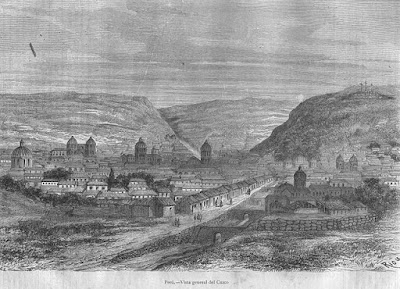 |
| Old Cuzco |
From a sanctuary in Cuzco's Convent of Saint Augustine, a desperate voice uttered:"Esto es lo que quiero. Esto es lo que quiero, Señor!
Si Dios quiere, por fin podremos aportar claridad a su caos.
Haz que escuchen tu visión.
Ilumina el camino.
Ilumina mi camino!"
("This is what I want. This is what I desire, Lord.
God willing, we can finally bring clarity to their chaos.
Let them hear your vision.
Light the path. Light my way!")
Since his arrival to the New World, Friar Marcos Garcia had been hoping to get a chance to do some real work closer to the native populations. And, in response to his perpetual, impassioned praying, the moment had finally manifest.
In accord with the August of 1566 Acobamba Treaty, and after his son, Quispe Titu, had been baptized, Inca Titu Cusi had requested that he himself and his principal wife be baptized in Vitcos. Though the Sapa Inca had previously been baptized as a child, in the late 1530s, he was eager to reup his personal commitment to the church and to the newly-signed accord.
The Sapa Inca was also prepared to invite church activities into the Vilcabamba Region. Seen together with the baptism, Titu Cusi's doubly action not only satisfied two aspects of the treaty, but it also seemed a miraculous answer to the young Garcia's fervent prayers.
Some may have called it coincidence; and others might have called it fate. But, the Iberian clergyman was certain: this was God's personal call to him, asking that he fulfill his deeper spiritual purpose on Earth.
 |
| St. Augustine |
Garcia, in highest of spirits, thus commenced the Prayer to the Holy Spirit. "Respira en mí, oh Espíritu Santo, para que todos mis pensamientos sean santos. Actúa en mí, oh Espíritu Santo, para que también mi trabajo sea santo. Atrae mi corazón, oh Espíritu Santo...."
("Breathe in me O Holy Spirit, that my thoughts may all be holy.
Act in me O Holy Spirit, that my work, too, may be holy.
Draw my heart O Holy Spirit....")
Early the next morning, an official contingent of clergy would make their way from the dry climes of the capital with aims of reaching the mostly subtropical environs of the Northwest Territory within a week. Accompanied by Father Juan de Vivero, the prior of the Saint Augustine Convent, and two others, young Friar Garcia would set out on what would be certainly an arduous journey. It was one, nonetheless, that he felt he was born ready for.
Ever since his childhood in Spain, and on through his arrival to the New World, his calling had been simple and clear: to audaciously bring Christian light to the dismal shadows of the globe. And, now, in the depths of the Viceroyalty of Peru, his particular purpose was to audaciously shine that light on the entirety of (what he saw as) this dwindling empire of heathens.
As the clerical contingent made their way along the mighty Urubamba in the Valley of Yucay, Garcia, despite his acute anxiety, felt prepared as ever. After all, the Spaniard had fantasized about this occasion for most of his life. Through his reading of exciting New World tales of both conquistador and cleric as a child, and, later, his listening, first-hand, to veterans talk of their American experiences, Garcia knew from time immemorial that this adventure was made specially for him.
"Gracias, Señor. Todo lo que hago, lo hago por Ud. (Thank you, Lord. Everything I do, I do it for You.)" He declared.
Little, however, did the fervent, temperamental young friar know, but the realm of Vilcabamba was not a simple wonderland, a place to have everything his way. This mostly unknown jungly land, tucked away so deeply and intricately in its lush Andean niche, was, he would find, more a slow-ticking time bomb. A place that would hold for Garcia much adventure, some advances, and countless drama.
Entering 'the Remote Fastnesses of the Andes'
The road to Vilcabamba, along Highway 100, was as exciting as any action scene out of an Indiana Jones' movie: an abundant jungle, containing every species of flora and fauna imaginable; an arduous muddy road, precariously paralleling a wild river; an unfamiliar and exotic people; a bumpy car-ride, due to worn car shocks and struts; and, at the core of it all: a blind venture to an entirely unknown destination.
In that moment, I was glad I hadn't opted to travel with anyone. Having this freedom to make my own choices and venture to places I desired was heavenly for me. No Jesus. Which meant no antics, attitude, or perfume. No Rafael. Which meant no narcissism, narcos, or fear mongering. Even no Juanes. Which it seemed meant no complications or compromises.
The only thing that remained were the blessings via the voices and memories of José, Chuck, and Celestino, among others. Their exciting histories, tales, and messages liberated my soul along this progressively desolate road. A road which now presented new horizons, opening further and forever into the glorious high jungle of Vilcabamba. Even from my horizontal stead in the weathered car's caboose, I felt blessed to have their words and visions so readily there.
Thank God, I thought, as the climbing road got really rough and bumpy. What a blessing not to have to walk it...
The Chuquichaca Bridge, that proverbial and literal crossroads, the spot of so many Iberian-Incan meetings, peaceful and otherwise, opened the road westward to Vilcabamba. At a location beyond the great Urubamba crossing, the muddy and miserable 1567 journey was reaching a breaking point for some.
Father Juan de Vivero needed to rise to the occasion. Thusly, he offered the struggling, downtrodden non-clergy pair a prayer so as to strengthen their tired bodies and heighten their solemn, sunken spirits. It was a familiar mantra, and one that would surely be offered incessantly along these arduous roads: "the Prayer to the Holy Spirit."
"Respira en mí, oh Espíritu Santo, para que todos mis pensamientos sean santos.
Actúa en mí, oh Espíritu Santo, para que también mi trabajo sea santo.
Atrae mi corazón, oh Espíritu Santo..."
("Breathe in me O Holy Spirit, that my thoughts may all be holy.
Act in me O Holy Spirit, that my work, too, may be holy.
Draw my heart O Holy Spirit....")
Friar Garcia, despite the physical toil of the trip, already had his mind and spirit intent on not only fulfilling his present role in the baptism but establishing himself long-term in the rural Andean region. His imagination was already taking hold with visions of chapels and churches, of converts of Christians, of order and organization.
The Augustinians in Cuzco, after all, had received a direct invitation from Inca Titu Cusi Yupanqui himself. This was the result of not just the Acobamba Treaty signed only a year before. It was the result of two decades of pleading with the loyalist Incas to allow the Iberian churches into their native realm. And, if the Spanish clergymen played their cards right, more advantageous events could occur, which would broaden their momentum in the Northwest Territory.
When the prayers had finished, somewhere around Hoyara, the foursome recommenced their journey in the direction of the first Neo-Incan capital. As his feet forged forward, Garcia's soul increasingly burned to make an impact in these mostly untouched depths of the loyalist Incas' universe. At this point, no fear, doubt, or naysayer in the world could stop the friar from forging his Christian fortune in the forests of Vilcabamba.
Nobody could stop us either, as our indomitable taxi sped along the dusty westward trail of Highway 100. Perched far above the low-lying Vilcabamba River, much of the dirt surface of road followed a similar pattern: a right-hand turn in toward the mountain; a subtle straightening out and crossing of a small stream of run-off water from the mountain; followed by a left-hand turn out toward the river canyon. This winding combination, which conformed to the infinite undulations of earth along the entire mountain canyon, repeated about three hundred times. And, intriguingly, each time felt thoroughly adventurous.
At around the hour-point of the two-hour tour, we stopped for a woman who hailed calmly from the roadside. Her native appearance was a signal of her local identity, which equated to "harmless" on my emotional barometric scale, the same scale that measured danger in the form of narcotrafficker or criminal. This was an added relief to my day's so far smooth journey.
Seeing that no other seats were available, save for the trunk of the Toyota wagon, I unhesitatingly offered my back window seat to the 40-something year old woman. Following my firm insisting, and her short-lived and ultimately futile pleading, I assumed my place in the biggest yet bumpiest space in all of the taxi.
Celestino's words returned to mind as the now fully-packed car continued its climb. "Waynalla kakuynchis, amapuni machuyachischu! (Be young always, never grow old!)"
I pulled out the Quechuan prayer list whilst the Toyota toiled on. I perused some that I'd heard and others I hadn't, as I mouthed the foreign words as best I knew.
Feeling a bit nostalgic, I thought an ode to Celestino and his daughter fitting given our style of transport and our rural whereabouts. With my friend squarely in my mind, I celebrated: "Waynalla kakuynchis, amapuni machuyachischu! Waynalla kakuynchis, amapuni machuyachischu! Para siempre, Celestino, mi amigo! (Be young always, never grow old! Be young always, never grow old! Forever, Celestino, my friend!)"
I wondered how Celestino and Chaska Flor were doing. While in the thick of this current adventure, I yearned to soon venture to the shaman's home for what would surely follow suit. Though I'd seen visual insights via my daydreams, the laguna by which he and his family lived, and the other two upper lagunas propped so high above Pisac, sounded like an ideal place to be, physically. A place that would forever entice me until my having set my feet there.
"Las Tres Lagunas." I remarked, imagining the Andean Shangri-La of my earlier imaginations. "Wow!" I awed, promptly waking from my daydream, while realizing what now unveiled before me. "How amazing!" I celebrated. It seemed that the Cuzco Region offered endless examples of utopia, regardless if it be in the niches high above the Sacred Valley or in the rural recesses of the Vilcabamba Valley, our current whereabouts.
 |
| Part of Nuremburg Map, 1599 |
Hiram Bingham & Co. had seen myriad majesties on the Urubamba-to-Vilcabamba trail. They'd witnessed Cuzco, Chinchero, Ollantaytambo, Machu Picchu, and the wonderland that is the Urubamba Valley, among other places.
However, along the trail west from the Chuquichaca, at a place called Huayrurani, the professor's uncertainty was showing through. Hence, he scrambled through the arsenal of mental stories he'd accumulated and assimilated about the Northwest Territory.
There was a list from the 17th Century: Father Calancha, Baltasar de Ocampo, and other contemporaries of Captain Garcia, among others, who all referred to this area as "the Valley of Uiticos."
Then there was Raimondi in the mid-to-late 19th Century. Antonio Raimondi, the Italian-born Peruvian, traveled ceaselessly through the country and, in particular, the region, albeit via a slightly different route. His maps pointed to this river valley as the "Valley of Uilcapampa," with numerous mention of mines and minerals, though only brief indication of ruins, at a place called "Maracnyoc."
For Bingham, the general area westerly beyond was where the maps and explanations ceased to yield anything more. Perhaps, one could both view their location and sum up their sitch as being in the proverbial "Belly of the Whale." At the very least, it was a threshold between worlds' known and unknown.
"Say your prayers, partners." Bingham called out to his Yale colleagues. "It looks like we blaze the way from here on out!"
From here forward, he and his expedition would have to trust their directions, intuition, and the locals who'd lead the North Americans from village to village. From here forward, they would be exploring off the map.
From the rear of the taxi, my guess as to our whereabouts would be hard to even conceive. Though I did recognize one occurence: our road, an hour on, began to climb.
I continued to be impressed with the ground we'd made thus far. Based on my guidebook, I calculated that from the cloud-forest climes of Quillabamba (3,445 ft.), the origins of our taxi-ride, we'd already ascended almost 5,000 ft. to our taxi's current location at Lucma (8,428 ft.).
As I witnessed only flashes of what looked to be uniform structures in this small town of less than 400 residents, I recalled that it was along the previous ten-mile stretch of road that a key breakthrough had emerged some one-hundred years' before.
A quick turn of events had led to an encouraging find for the Yale Expedition. Within the stretch of a day, the North Americans had been guided to a few ruin sites of note: one at Maracnyoc, another at Hoyara, and the other at Lucma, a place called Incahuaracana.
Thus, it was a refreshed, rejuvenated, and eager mood that accented the next day's proceedings. In the early morning, the men forded the Uilcapampa River, after which they were told of some ruins high up on a precipice above the valley.
To this news, Bingham's ears perked, matching exactly the reaction of the others. "How do we get up there?" The professor asked, ready and rearing to reach the ruins, despite any barriers.
Here, he went back into his mind, as he analyzed the scenario:
"It was Señor Pancorbo who had assured us in Cuzco that we should find ruins near Pucyura and he had told his major-domo to be on the look-out for us. We had a long talk with the manager of the plantation and his friends that evening. They had heard little of any ruins in this vicinity, but repeated one of the stories we had heard in Santa Ana, that way off somewhere in the montãna there was “an Inca city.” All agreed that it was a very difficult place to reach; and none of them had ever been there."
Could this be the place that Calancha wrote so descriptively of? Bingham wondered, with the other modern-day hints and pointers nurturing his hopes.
In the matter of a pair of days, near the village of Pucyura, the tides of fortuity seemed to be shifting for the Yale men.
Miles after the town of Lucma, after having shifted our direction from westward to southward, we passed a town whose name started with a "P". Perhaps this was the famous Pucyura. But, given the high velocity and constant jouncing of the taxi, it was hard to read road signs.
Only minutes later, we achieved equilibrium whence the colectivo taxi arrived to a short stretch of buildings in a veritable high-mountain town. It was here where we came to a hastened halt.
I peeked out the Toyota's dusty back window to find out more. From what little I could make out, the town was in a high and dry clime of a place. I'd expected, on the contrary, to see verdant vegetation in all directions, for pictures that I'd seen of Vilcabamba's lush, jungle-niched ruins had told me this to be so. Thus, mine was then-and-there confusion.
Since I was now in a town, I considered something else. Prior to my trip, I'd not seen any kind of medium showing a town or village surrounding the ruin site. So, as it turned out, my guess would be, at best, partially uninformed. Was this the end of the road? I mused.
After I'd fully propped open the taxi's backdoor for a better look, I noticed even more characteristics of a veritable high-elevation town: a panorama of gargantuan mountains; thin, cool air; and heavily-clothed and -jacketed locals.
Utterly bewildered and with labored breath, I now wondered as I wandered: Where the hell are we?
Retracing the Incan Retreat along the Vilcabamba Valley
 |
| Ascent to Rosaspata |
The Augustinian contingent from Cuzco had fiercely weathered the many-day journey. They'd come from the high mountains of Cuzco, through the mighty Valley of Yucay, to the high jungles along the course of the Urubamba Valley.
Then, having climbed in elevation a couple days' past the crossroads at the Chuquichaca Bridge, the quartet finally arrived back up to mountain heights at what would be the scene of the royal baptism.
Friar Garcia reveled at that which passed before his eyes. While ascending a long-stretching trail up to the grand palace site at Rosaspata, the Iberian proclaimed, "Y esto eso: el gran ciudadela! (And this is it: the great citadel!)"
Like more than a few other Spanish contingents from three decades' past, Garcia was awed by yet another example of an architectural masterclass. One that perhaps wasn't of the highest level of Incan stonework, he observed, though it certainly rivaled a majority of the work done in many other areas of the empire.
Moments on, the friar and prior met with high Incan officials at Rosaspata, a center of the Neo-Incan world. There, with a bird's eye view of the entire river canyon, the Iberian clergymen marveled in their luck, struck by the priceless perspective they'd been gifted. It was soon promised to the pair that Inca Titu Cusi would be making his arrival momentarily to the mountain abode.
The Iberians were impressed with how the new Sapa Inca, in 1567, had been so resolute on making good on his end of the Acobamba Treaty bargain. What's more, this gesture made it clear that Titu Cusi was also ready and willing to coexist with the Spaniards; that is, as long as equal respect was consistently reciprocated by the guests to the region.
In the meantime, Garcia and Juan de Vivero would go straight to work in preparation for this monumental occasion. It was one that every Iberian soul in Cuzco, Lima, in between, and beyond would've sacrificed wholly to attend. For even the King of Spain, Felipe II, would've been jealous not to have been present on such an historic evening, deep in desolation wilderness of the Andes heartland.
My anxiety was operating as high as it'd been since my arrival in Peru. More than anything, I just needed answers. "Dónde estamos? (Where are we?)" I asked the driver, as the other passengers walked off into the distance.
"Hemos llegado, amigo, (We've arrived, my friend,)" the driver insisted. "Todo está bien. (Everything is fine.)"
It was an answer to which I could only ponder, more confusedly than before: Where was Vilcabamba?
I muttered, as I inspected my surroundings some more. What of the lush-niched ruins and relics, the sky-high verdant canopy, the limitless forest trees and bushes? Hey! Where the hell was the real jungle?!
With little to no clarity offered, after a short, perplexed pause, I warily agreed to move on. "Ok. Gracias (Ok. Thank you.)" The driver hastily handed me my bag and was gone.
His Toyota turbo sped off in a cloud of dust, surely in hot pursuit of prospective passengers looking to leave back down the bumpy descending road of carsickness, toward the lower-altitude cloud forests of Quillabamba.
 |
| The end of the road? |
I resolved to amble in the direction of the town.
Oh, if Jose could see me now, I lamented, needing any form of guidance at this midday hour.
Amidst accepting my outright confusion, coincidentally, the first sign I saw, read: "Vilcabamba."
Now, how's that for clarity? I thought. Or was it?
Notwithstanding, while surveying the long road stretching up the hillside, I mused: Is this right? Were we already in the Last Refuge of the Incas?
I walked a bit further along the high altitude road. Where were the jungle vines and green foliage so typical of the historical depictions and photos? I wondered, in counterpoint to the obvious cool air and foggy moist mountain soils.
This deep mental mix-up continued as I made my way toward the community store the hasty cabbie had recommended. There, wedged inside of the door frame, a tall, older man customarily waited.
"Buenas tardes, señor (Good afternoon, sir)." I announced, upon approach.
The now very tall and mustached man nodded and promptly replied in kind, "Bienvenidos (Welcome)." He then motioned for me to enter the shallow-height doorway of the typical Andean structure.
Inside the dimly-lit store, the weight of feet caused cracking sounds on the old wood floor. It seemed that the building itself was an historical relic, albeit its age was probably only fifty years or less. As I surveyed the inside, it looked like the store was older than that, perhaps a couple centuries or more. It felt like the interior and everything it contained hadn't altered in that time.
The layout was curious: the low-ceiling room was split into two parts. The right side had food products and rations, ranging from fruits, vegetables, and rice, to crackers, cookies, water, and more. On the left side, there were old wood tables and matching benches, forming the restaurant portion of this humble establishment.
Beyond the place's timeless appearance, the feeling inside of the room struck me right away. Although it was quiet and calm, there was something else about the store that seemed strange, eerie. It was as if other things had happened here. My inner Juanes came into play, while I queried: Was this a mystical realm, perhaps a portal? One where people would enter and leave for somewhere else, anywhere they chose, wittingly? Or, maybe, to the unwitting, a place through which they'd lose themselves to the dictates of the beyond?
The proprietor inquired, "Qué planes tiene? (What are your plans?)"
Holding the store's peculiarity at bay, I told him, "quiero ir a Vilcabamba. (I want to go to Vilcabamba.)"
Without a word, the man, Juan, slowly led me to the other side of the old room, to a tattered map posted solitarily on a wall. The ancient map displayed the region in which I'd spend my next three days, at the very least.

That same region enliivened, blossoming fully to life in my mind's eye.
Birds flew playfully through the thin air, high above the citadel. Their view from 14,000 ft. was magnificent, reaching over two marathons east, back to the Urubamba crossing in low-lying Chaullay.
It was later in the evening, and the baptism scene on the open grounds of Rosaspata was finally set. The Bible, candles, holy water, and other necessary objects were present and in proper place.
As a select group of high Incan officials formed the audience to the sacred intercultural ceremony, Inca Titu Cusi and his principal wife were then led out from their room to meet with Father Vivero and Friar Garcia. Both clergymen were elated to have this highest of opportunities. Although the Spanish-Incan relationship hadn't been the smoothest, especially in its early days, lately, the tides had settled, and an environment closer to peace had defined the past couple of years.
Accordingly, Friar Garcia took glory in the sights that this high mountain niche of heaven blessed upon him and all those present at the important procession. As he did, he thought back to the other Spanish contingents that previously passed through this region: Ordóñez and Díaz; the Pizarros; de Matienzo; and more. Their experiences had been entirely different.
To put it mildly, these men entered as unwelcomed guests, fervidly in search of whichever Sapa Inca, with a firm vision of demolishing him and the Incan Empire with it. Those Spaniards were treated as they should've been by the loyalist Incas: as invaders. As such, they were dealt with viciously and, after many battles, successfully by the defensive Andeans.
'Cómo han cambiado los tiempos (How times have changed)', the religious man, circa 1567, thought to himself with a subtle smile. Thanks chiefly to Inca Titu Cusi and his predecessor and brother Sayri Tupac, de Vivero and Garcia had received a royal reception, as plainly evidenced by their formal invitation and cordial treatment as guests.
'Gracias, Señor. Aquí y ahora es donde comienza (Thank you, Lord. This is where and when it starts)', the young friar affirmed.
Back inside the unusual store, I resolved to keep things business-like. I figured this might be best to ensure my safety from falling into danger; be it into the store's inner-sanctum trap, or even, a la Juanes, into its portal.
Jokes' aside, Juan's map needed an update. It was old, decrepit, and looked like a far-fetched approximation, at best. He explained what it would take to complete el circuito (the circle). He insisted, "se necesitarás cinco días con la ayuda necesaria de un arriero y una mula... (it will take five days with the required assistance of a muleteer and mule...)."
"Una mula? (A mule?)" I bemused, with a slight distrust.
Slightly annoyed, Juan went on, "...una mula para llevar la mayor parte de las provisiones. Más dos días más para terminar el último tramo del circuito, desde Vilcabamba hasta su punto final, en Quillabamba. (...a mule to carry the bulk of your supplies. Plus two more days to finish the last leg of el circuito, from Vilcabamba to its end-point, at Quillabamba.)"
Juan's predicted circuito time-frame of five days (one week for the entire trip from here to Quillabamba) was quickly put to rest when a 40-something year-old woman entered the store.
The broad, formidable woman struck me immediately due to her anomalous light complexion. As my perplexed mind attempted to categorize her as insider or out, I could soon tell that she was a local due to her demeanor and dress.
She affirmed to Juan and me, "el viaje de Vitcos a Vilcabamba dura sólo cuatro días, no cinco. (the trip from Vitcos to Vilcabamba runs just four days, not five.)"
"Y es necesario una mula? (And is a mule necessary?) I asked, looking to crosscheck Juan.
To which the arriera (woman muleteer) responded, "No. Puedes hacerlo sin mula, pero será mucho más intenso. (No. You can do it without a mule, but it'll be much more intense.)"
Juan nodded his head, probably in knowing that he was wholly unqualified in the first place to attempt to determine the route's length and breadth, for one. And for seconds, I'm sure he wouldn't even dare to think to differ with the confident, experienced arriera, hence his reticence.
All of the arriera's information yielded an instant optimism for me. And, as I was to find, there was more momentum to come.
In the span of less than fifteen seconds, my lingering geographic confusion was entirely cleared up. It, like all great things, started with a simple question or two: "Estamos en Vilcabamba? O, mejor dicho, dónde está Vilcabamba? (Are we in Vilcabamba? Or, better said, where is Vilcabamba?)"
Both Juan and the arriera affirmed to me that the actual Vilcabamba, or Espiritu Pampa, was days into the distance and at a much lower elevation and jungly climate than Huancacalle, or old Vitcos, our current location.
"También solemos referirnos a "Vilcabamba" como a toda la región de Vilcabamba, aparte del pueblo de Vilcabamba, que también se llama Espíritu Pampa. (We also often refer to 'Vilcabamba' as being the entire region of Vilcabamba, aside from the town of Vilcabamba, which is also called Espiritu Pampa.)"
This instantly made sense to me. And it confirmed my having seen the jungle-niched ruins in pictures that proved that our present location wasn't the Vilcabamba historical site. We, as it turns out, were in Huancacalle, or old Vitcos, another place of historical intrigue.
To this, I professed infinite thanks to both Huancacalleans for this clarification. "No saben lo importante que es esta información! (You don't know how important this information is!)" I celebrated.
Juan and the arriera smiled, though both were probably bored for having to answer surely the most popular question asked by any and all outsiders.
I recalled a long analysis Bingham had on the topic of Vitcos, circa 1920:
"One looks in vain for Uiticos (Vitcos) on modern maps of Peru, although several of the older maps give it. In 1625 "Viticos" is marked on de Laet's map of Peru as a mountainous province northeast of Lima and three hundred and fifty miles northwest of Vilcabamba! This error was copied by some later cartographers, including Mercator, until about 1740, when "Viticos" disappeared from all maps of Peru. The map makers had learned that there was no place in that vicinity. Its real location was lost about three hundred years ago."
 |
| Antonio Raimondi |
Even Raimondi, that tireless explorer of Peru, who in 1865 went right through the Vilcabamba Valley, couldn't locate a Uiticos (nor Viticos, nor Biticos, nor any of the sort). This explorer, like most others, thought Choquequirao was the last holdout of the loyalist Incas. It was thanks to Don Carlos Romero, the Peruvian historian and one of the few dissenters, who was adamant that the last four Incas had not established home in the "cradle of gold," up the hill from the great Apurimac. Instead, Romero was convinced that the last capital of the Incas was somewhere in that same Vilcabamba Valley through which Raimondi had so thoroughly searched.
And for this reason, Bingham needed to find this place.
And for these reasons, I needed to see this place.
In spite of realizing my whereabouts, I had an inkling of what Hiram Bingham felt. Even modern maps of the early 21st century were vague. At the very least, the most popular of guidebooks, circa 2006, had only brief mention of the area. Certainly, times have changed with the Vilcabamba region becoming more popular over the past decade, but little information was available to me during those incipient years of the internet.
Bingham went on to affirm in that same writing selection,"[i]t was to be the work of the Yale Peruvian Expedition of 1911 to collect the geographical evidence which would meet the requirements of the chronicles and establish the whereabouts of the long-lost Inca capital."
His clear statement summed up my only intention on this trip. And, it turns out, that I'd reached my first stop.
Back to the logistics of the trek's course. In the end, I tended to trust the slightly reduced timeline laid out by the arriera, since, as Juan referenced during his introduction of her, she had a lifetime of experience hiking in the area. There were certain physical attributes that hinted at this lengthy experience: her weathered face, the sun- and cold-wrinkled skin around her eyes, and, as I would find, her hand shake: firm and unmistakably assured. In fact, when we clasped hands upon salutation, she almost crushed mine, as I was unsuspecting of such a fierce grip.
After taking a deep breath, I regained my poise enough to ask the arriera, "Ud. puede ir conmigo a Vilcabamba? (Can you go with me to Vilcabamba?)"
She smiled, brighter than before, and responded, "No puedo. Tengo mis ganados y no puedo dejarlos ahora. (I can't. I have my cows, and I can't leave them at the moment.)"
Notwithstanding, before she left, the arriera left me with a distinct message. It was one that would stay with me even up through the present-day. She said, "asegúrate de mantener los ojos abiertos, amigo. Hay mucho que encontrar entre aquí y allá. (be sure to keep your eyes open, friend. There's so much to be found between here and there.)"
The Huancacallana and I shook hands. This time, I'd prepped to do so firmly, as I hadn't before.
And with that the arriera was gone.
Welcome to Old Vitcos: A Lost Capital (Re)found
A moment on from the arriera leaving the store, I intimated to Juan of my interest in seeing the nearby old Vitcos ruins. As I started to recall stories that I'd read and heard about the place, I knew there was, as she alluded to, much to see in the immediate area, as well as off into the distance.
Juan sent for his nephew right away, as I strayed off onto a seeming tangent still with the arriera's message clear. "Hay mucho que encontrar entre aquí y allá. (There's so much to be found between here and there.)"
Her words hit me, as I spaced out further.
Pausing for a moment in their surveying of the lush land, the Incan mitayuqs (workers) caught scent of something in the bushes. Not wanting to wait it out, the pair of surveilling specialists sprinted into the thicket to ensure safety for the rest.
"What is it, Awaq?" Called the superior.
Bringing the find into view, the mitayuq revealed what many of them feared: it was the body of a young boy. As such, those present shuddered in disgust at the sight before them. The poor soul had most likely been roaming too far and succumbed to a snake bite, with few others in the area to save him.
As the mitayuqs did away with the body, the group disjoined from their defensive positions, and continued their activities in the area.
The same supervisor, Sumak, then called out to his equal, "shall we set up for dinner, Sacha?"
Before the answer came, Qhawa, the other mitayuq, called out. "Sir, you need to come here!" His tone was immediate and one of shock. Qhawa used a sharpened stick to clear away the excess shrubbery. After several severe strokes to get through what was either virgin growth or long overgrowth, what appeared to be a ruin came into view.
As 15th century surveyors-turned-ruin-finders delighted in their find, myriad wild eyes met what looked to be an ancient, man-made wall of stones, probably from the 10th century.
"Someone has lived here, before." Sacha proclaimed. Then awing at the revelation, he remarked, "a long time before."
"It looks to be Wari," said Sumak, referring to the structure's style. Awaq and Qhawa nodded in agreement, as now the whole group of mitayuqs assembled about the discovery. These common laborers, mostly from the north, had reason to be excited, forming a nice break from the normalcy of toil that they were so accustomed to.
"Clear the forest, immediately." Sacha called out to the whole group. "This is where we'll camp."
The men would surely be doing their fair-share of exploring and assessing of more ruin structures in the days and weeks to come.
Meanwhile, Juan's nephew had arrived within minutes, shocking me out of my daze.
"Ven aquí, Eddy. Quiero que conozcas a Patricio. (Come here, Eddy. I want you to meet Patrick.)" Juan ordered.
The tall teenager who'd been standing straight-faced inside of the doorframe, stepped forward into the room. "Encantado de conocerte. (Nice to meet you.)" He timidly responded.
"Eddy es un chico muy responsable, y te mostrará todo lo que necesitas ver en Rosaspata y más allá. (Eddy is a very responsible boy, and he'll show you all that you need to see up at Rosaspata and beyond.)" Juan assured.
Eddy, a stoic, nineteen-year-old, worked the land, assisting with his family's chacra (farm). When he wasn't on the farm, he would travel outside of the immediate area of Huancacalle either as a guide or a transporter of goods.
It was 1:45 p.m., and time was of the essence.
"Vamos? (Let's go?)" I asked.
"Sí, vamos. (Yes, let's go.)" Eddy matched.
Accordingly, Eddy and I wandered out to the area behind the Huancacalle town "strip." As we did, I could sense that the centuries' old ruins of the Incan past were awaiting us in the fog-obscured distance, veiled from sight as we slowly, anxiously approached.
An old story, however, was still able to find its way effortlessly in through the ethers. Its content was, once again, fitting given the Vitcos setting and timeless context.
Looking back, having an unbelievable natural view in three directions was one of the toughest parts of having to go. It was 1438, and it was time to leave the Apurimac for Cuzco to assume the lead of a nascent empire.
"Home can be so hard to leave, mother." the young Sapa Inca confessed, feeling the effects of change.
If his dad's death wasn't hard enough, it was now the moment to step up into showing his family and his people just what he was capable of. The Kingdom of Cuzco was the zone of dictates thus far, thanks to Viracocha, his father. He'd continued his expansion to the highlands above the sacred capital and moved his jurisdiction into the Valley of Yucay and elsewhere around the Incan nucleus.
Only a few knew, most paramount among them Pachacuti himself, that under the incumbant Sapa Inca's leadership, consolidation and expansion would be the two concepts put straight and consistently into action. That meant that enemies and those groups thought to be would be taken care of, either assimilated into Inca society or done away with outright. Their lands would thus be occupied and built upon with Incan structures and shrines, only of the highest quality. Roads would be planned and planted, connecting everything to the center in Cuzco. No place would be outside of the Incan radar, which meant that potential possession by the perpetual Quechua machine would always be a possibility.
So, any fear, apprehension, and onset homesickness that the young Sapa Inca-elect may have felt on his eve of exodus to the capital, would eventually dissipate, for his purpose was only to act on his ambitious visions, knowing that it was forever now or never for the Incas.
That evening, his last before the beginning of his reign, the festivities were two-edged: somber yet joyful. During his time as Sapa Inca, from 1410-1438, the great Viracocha had ruled valiantly for just under three decades, placing important foundations mostly in the area of Cuzco. Tonight, his son, and the new Intip Churin, the Son of the Sun, would honor his father in all of his highness, while surely fancying his brinking opportunity to significantly expand on his father's work.
"He always knew that you'd be the one, Pacha." His mother said, holding back tears. "Now go show him and the others exactly what you're capable of."
Capable, talented, ambitious, bold, strong, and, more than anything, unstoppable were all adjectives that perfectly described young Pachacuti. Under his iron-fisted leadership, Cuzco and the Cuzco Region would grow exponentially. Though their adversaries might say something different, during the 9th Sapa Inca's reign, the Incas' most glorious structures would be erected or improved upon, their roads properly mapped and built, and their organization in logistics, communication, and commitment would solidify and bolster.
In short, under Pachacuti a significant shift would occur taking Inca society, and everything we knew of it, and transforming it into a bona fide empire. Tahuantinsuyo, "the realm of the four parts (or regions)," would take prodigious shape and size under the prolific, legendary leader.
"...I always knew that you would be the one, son." His mother's words stuck to the heart, soul, and mind of the Sapa Inca. Hers was the perfect message prior to his departure for Cuzco.
Pachacuti really didn't know any other way. He knew he'd be successful. And he knew he'd make his father proud.
With increasingly overcast skies, a striking panorama of green vividness graced our afternoon as we walked up the trail. Its wonder came in the expression of wet grass, wind-flowing trees, and immense, sturdy mountains. A mosaic of 200 Chacras, spanning all hues of green and brown, blanketed the undulating, rolling-hill landscape in all directions, granting me an unmistakable impression of yet another example of the quintessential Andes.
"Qué se siente al vivir aquí, Eddy? (How does it feel to live here, Eddy?)" I asked.
"Es mi casa. (It's my home.)" He smiled. "Y no lo cambiaría por ningún otro sitio. (And I wouldn't change it for anywhere else.)"
"Es un lugar tan hermoso. Pero también hay mucha historia, aquí. (It's such a beautiful place. But there's also so much history, here.)"
Eddy looked around at the sights to behold. "Sí, lo sé. (Yeah, I know.)"
At this point, the anticipation was relentless. It's like I was made for this moment. Any and all of my reservations, doubts, second-guessing, etc., fell to to the earth, as the stroll to Rosaspata continued.
"Hey Eddy, conoces mucha de la historia, aquí? (Hey Eddy, do you know a lot of the history, here?)" I wondered.
His smile was even brighter, as he responded confidently. "Sí, tengo algunas historias que contar... (Yeah, I have a few tales to tell...)"
I couldn't wait for the tales that came next.
Even at 8:30 a.m. the heat of the sun had asserted its reign. The nascent town, hidden away to the northwest of the Incan nucleus, was slowly, intentionally becoming the Incas' Amazonian version of the Garden of Eden.
It was sometime in the 1440s, as construction began in the depths of the vilca (huilca) trees.
The Sapa Inca, who'd arrived only minutes' before, was discussing the scene. "These bowls are obviously Wari, Atik. They look like anything and everything that we've found west of here, all the way to Huamanga, where the Wari were based."
"Well, judging by how the men are working, it looks like the citadel will be ready sooner than we thought, Sapa." The supervisor responded. "The men uncovered two structures to the east of here a couple of weeks' back. Those have been incorporated like we've done with the three right here. Within a day, the mitayuqs will have finished work here in Vilcabamba."
Pachacuti smiled. "It appears that the Wari, once more, have done the groundwork for us. Thanks to them, and the commitment of our men, Vitcos will now have a neighbor!"
Back in the higher altitudes of Vitcos, firm instructions were being given to builders as to how improvements needed to be made. "We're working fast, Asiri, but we have to. The Sapa Inca will be here, shortly."
"If Rosaspata is to be of the highest quality, we'll need more time, sir." Asiri affirmed, looking concernedly to his men.
His superior pressed. "Look, Asiri. Time is short, and the space between these stones is too great. We must have a better product!"
Asiri and the group of masons dejectedly looked on, as the architect continued. "When Inca Pachacuti arrives from Vilcabamba in three days' time, he'll need to see our best work. Regardless, he'll demand it. I demand it! Now, redo this wall!"
Meanwhile, another structure was being built up the way. It appeared that some similar issues were holding up its progression as well.
There, overlooking the most wonderous of mountain views, another supervisor threatened: "We're just days' away from our deadline, men If you men can't keep the quality high, you'll be dealt with accordingly!"
Clearly, on both sites of the Northwest Territory, the pressure was on to produce. Choquequirao, the citadel above the great Apurimac River, was the model for these two emerging citadels. After all, Choque was the estate of Pachacuti, and was a place that he admired deeply.
Though it was becoming a hard ask to reach that level of mastery in such a short timeframe, the builders of both Vilcabamba and Vitcos would, nevertheless, attempt the audacious feat. A feat demanded from the forever ambitious and impatient Sapa Inca himself.
Our leisurely walk up to the ruins of old Vitcos was graced by a light sprinkle, which continued variably throughout the afternoon.

We, first, came upon the remnants of an old structure. Given the abundant moisture in this lush environ, the stone wall and window had been overtaken by plants and other growth, most notably moss.
Was this the relic the early Incas had located in their surveying of the jungle?
I was simply wowed by our marvelous find. So, to clarify my curiosity, I asked Eddy:"de qué época es este muro? (what epoch is this wall from?)"
Eddy, in response, could only shrug his shoulders.
But I knew, upon further review, that the wall's style was clearly post-16th century, not from the 10th or before, like the stonework from the story.
There was, curiously, a mystical presence to this olden wall, too. It almost seemed like a threshold to me. Could this be a portal? I proffered, a la Juanes. One which could mysteriously transport us back through the ages from modern Peruvian to Spanish colonial and veritable Incan?
Irrespective, I was convinced.
Rosaspata/Vitcos: An Inca City 'Way Off in the Montãna'
As the trail ascended past the threshold, I had some more epiphanies. I knew I would be coming upon a few very important ruin sites in this immediate area. Thanks to José, and to the insights from John Hemming's classic "The Conquest of the Incas," I was now clear and certain that one of these sites was Rosaspata. The other site, a short walk away, was Yurac Rumi, or "White Rock."
Strangely, it's as if I had been here before; not necessarily in the physical, but via my imaginations. In a fitting insight reminding me of the initial conversation José and I had back in Lima, I celebrated to myself: there's nothing like having words and maps come to life through physically being in a place. If only José could see me now...
With a pleasurable rain falling upon us, I felt this ruin rediscovery romp had prospects of prompting even more connections with historical and anthropological knowledge, much of which I had accumulated through my adult life. As we calmly sauntered along, I surreally sensed an ever-broadening sensation of deja vu.

It was then, fascinatingly, that it hit me: we were in Vitcos, the ancient entryway into the distant retreats of the last realm of an empire: the Lost City of Vilcabamba.
As the Sapa Inca, circa 1440, and his entourage made their way up from the low-altitude forest of vilca trees and past Pampaconas, his mind took him far and wide
His inner dialogue was reflective and telling.
'Ever since my youth, my father, Viracocha, spoke of our destiny: "Know that we are to dominate the entirety of these mountains. Always remember: not one spot on the length of this range shall be untouched by us!"
'He would continuously say this, so I really didn't know any different. Thus, during my rule, I've sought to grow and continue to grow into all mountains, every valley, each canyon, until my death disallows me the pleasure. My wife tells me that sometimes I press too much; that my demands are far too stiff. But if dominion is to be achieved, how else can one lead?
'My vision for our people is to be united from Quito to Tiwanaku and beyond. I'm clear that this won't happen during my time, but I'm hopeful that my sons will reach this feat in the years to come. I eternally trust that they will achieve this.
Pachacuti muttered intently the following:
'Kamariychis tukuy imapas thak nisqalla
kananpaq, runapas mirananpaq,
tukuy imapas aswanta yapakunanpaq!
(See that all things are at peace, that the people
multiply and that all other things forever increase!)
Raising his voice a few decibles louder, he celebrated:
'Let our people flourish and forever hold you close...
A Pachamama! (Oh, Pachamama!)
A qhapaq apu Inti! (Oh, Lord Sun!)
A ancha hatun illariy ruraqe! (Oh, Supremely Resplendent Creator!)'
Our calculated, intentional walk up the rain-soaked hill above Huancacalle finally wound us up to old Vitcos, toward an opening to Rosaspata, the principal site of intrigue. Not wanting to sound dramatic, but, as we approached the perfectly-plotted ruin site, I did so in utter rapture, for I found myself in a setting impossible to overlook.
The plot wasn't bad, now...
 ...or then, circa 1440...
Pachacuti & Co. finally reached the summit above Vitcos. From this incredible bird's eye view, the group of 20 reveled in what they saw in the distance, perhaps only a mile away, across the Vitcos canyon.
Apparently the workers had shaped up, in the end, for the finished product was simply immaculate. Rosaspata looked complete. Its stonework, concept, layout, and allure were all accounted for. Even from the other side of the canyon, its master-level execution was evident.
The Sapa Inca even made the comment: "It reminds me of home." Home being Choquequirao, which was the idea and concept behind stylizing these new citadels.
Pachacuti continued, feeling nostalgic, "I wish my mom could be here now."
An hour on, once the royal procession had arrived at the grounds of Rosaspata, the new citadel was promptly presented to the Son of the Sun as a gift, in the same way that the citadel at Vilcabamba had been only days' prior.
The chorus of voices sounded in unison:
"Kusikuywanmi napaykukiku,
k’anchayniykiwan samikuspayku!
Kusikuywanmi napaykukiku,
k’anchayniykiwan samikuspayku!
(With great joy we salute you,
basking in your great light!)"
Those present at Vitcos offered this timeless prayer to not just the Sapa Inca himself, but also to the sun in the sky, for both were one and the same. The nascent Inca Empire would carry on with its grand expansion over the next number of decades, away from Cuzco and along the spine of the Andes, like Pachacuti had envisioned.

Howbeit, prior to reaching the much-anticipated grounds of the Vitcos ruins, Eddy located a few of his townmates. The three men, who oddly resembled the Three Stooges (albeit Andean-style), were on-duty security guards tasked with protecting the Rosaspata site.
I wondered aloud: "Crees que ha habido muchos robos de reliquias aquí? (Do you think there have been a lot of thievery of relics here?)"
"A lo largo de los años, ha habido varios, que yo sepa. Pero la mayoría de ellos ocurrieron después de que Hiram Bingham llegara aquí. Eso es lo que me dijo mi abuelo. (Through the years, there have been a number of them that I know about. But most of them happened after Hiram Bingham came here. That's what my grandfather told me.
)"
The three machete-toting guards would've been deathly-intimidating to anybody not already affiliated with the men. Luckily for me, I had an inside connection to this trio by way of Eddy.
But, in spite of this familiarity by way of local, a tinge of fear still uneasily accented my salutation. "Buenas tardes. (Good afternoon)," I verbally pinched.
In response, they, perhaps just as unsure of me as I of them, offered a matching, tense greeting. "Buenas. Buenas. Buenas. (Hello. Hello. Hello.)"
Whilst we visited briefly with the men, they reminded us, via Eddy, that the touching of stones or displacing anything within the ruin-site would result in being caste out; no questions asked.
Eddy responded, stoically. "De acuerdo. Todo bien. (Of course. No problem.)"
Peruvian Larry, Moe, and Curly each nodded sequentially, making their way, awkwardly, to supervise yet another random segment of grass in the expansive ruin site.
As Eddy and I walked on toward the outer wall of the site, he confessed, whispering, "siempre hemos subido aquí, especialmente cuando los guardias no están mirando (we've always come up here, especially when the guards aren't watching)."
We giggled to one another, slyly adjusting our volume so as to mute our message from the trio of now distant comedic characters. As we did, I looked up to witness the brilliant example of Incan architectural genius before us, while reasoning, internally, no es un mal lugar para jugar (not a bad place to play)."
Friar Garcia knew, even prior to stepping up to the heights of old Vitcos and its sacred Incan shrines, that he would call this place home for some time to come.
For days, above all, he'd had fervid visions of establishing a church close to those shrines. He'd seen so many churches and chapels constructed in Cuzco that he knew exactly how he'd wanted his. The materials would be easy to gather, he'd just need worthy carpenters to help him. That meant he would need loyal converts, trusting of him and the Christian way, the Way of God.
He knew, like any Iberian in the New World, the going would be tough, given the heady yet contrarian cultural and religious context of Vitcos. Some natives were open to the teachings of Christ, for Garcia had seen that in Cuzco. Many natives, however, didn't want to be bothered one bit. Like always, the friar resolved to trust that God's Will would guide and rule the day. It was, now and forever, in His hands to provide.
Garcia knew that in Vitcos he'd, perhaps soon, need help along the road. It was, ultimately, no small task to bring the Christian light to a world, an Incan world, of, in his eyes, such darkness and abysmal sin. Fortunately for him, his constant demands would occasionally flow into open high-clerical ears, meaning at least some of his ambitious Vilcabamba visions would have a chance to materialize.


My friend and I worked our way to an expansive, flat opening in the middle section of the ruins. The view from high atop the elevated plateau was simply magnificent. The town of Huancacalle, and its twin, Puquiura (or Pucyura), were plainly viewable far below.
From here, I pondered to myself: how strangely surreal. The blending of natural and man-created beauty, slowly caressed by soft, ethereal clouds and Andean mist; the moist dirt, short grass, and tree leaves adding absolutely to the otherworldly nature of this approximately 560-year-old site.
Friar Garcia couldn't hold back his excitation either. Upon watching the frame of his future church being erected, he glowed in appreciation for finally receiving the go-ahead to carry through with the project. Though the structure wouldn't be up on the hill next to or on the Rosaspata temple, it would, however, be placed a few miles away in the village of Pucyara. Regardless of placement, the young friar was elated how some of his visions were starting to come to fruition.
Garcia's first few months hadn't all been daisies, however. Although following the successful baptism of Titu Cusi and family Garcia had kept momentum high with daily attempts to make ground in converting individuals, the irritable friar was finding life in rural Vitcos to be more trying than he'd thought. What started to bother him most was that he felt that many locals really didn't want him there in the first place. This was evident in the way they'd ignore the cleric when he'd approach them even for simple conversation, let alone spreading the "Good Word."
Something else was burning at his soul: he was really missing his peers in Cuzco, not to mention his friends and family in world-away Spain. He had always been used to having a group of confidantes with him to not only work on projects and tasks but also to keep one another company. He found life in the area to be so lonely that he'd instead ceaselessly busy himself with church activities. And, when these prayed-for manifestations and plans didn't seem to be coming quickly enough, his resulting short temper and frustration would only make matters worse.
A ball of disillusion began spinning in Garcia's gut. It even got to the point where the chaotic emotions wouldn't go away easily. Knowing this, the friar's only resort would be to pray, sometimes constantly. In fact, he found that it was "The Prayer for the Indwelling of the Spirit" that brought most solace.
Espíritu Santo, poderoso Consolador, sagrado Vínculo del Padre y del Hijo, Esperanza de los afligidos, desciende a mi corazón y establece en él tu amoroso dominio. Enciende en mi alma tibia el fuego de tu Amor para que me someta totalmente a ti. Creemos que cuando habitas en nosotros, preparas también una morada para el Padre y el Hijo. Dígnate, pues, venir a mí, Consolador de las almas abandonadas y Protector de los necesitados. Ayuda a los afligidos, fortalece a los débiles y apoya a los vacilantes. Ven y purifícame. Que ningún deseo malo se apodere de mí. Tú amas a los humildes y resistes a los orgullosos. Ven a mí, gloria de los vivos y esperanza de los moribundos. Guíame por tu gracia para que te sea siempre grato. Amén.
(Holy Spirit, powerful Consoler, sacred Bond of the Father and the Son, Hope of the afflicted, descend into my heart and establish in it your loving dominion. Enkindle in my tepid soul the fire of your Love so that I may be wholly subject to you. We believe that when you dwell in us, you also prepare a dwelling for the Father and the Son. Deign, therefore, to come to me, Consoler of abandoned souls, and Protector of the needy. Help the afflicted, strengthen the weak, and support the wavering. Come and purify me. Let no evil desire take possession of me. You love the humble and resist the proud. Come to me, glory of the living, and hope of the dying. Lead me by your grace that I may always be pleasing to you. Amen.)
Garcia's prayer drifted strongly to the east, past the Vilcabamba perimeter, and up toward the high elevations of the capital. His ultimate hope was that a response would return sooner rather than too late.
Off to the east, unending layers of mountaintops back in the direction of low-lying Chaullay, and the Chuquichaca Bridge, reminded me that we were settled on a truly high-altitude perch (3100 meters or 10,171 feet). I shifted my gaze back to the extensive populated area below.
"Entonces esto es! (So this is it!)" I celebrated, witnessing what generations of Incas-turned-Peruvians have seen.
My guide and I walked around the high-propping, flat mountain top. Throughout our jaunt, I couldn't help but fully bask in the physical beauty of the site. At one point, I even declared,"guao, esto fue el centro de todo! (wow, this was the center of it all!)"
I remembered José talking extensively about Vitcos. His intricate details now appeared in the forefront of my mind, as I recall us sitting in the comforts of his Lima home. In fact, it was while sitting at his kitchen table, during an early afternoon, after we'd recently returned from an excursion to Lima's Larco Museum.
"Patricio, es lo primero que vieron los españoles cuando llegaron en 1537. Fue el primer bastión de seguridad de los incas leales lejos del Valle Sagrado y de Cuzco. (Patrick, it's what the Spanish saw first when they came way back in 1537. It was the first bastion of loyalist Incan safety away from the Sacred Valley and Cuzco.)" José affirmed.
We'd just finished eating Lomo Saltado, one of the staples of Peru, as música criolla played soothingly from his living-room stereo.
He continued (Translated in English from Peruvian Spanish, for sake of brevity):
"Rosaspata, or Rusaspata in Quechua, had been almost entirely reconstructed. A necessity, given that Vitcos, and thus Rosaspata, had been in existence since at least the 1450s (and perhaps even as early as the first decades of the 1400s).
"It was one in an extended series of major Incan hubs in the greater Cuzco Region (other hubs include Machu Picchu, Choquequirao, and Vilcabamba), all of which are thought to have been erected by Pachacuti Inca Yupanqui (Pachakutiq Inka Yupanki, born 1418, the ninth Inca - 1438-1471/1472), an extraordinary and ambitious leader who guided the Incas during times of Incan assertion and solidification in and beyond the heart of the Cuzco Region."
As the smooth music of the coast set the tone in the early afternoon, I, again, started to venture off onto another tangent, but I was kept in normal reality by a certain someone.
"You've heard of Pachacuti, right, Patricio?" The professor sarcastically asked, as I blanked out for a moment.
Pachacuti and his huge team of architects were relentless in their work. Added to Vilcabamba and Vitcos, was the newly conceived and executed Machu Picchu citadel. Based, too, off of the Sapa Inca's home estate, Choquequirao, Machu Picchu would become an instant hit with the Sapa Inca and any other witness to its masterpiece.
The last of the work at the citadel was just being finished, when Pachacuti stepped up to its illustrious heights. His wife and entourage of high officials were all champing at the bit for the much-anticipated occasion.
"Ever since my childhood, have I yearned to continue forward with my father's vision for our people. In Choquequirao, my siblings and I would play on those divine fields, shrouded in infinite fog, flowing through the forever valley of the Apurimac. My father, Viracocha, said that one day the Quechuan people would have to take the next step: to expand from our comforts and demand more.
"He, too, loved the look and feel of his home, at the estate in Choque. He'd talk ceaselessly of his desire to stretch our reach north, here, where we stand now, and further, northwest, into Vitcos and Vilcabamba. All of that has been done. From here, we will only keep moving and acting.
The great Sapa Inca's voice slowly, reverently proceeded.
!A ancha hatun illariy ruraqe! (Oh Supremely Resplendent Creator!)
!A qhapaq Apu Inti! (Oh Lord Sun!)
!A Mama Killa! (Oh Mother Moon!)
!A sumaq Apu Illapa! (Oh great Lightening Deity!)
!A Apu Qoa Choquechinchay! (Oh deity of the Feline Star!)
!A Pachamama! (Oh Mother Earth!)
"Just being here is enough for me, knowing how hard you all have toiled for the security and strength of Tahuantinsuyo. Thank you, for now we'll never be reached from here or any of these sacred citadels. You have all constructed yet another perfect ode to me, to the Sapa Incas of yesteryear, to the Apus, to Apu Inti, and to Pachamama."
José's voice then took over: "Never forget the sacrifice you've made, here. Know that these structures will forever stand, regardless of the years, the events, and the changes that occur..."
The Professor then had to check my attention: "Did you hear me, Patricio?! Patricio! Pachacuti! Have you heard of him?!"
"José! Of course..." I responded patiently, while knowing full-well, as did José, that we'd just seen a detailed exposition on the great Sapa Inca earlier at the Larco Museum.
"Well, we're going to keep him and his contemporaries tucked away in the 15th-century past. We need to keep focused. Let's be more concerned with the 16th century on, okay?" José affirmed.
I could only shrug my shoulders in dissolution at the sheer quantity of stories on the offer. My education had fervently followed me on my travels. Thanks, chiefly, to the one-and-only José Bolaños.
I started to reflect on one of my favorite people who I'd ever crossed paths with.
It must be said that he is a former mechanical engineer professor at the University of San Marcos. After a bad automobile accident some years before, at the young age of 54, he was forced to retire and found himself free to explore other avenues in his life.
 Given his experience in mechanics, José had numerous projects on which he worked. From exercise machines, to de-featherers for chickens, to filter systems for filling cars and trucks with engine-cleaning chemicals for his brother's company, among many others. Another avenue for José was acting as an ambassador to Peru for me. As touched on before, he showed me this country. He told me tales of history, society, and life only a passionate teacher would. He taught me about Peruvian music and showed me recipes for Peruvian food. He guided me through the streets, the markets, various restaurants, and all of the museums of Lima, always with lessons and insights to give. In short, I'm indebted to this man for all that he's given me.
José was also old-school. When he talked, he expected to keep talking until points and knowledge were complete.
In this light, José continued. "Originally, Rosaspata functioned exclusively as a ceremonial site and residence for Inca nobles for almost a century. The use of the site as such was plainly evident upon view of the two principal sections of buildings within the site. One group contained a cluster of eight rooms, while the second group contained an unquantifiable amount, probably more than ten rooms."
"Just so we can keep our focus on slightly more modern times, Patricio, here's one for you. You've heard of Hiram Bingham, right?" The professor asked, again with intended sarcasm.
I rolled my eyes, as I shot back to the Yale Professor's writings.
High atop the 'Hill of Roses', Rosaspata, circa 1911, Bingham observed the markings of what appeared to fit Calancha's description of Uiticos.
Bingham looked at the walled mountains surrounding the site, the numerous structures and their level of craftmanship, especially of the door frames, and, after hearing of a Temple of the Sun over a spring of water located nearby, he was convinced of the Expedition's successful find. It was in the place that Don Carlos Romero insisted it would be, in this beyond rural region of the Vilcabamba Valley, only a hundred miles or so from civilization, to the northwest of Cuzco.
The Yale man shot back in his memory to not just the trip of 1911 from Cuzco to here, but back to his previous trip made to Peru at the start of 1909. His venture to Choquequirao, the "cradle of gold." His enjoyment was real, as was his skepticism to the popular thinking of the time that this site was the veritable last capital of the Incas. Based on his readings, he knew that the details of the early chroniclers weren't lining up.
 |
| Father Antonio de la Calancha |
In particular, it was Calancha's descriptions, Raimondi's map, and Romero's certainty which informed and inspired the ambitions of Bingham to investigate the nearly 400-year-old mystery. Once located, Bingham was instantly hooked by his find at Uiticos. He would return in 1912 and, again, in 1914-15 to collect more and more information and do more excavations at Uiticos and other sites in the area.
"Well," José affirmed, as his voice found its way back to me. He was now giggling through his words, "the North-American measured the royal residence from his visit back in 1912. Bingham determined the entire site to be 245 ft. by 43 ft. Add to this, a separate, albeit less intricate, large structure measuring 78 ft. by 25 ft."
His expeditions' work in 1912 and 1914-15 paid special attention to the measurements of the site and sought to analyze and understand the function of the structures in Uiticos and beyond. Though some of their analyses were misinformed, they, after all, had been the academics who for western social science first filled in the blanks of the map and the gaps of history of the whereabouts of the Neo-Incan State and at least one of its rural Vilcabamba Region retreats.
Luckily, I, circa the 21st century, had a handy Professor who'd done the dirty work to filter out the conjecture of the past, yielding and providing a clearer, truer picture of the place and time.
José now continued at length.
"After decades of use as a satellite site for Incan nobility retreat, Vitcos later became a necessary permanent residence of the Incas. After various events and battles, especially subsequent to the Battle of Cuzco (July, 1536) and the Battle of Ollantaytambo (January, 1537), (ironically, one that ended in a victory for the Incas), Manco Inca transformed Vitcos, in a sense, into one of two (the other being Vilcabamba) permanent nucleus from which to operate. It was a location far enough away from the victory site at the Sacred Valley citadel, which was too close for comfort from Spanish-controlled Cuzco. Thus, Vitcos became a place where all classes of Neo-Incan society mixed and lived."
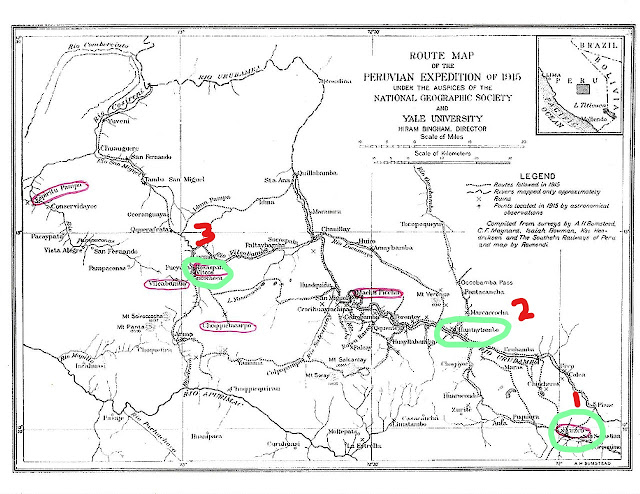 |
(Cuzco is marked 1. Ollantaytambo is 2. Vitcos is 3.)
 |
Standing on the open space of Rosaspata's usnu, with a cool wind coming through the area, I realized something profound. For Eddy, the Vitcos ruins literally formed his backyard. To him, it was simply home: a normalized site, offering sights that he probably took for granted, like anyone would the places in his or her hometown.
For me, I couldn't get enough of the geographic, cultural, and historical vistas on display and lessons on the take. I continuously thought to myself, how fitting for the loyalist Incas to establish a capital here.
When Tupac was born, the most excited of them all was none other than Titu Cusi. Sixteen years his elder, the latter would take an especially loving role in the youngest brother's life. Titu would play with Tupac when the latter was old enough. Titu would recite stories of legend and history to young Tupac during their time in the forests or just before bedtime. The day-to-day interactions of the pair was something special for them both, yielding an inseparable quality to their relationship as brothers.
One event that would always torment Titu Cusi was when their father passed. Titu had been back in Vitcos following a couple of years' spent in the capital. During an evening of fun with his father, high officials, and a few Spaniards in refuge, the shock of young Titu's life would occur.
The mood was light as the group of eight played a game of herron, a sport similar to that of horseshoes. Everyone had already eaten supper and chatted about the news of the week from the niche at Rosaspata, Manco Inca's residence.
Herron was the Sapa Inca's forte, for whomever played the Son of the Sun knew that they'd be in for it when push came to shove. Thus, the seven others spent most of their time licking their figurative wounds, while they witnessed Manco dominate the proceedings. This didn't necessarily cause his competitors frustration nor lament, since the nature of the game was invariably based in recreation and fun.
It was in this way that the mix of men, both Old-World and New, enjoyed their time together.
"Ok, Hernandez. Te toca a ti! (Ok. Hernandez. It's your turn!)" Manco declared, smiling brightly as he enjoyed constrant momentum.
Hernandez was the leader of the Spanish trio of men who were in hiding at this point, renegades to the Crown for having been involved in the killing of Francisco Pizarro years' before. Manco & Co. had been nice enough to honor the Iberians a safe-haven, away from the dangers of Cuzco or anywhere else. Housing, food, work, and good company were all provided by the hospitality-focused Loyalists.
So, with this in mind, it was inconceivable what came next. Let's let Titu Cusi himself describe the event fom here:
. . the said Spaniards were in my father’s company in his own house in Vitcos,
my father, they, and I were enjoying ourselves by playing a game of herron.
. . . When, in the course of the game, my father went to pick up the iron with
which they were playing, they all fell upon him with daggers, knives and some swords. . . . When I, still being very young, saw them treat my father this way,
I tried to rush to his aid, but they angrily turned on me and threw at me my
father’s personal lance, which happened to be there, thus almost killing me as
well. (Titu Cusi Yupanqui [1570] 2005: 126)
The story that Titu tells to Tupac of this horrific evening, circa 1544, early 1545, is as intimate as it gets. And with each time the tale's told, it gets more and more painful to tell, especially when the two are located at the scene of the crime at Rosaspata.
350 or so years' on, another insight about the grand plaza of Vitcos returned to me.
When Hiram Bingham stood on the tree-littered and vine-heavy site for the first time, he was amazed at what he saw on this raised prop. However, since no other known modern westerner had observed the site before 1911, the North American continued to question his whereabouts by analyzing the landscape, and crosschecking it to his sources, in depth.
"The 'Hill of Roses' is indeed 'a high eminence surrounded with rugged crags'. The side of easiest approach is protected by a splendid, long wall, built so carefully as not to leave a single toe-hold for active besiegers...The hill is steep on all sides, and it would have been extremely easy for a small force to have defended it...it was undoubtedly 'almost impregnable'."
The details of his study continued, discussing the number of open plazas, rooms, hallways, doorways, and measurements of each and all. In spite of the quantity of questions the Yale professor asked, his scientific mind was rewarded peace when he noticed that most of the characteristics of the Hill of Roses, or Rosaspata, thus Vitcos, was equally matched at least in the account dictated by Ocampo, a contemporary of Tupac Amaru, the last Inca.
If Vitcos was the residence of Tupac Amaru, had it not been that of his predecessors, Titu Cusi, Sayri Tupac, and Manco Inca? Bingham pondered.
The written proof that he'd read, however mixed and vague, pointed to this having been so.
Titu Cusi and Tupac Amaru were raised in Vitcos. They loved it for all that it provided them and their people. In spitre of the monumental setback that was the death of their father during the mid-1540s, the royal father for the most part enjoyed their time on the perch where three rivers meet.
The pair of royal brothers weren't alone either. Their other brother, Sayri Tupac, was the Sapa Inca, now living away from home in the compromised comforts of Yucay. After an argreement was struck with the Viceroy to relocate to the plush encomienda in the heart of the Valley of Yucay, Sayri jumped at the offer. This took him far from Vitocs, far from his people, and far from his family.
"Why did he do it, Titu?" Tupac wondered, just days' after their brother's exodus.
"He saw it as a better choice given the pressure they were putting on him. Sayri thought that living in Yucay would be safer for everyone." Titu responded.
Tupac, only twelve years-old at the time, still didn't get it. "But why would he leave home, Titu?! He asked, emphatically. "We have everything we need right here!"
Titu Cusi agreed with his youngest brother. For he, too, despite his being verbally understanding of Sayri was mystified, frustrated that the Sapa Inca had left home and entered the Valley of Yucay, to a place, Titu thought, that was like a dangerous cauldron for any of the Loyalists to be.
I remember José, via more of his Lima lecture, confirming to me what I could now vividly see and, thus, finally understand.
"Vitcos was a perfect area, Patricio, in which to base the Neo-Incan State, which lasted from 1537 to 1572. It was within close reach of subtropical climes with lush and thick vegetation, which provided abundant quantities of coca, yucca, and manifold fruits. The abundance continued in terms of available animals for trapping and hunting. Farming could also be comfortably achieved, given the moist yet high-altitude soils.
My attention must've clearly faded from Jose's lecture, for I cut-out into another dream while standing here, in yet another Heaven-on-Earth in the Andes.
"You know, Tupac. I never told you about something that's been on my mind lately."
"What is it, Titu?" Tupac asked.
"Well, you know I've told you about the first time the Spaniards came to Vitcos way back after we escaped from Ollantaytambo, right?" Titu asconfirmed.
Tupac nodded, as his older brother continued. "You know, the battle where the conquistadors went through here at Vitcos all the way over the hill to Pampaconas and beyond."
"I know that story, Titu."
"Did I tell you that the Spaniards stayed for a couple of months, ready to find our father at all costs?"
"Yes, Titu. I know that story."
"Well, did I tell you what happened before all of the Spaniards went back to Cuzco?"
Tupac's face showed confusion. "No, I don't think so..."
"So before the contingents from Pampaconas and the deeper jungle just short of Conceivideoyoc and Vilcabmaba, as well as the one that was stationed here thought it best to take a few people hostage anmd to take them back to Cuzco with them. So, they decided that it would be good to take me."
"Titu! Why diWhy didn't you ever tell me about this?" Tupac conplained.
"Tupac, I didn't think it was right to do. I never wanted to scare you." Titu asserted.
Tupac only looked on. So, Titu went on. "We'll, it happened. I went with them. At first, they treated me badly, calling me names and treathening me with torture and more. But, after they'd thought better of it, they chose to better my treatment. So much so that once we got to Cuzco they made sure that I was the best treated out of any other Inca-blooded person in the empire. They sent me to school, they taught me their language, their habits, their customs. It was interesting to be able to start to understand the world through the eyes of the Spaniards.
"Did you miss home, Titu?" Tupac wondered.
"Of course I did, Tupac! But I also knew that I'd be able to leave Cuzco at a certain point and come back to Vitcos. So that made it all a lot easier to handle.
Jose's voice came back in:
"When you go there, Patricio, you'll see that Vitcos boasts a high-elevation niche location. It's beyond a long stretch of high jungle from, roughly, Machu Picchu to just short of Vitcos, which made it hugely toilsome for Spanish contingents, who always traveled with heavy armor, horses, and weapons, to make the trips. Included in this arduous route, were numerous rivers along the road and in the general region, making it equally taxing for the Spanish to arrive comfortably. And, like we've heard before, sometimes, Incan bridges, like the Chuquichaca Bridge, were intentionally cut by the Incas to discourage invader passage, as we've already talked about.
And my attention, once more, took exodus back to Titu Cusi's relation, circa 1558:
"So once I made it home, it was obviously incredible to be back here, with our family, and officials, and friends, and just being here in the mountains. Another thing that was interesting was how I'd been able to understand the Spaniards and their way of seeing the world. I could see through their eyes in a way. Actually, since I spent so much time with them in Cuzco, and befriended a number of Spaniards my age, I was considering at a certain point that I'd return to Cuzco or somewhere close to there."
"It was that good of a time there, Titu?" Tupac wondered.
"In spite of the fact that I was a 'prisoner', yes. Since I was so young, I experienced it as an adventure. I learned so much about their way of life that I kind of got used to it. So when Sayri decided to go to Yucay to live, I could understand his decision to do so."
"You could?!" Tupac couldn't believe it.
"In a way, I could, given how I've been to that world and know a good amount of it. But, of course, I've had other experiences that have taken me away from wanting that."
"What? Like Father dying?" Tupac asked.
"Yes, that's one big thing. Another big event was when my mom was taken away. Have I talked about that one before?" Titu wondered.
"No. I don't know if I want to know." Tupac coiled.
Titu smiled. "I understand. But there's always a time to learn more.
"My mom was taken the year that Gonzalo Pizarro came to town. It was 1539, and his contingent of Iberians and native allies was bigger than the first attack of 1537, when they took me.
"I still can't believe that, Titu!" Tupac lamented.
"I know, Tupac. But, like I said, it wasn't as bad as it could've been." Titu affirmed, then queried. "Now where was I?"
"The attack of 1539." Tupac responded.
Titu nodded, as he continued at length:
"That's right. In 1539, the Spaniards were relentless in their attack. They made it past the Chuquichaca Bridge, even faster than the time they'd passed in 1537. This time, they knew where they were going. So it took them half of the time to venture through Huayruruni, Hoyara, Tarqui, Lucma, all the way to Rosaspata. They even took care of our soldiers quicker than the first time.
"Father had fled with Uncle Huallpa and all the others. He told me that they all knew the Spaniards would make it even further this time. And they did. After skirmishes all along the road to Vilcabamba, one small Spanish contingent made it as far as a couple kilometers' short of Conceividyoc."
"What?! That close?!" Tupac was shocked.
"Yes, Tupac. Father said he and the others were shaking in their shock of the news. They were ready to flee again, all the way to Momori, if they had to."
"Momori?! Why would they ever want to go there?" Tupac wondered about his father's opting to potentially go to the place where the natural enemies of the Incas, the Pulcasuni, reside.
"Well, that's how desperate the situation was in 1539!" Titu affirmed. Then continued: "But, in the end, the Spaniards were fought off valiantly by our soldiers. So strong was the defense that the Iberians again had to flee all the way back through Pampaconas to Vitcos, and then out of the Valley of Vilcabamba, altogether."
"Titu, it seems like the story's not over, though..." Tupac intuited.
"You're right, Tupac. This is where it gets tough." Titu lamented.
"I've got you, brother." Tupac comforted.
"Before the Spaniards left, they, again, needed to leave their mark in the way that they do." Titu grabbed a couple loads of air, and then continued:
"I was playing with cousin Patu down in Tendi Pampa when I heard the news. Father was the one who informed me. He told me and Patu that he had to tell us something and needed us to stop playing right away. We sensed something bad. Father told me that my mom and her brother had been found in their hiding spot along the Vilcabamba road and had been taken into custody by the Spaniards."
"Titu, no...." Tupac replied.
"She was then taken with the main contingent down the Vilcabamba, to the Chuquichaca, then along the Urubamba, all the way past Machu Picchu, en route to Ollantaytambo, where she was considered the grand prize of the Spaniards.
"Father told me the rest:
'Francisco Pizarro met his broth Gonzalo at the base of the terraces at Ollantay, where the Governor was immediately furious. He couldn't believe that the Spaniards hadn't captured Manco Inca and other high officials during the weeks and weeks that they'd spent attacking the Loyalists in the Northwest.
'Francisco saw who Gonzalo and his contingent had returned with and scoffed at his brother: 'mierda, Gonzalo! What good are you to our cause. I gave you horses, arms, food, and everything needed to take the Sapa Inca out, and you came back with his wife?! This is all you have to show?! This is all you could muster and achieve, my brother?! If you ask me, this is a lame game you're playing with me. Not just you, Gonzalo! All of your men!
'What came next happened so quickly that even those Spaniards watching couldn't conceive of the decision made by Francisco. Almost in one action, he went from reprimanding his younger brother to ordering the next step. Which was...unfortunately...that his men were to have my mom killed in the plaza at Ollantaytambo to make a statement to the Loyalists.'
"Brother..." Tupac responded.
"Later on, not wanting to waste their time, my mother, Cura Ocllo, was put to death by a small group of Spaniards...and that's it." Titu grieved.
Minutes' on, Titu conjured more. "So, with my dad, our father, and with my mom before him, And plus my experience being taken hostage, I've learned, in spite of some good experiences in Cuzco and with the Europeans, to be wary of the Spaniards, Tupac."
Jose's voice came back in, slightly off-topic:
"Through the leadership of Manco Inca's three sons: Sayri Tupac, Titu Cusi, and Tupac Amaru, the loyalist Incas maintained their empire, conducting business within their Neo-Incan sphere, as well as interacting with the Spanish, via missives and go-betweens, like priests, royal officials, and military officers."
"Pero por qué Sayri Tupac se trasladó a Yucay en lugar de quedarse con su familia y su gente en Vitcos? Por qué decidió confiar en los españoles? (But why did Sayri Tupac move to Yucay instead of stay with his family and people in Vitcos? Why did he decide to trust the Spaniards?)" I asked the Professor, who looked at me with a bright smile.
"Gran pregunta, Patricio! (Great question, Patricio!)" Jose affirmed. "Recuerdas lo que pasó con Manco Inca? (Do you remember what happened to Manco Inca?)"
"Sí. (Yes.)" I said.
"Y recuerdas lo que le pasó a Cura Ocllo? (And remember what happened to Cura Ocllo?)" He queried.
"Sí. (Yes.)"
"Y cómo te sentiste al estar siempre escondido en una región lejana, lejos de cualquier lugar cercano al Valle Sagrado o al Cuzco? (And how it felt to forever be hidden away in a far-off region, far away from anywhere close to the Sacred Valley or Cuzco?)" The Professor asked.
I nodded, attentive to what came next.
"Pues bien, Sayri quería negociar y no esconderse y estar cerca de las raíces de su pueblo en el Valle de Yucay, cerca, al menos, de la histórica y sagrada cuenca del Cuzco. (Well, Sayri wanted to negotiate and to not hide and to be close to his people's roots in the Valley of Yucay, near, at the very least, the historical and sacred basin of Cuzco.)"
What the great Professor had to say made clear sense. I thought back to how Titu, Tupac, and the others reacted to the exodus of the Sapa Inca. Thus, I resolved to treat each Sapa Inca as his own man, responding to the needs of himself and his people in the moment of choice.
As far as Titu and Tupac, years' later, when they were Sapa Incas, they'd choose to stay in Vitcos, close to their home and what they were used to.
As if José had sensed my thoughts in that moment, and Bingham's uncertainty from a hundred years' past, he asserted: "And remember: when the last two Sapa Incas had to later retreat further away from Vitcos, for reasons of safety and security, Vilcabamba was always a place they could venture to."
I watched as Eddy smiled, while I, too, visibly marveled in the beauty from high atop the citadel. My friend fittingly concluded, "y ahora entiendes por qué siempre subimos aquí (and now you understand why we always come up here)?"
I could only meet his smile with a look of astonishment, simply awed by it all. I can understand why, friend. I can also understand why the loyalist Incas came up here as well, I mused.
Yurac Rumi: 'the Rock Over a Spring of Water'
Bingham was also astonished when he saw the hill of terraces a quarter-mile beyond Rosaspata. Not only was the sheer size of the terraces a sight to behold, but his journey had shown him that man-made terraces were rare in the nether reaches of the Vilcabamba Region.
He commented to Mogrovejo, "Perhaps we're close?"
The Lucma man nodded.
Bingham felt his luck was continuous, as he sensed his company's approach to another hugely important site. He knew this based on the series of well-built terraces, which seemed to now multiply, resembling giant steps up the face of this large mostly-forested canyon.
After having mistaken a good-sized etched boulder as being the veritable White Rock of his dreams, his expertise nudged him to bypass the sacred huaca, instead, driving him and his men further up the hill. As the research team trudged their way up the soggy path, they surely sensed they were on the verge of discovering something much larger.
"Tiene que estar allí arriba. It has to be right up there." Mogrovejo bilingually affirmed to the North Americans.
If the Expedition were to be indeed lucky, they'd soon be roaming upon the promise of promises made by Señor Pancorbo: "a white rock over a spring of water." It was a ruin called "Chuquipalpa."
After completing our brief hour tour of wonderful Rosaspata, we ventured on a path that led us to and along a series of huge andenes, or terraces. Terraces that right away lived up to Bingham's billing, and which eventually, we hoped, would lead us up to the high perch where the sacred Yurac Rumi, the White Rock, shrine sat. The andenes were further evidence that Vitcos was, originally, not just a residence of common Inca subjects, but a residence clearly designed for the nobles.
Our paced climb up the many terraces to the Yurac Rumi shrine was thrilling. During the ascent, we not surprisingly ran into the same Three Stooges again. As their straight, silent, and stunned looks reminded us clearly, "not to touch anything," it still eerily felt like as long as we were in old Vitcos, we would forever be surveilled by the odd threesome: Los Tres Chiflados.
Silence, once more, marked our exchange. It was, unsurprisingly, another awkward pause, followed by more of the same the next moment. So, once we'd uncomfortably parted ways, absurdities ceased to be my focus. And from then on, there was only one thought that remained: if Rosaspata was the veritable grand residence of the Incan nobles in Vitcos, Yurac Rumi was, undoubtedly, their deserved, illustrious temple.
Once we neared White Rock, the formerly cloud-crowded skies brushed away to clarity. Concomitantly, it was as if a giant, wet terrestrial towel had been pulled from its task of blanketing the hills of trees and plants. Refreshingly left was a cool, misty dew that added an element of magic to our jaunt. With unstable feet on muddy trail, one could feel, viscerally, the solitary, grand presence up just over the hill.
Within a few more anticipated paces, the upper layers of Yurac Rumi finally became visible. It was then that I breathtakingly remarked to Eddy, "Joder! Qué maravilla! (Fuck! How incredible!)"
Eddy, this time, only offered a knowing smile in response.
Bingham gave a clear, simple description:
"It was late on the afternoon of August 9, 1911...when I first saw this remarkable shrine. We followed a trickling stream through thick woods until we suddenly arrived at an open place called Nusta Isppana (Yurac Rumi or White Rock). here before us was a great white rock over a spring.
"Our guides had not misled us. Beneath the trees were the ruins of an Inca temple, flanking and partly enclosing the gigantic granite boulder, one end of which overhung a small pool of running water. When we learned that the present name of this immediate vicinity is Chuquipalta our happiness was complete."
The famous Yale professor went on to describe the sacred scene, giving his vision of perhaps how the Incas of antiquity may have practiced their worship at the Yurac Rumi shrine.
"There was not a hut to be seen; scarcely a sound to be heard. It was an ideal place for practicing the mystic ceremonies of an ancient cult. The remarkable aspect of this great boulder and the dark pool beneath its shadow had caused this to become a place of worship. Here, without doubt, was "the principal mochadero of those forested mountains." It is still venerated by the Indians of the vicinity.
"At last we had found the place where, in the days of Titu Cusi, the Inca priests faced the east, greeted the rising sun, "extended their hands toward it," and "threw kisses to it," "a ceremony of the most profound resignation and reverence." We may imagine the sun priests, clad in their resplendent robes of office, standing on the top of the rock at the edge of its steepest side, their faces lit up with the rosy light of the early morning, awaiting the moment when the Great Divinity should appear above the eastern hills and receive their adoration. As it rose they saluted it and cried: "O Sun! Thou art in peace and safety, shine upon us, keep us from sickness, and keep us in health and safety. O Sun! Thou who hast said let there be Cuzco and Tampu, grant that these children may conquer all other people. We beseech thee that they children the Incas may be always conquerors, since it is for this that thou hast created them."
Based on his words, Bingham seemed impressed with his find, which, after years of study and analysis, had been such a long time coming...
For me, I had my own, perhaps modern-day, interpretation of Yurac Rumi. I wrote it in my journal from a seat on the open field just up from White Rock.
The humungous, magisterially-etched granite of White Rock provided Incan shamans with the necessary measuring tools to read the angles of the sun, ascertain the positioning of the stars and planets, and predict present and future events; thus, steadying and easing the course of the Incan universe, especially during exceptionally chaotic times.
Just then, José came back in:
"Remember, Patricio, for over three decades, the Incas were based in Vitcos. Therefore, that meant that Yurac Rumi was a long-term, established, and active site of high importance for the population. The shrine is considered the last Incan shrine of the Neo-Incan state and of the Incan Empire, more generally, before the successful Spanish incursion sacked the Incas in this area and beyond in 1572."
"Patricio! You've heard of Bri-yan Ba-wer, no? José wondered, using his strong English accent to pronounce the North American achaeologist's name.
"Of course, José!" I responded. "The museum guide talked about him today as well. Do you think I have no memory of any sort?!"
The professor only laughed, delighting in his child-like humor just to keep me on my toes.
"Well," José cleared his throat.
"Professor Brian S. Bauer and others, in addition to work at Vilcabamba, or Espiritu Pampa, were the first anthropologists to do extensive excavations at the site in 2008. The Yurac Rumi site had been mostly untouched and certainly unexcavated since Hiram Bingham's short-lived inspection of the site in July, 1911. Bingham, at the time, was more inclined to tend to the site at Machu Picchu, a place he'd discovered for western social science within the same month. A site, which Bingham mistakenly (though following popular thinking at the time), identified as "the Lost City of the Incas." And, a site, which required immediate attention in terms of foliage clearance, excavations, and other work.
"It seems that Bingham thought that Vilcabamba, or Espiritu Pampa, just wasn't big enough or elaborate enough compared to the citadel at Machu Picchu. Perhaps he was right, but the North American professor should've remembered that the Spaniards would've had easy access to Machu Picchu had the loyalist Incas set up shop there. Alternatively, Vilcabamba, like Vitcos, was a safe bet in terms of being sufficiently rural, tucked away in a nearly-inaccessable location, away from the reach of those relentless Iberians."
He continued, now more emphatically. "And when you go, Patricio, you'll see all of this for yourself!"
I thought it interesting to reflect on this conversation with the Peruvian Professor. He'd just complemented our viewing of Yurac Rumi, as he did with Rosaspata. He'd also just reintroduced a familar name: Professor Brian Bauer. With this, I thought straight to Juan Esteban and his mentioning of Bauer and the excavations they'd done together.
In spite of my slight reservations about Juan Esteban and his involvements, I thought it'd be nice if he were here to explain some of the work he's done in the area and greater region. Perhaps we were even standing right where he'd excavated, if indeed the Peruvian worked the Yurac Rumi project.
Alas, judging by how the synchronicities of the trip had manifested thus far, a future reunion with the Peruvian archaeologist wouldn't be a shocking turn of events. After all, our journey would be a long one.
'Burning Down the House': an Ancient Exorcism
A story from Hemming happened upon me.
A year on from the baptism of the royal couple, Friar Garcia continued to toil away at his church in Puquiura.
As he revisited blueprints of his desired construction of a chapel in Pampaconas, only a half-day jaunt toward Vilcabamba, frustration infiltrated his being. What started as a stuck feeling, slowly churning for weeks due to a continuance of loneliness and clerical stand-still, now gave way to a feeling that could purely be described as a manic boil.
Garcia was constantly active at his church, continuing his intent focus on growing a community of converts. Though he had made headway with some of the local natives, he still needed more. A lot more.
He also busied himself, almost incessantly, with detailed plans of reaching deeper along the road to Vilcabamba. Though Garcia was successful in planting a few crosses and building a handful of chapels, Inca Titu Cusi, nonetheless, was only willing to allow for so much. This infuriated the Iberian to no end, who, as always, insatiably needed more.
 |
| Father Diego Ortiz |
Despite the roadblocks laid down by the Sapa Inca and other loyalist Incas along the road, the ambitious Friar Garcia sought to really step it up. After his repeated pleading to Father Juan de Vivero back in Cuzco, help was finally sent in the form of a new friar.
Friar Diego Ortiz was a younger, more calm and collected man compared to his new partner. Though, like his cohort, Ortiz was very much committed to the Christian cause. Father de Vivero, like Garcia, knew that adding another ardent element to the Vitcos fire, would stoke the flames needed to manifest further into the jungle. And both men were willing to take this next step.
Ortiz arrived, wide-eyed, primed, and ready. Action in its deepest sense was the only proposed plan. And, as proof of growing religious momentum in the Vitcos project, come 1569, just months after his arrival, Friar Ortiz had his own church erected in the neighboring town of Huancacalle.
A desire for expansion, to put it mildly, was on the minds and in the souls of these two Iberian religious men. They had their sights unwaveringly set on nothing less than religious conquest. From this jewel in the mountains that was Vitcos, down into each and every niche along the road to Espiritu Pampa, or Vilcabamba, the two men, with indomitable focus, would stop at nothing to carry out their will, thus God's will.
As Eddy and I silently analyzed all of the nooks and crannies of the huge chunk of masterly-carved granite. While here, I couldn't help but think to his mentioning of Brian Bauer. It was fascinating that not only was I here at the white rock shrine, but that I'd met an archaeologist from the actual Bauer team. Where was Juan Esteban now? I mused.
I wonder if José knew of the problems that the archaeologists had run into during the course of their excavations? The threat of thievery. The potential for being kidnapped and held for ransome. The inseparable connection between the drug-trade and the relic-trade. Perhaps the Tres Chiflados intimately knew of some of these issues around old Vitcos? Were they, maybe like Juan Esteban, playing both sides? This was all conjecture, of course. So as to let go of where my critical mind was taking me, I necessarily had to leave the thought of Juan Esteban and the others.
I also let go of the memory of José's lecture and immediately thought back to a fascinating story retold by another master of telling history, John Hemming. It's been recounted by many, of course, but his version was told in a way that only the late Brit could've done. For what it's worth, like many of the other stories, my imagination has taken his details and run with them.
It was about the long-awaited and finally-realized trip to Vilcabamba by Friar Garcia and Friar Ortiz, at the start of a new, hopeful decade. It was February, 1570.
The jungle rain pounded incessantly down atop trees, humans, and dirt. Every inch of earth was drenched as the customary surprise rainstorm passed through the jungle. Trotting along trails of sloggy mud had never been so agonizing and absurd for either of the holy men. Though, this was typical weather during the height of the rainy season.
 |
| Inca Titu Cusi |
Days' prior, the chaskis (messengers) for Inca Titu Cusi had been sent for Friars Garcia and Ortiz with an invitation for the Iberians, offering them a potential open-door view into the furthest territory of the Neo-Incan Empire and more. The two holy men jumped at the opportunity, knowing that this could be not only access into the far-off imperial retreats, but also a key to possibly greater religious expansion into the jungles of Vilcabamba in the future.
"Diego! Te das cuenta de lo que esto significa?! Finalmente, amigo mío. ¡Por fin podemos dejar nuestra huella! (Diego! Do you realize what this means? Finally, my friend. Finally, we can make our mark!)" Friar Garcia affirmed.
"Lo sé, Marcos, lo sé. (I know, Marcos, I know.)" Ortiz responded. "Pero, recordemos que no podemos forzar nada. Titu Cusi no apreciará si forzamos algo demasiado. (But, let's remember that we can't force anything. Titu Cusi won't appreciate it if we push anything too far.)"
"Ah, mierda! Sabes cuánto tiempo he trabajado para que por fin llegue esta oportunidad? He renunciado a todo! A todo! (Ah, bullshit! Do you know how long I've worked to have this chance finally arrive? I've renounced it all! Everything!)"
Garcia could only look on at this point, letting his cohort go.
"Este es nuestro momento, Diego. Determinamos nuestro destino, aquí y ahora! Me niego a que sea de otra manera. (This is our moment, Diego. We determine our destiny, here and now! I refuse to have it any other way."
However, going starkly against the fervid hopes of Garcia and the lofty prospects of the occasion, the couple weeks' journey to Vilcabamba was fully founded in frustration for the two men.
Included in this was their miserable, rainy-season struggle-of-a-descent. At a certain point, the two friars had to relinquish the road and wade through the cold currents of the Pampaconas River. This occurred numerous times, yielding a comical view for any onlookers, and a hellish reality for the pair of Iberians.
Then, once there, perhaps in or around the town of Conceivideyoc, Garcia & Ortiz experienced an absurdly delayed access into Vilcabamba proper. It's said that their wait lasted two weeks. From this, predictably, the two friars, after so many days of toil, were thusly irate.
They were eventually allowed access into part ofthe town to observe and witness an oral history recitation by Inca Titu Cusi, Dictated by Martin Pando, a long-time confidant of the Sapa Inca, the lengthy talk covered much of the history of the last four Incas' time in Vitcos and Vilcabamba. In sum, the trip to Vilcabamba was so stricken with discourtesy that it caused the Iberians to see their trying tribulations and abysmal treatment as nothing less than utter disrespect. It was an event that infuriated the men to no end. During day two, the pair of Iberians trod fervidly up the trail past Pampaconas, where they rested for some time.
"I can't take this anymore, Diego!" Garcia asserted.
"I know that our time was rife with difficulties, Marcos. But let's keep things in perspective. We shouldn't make any bad moves, for that'll only cancel out immediately everything that we've worked for so far. It's been over two years, Marcos!" Diego affirmed.
Father Garcia looked like he was ready to burst at the seams. "Diego! Don't you get it?! They don't care to have us here! Titu Cusi only uses us to solidify his station and his safety in this region under the Acobamba Treaty. We're just puppets to him, helping him live in Vilcabamba, instead of being forced to move to Yucay like his brother Sayri before him!"
Father Ortiz took a deep breath, and looked for some space from Garcia's barrage. The latter only continued. "Do you know what the alternative to our being here and cushioning his lot, or his having to go to Yucay or Cuzco?"
Ortiz looked on as his mate answered his own rhetorical question. "War, Diego. War! Without you and me, a battle would've already ensued, scorching these parts. Hell! This would be the Crown's property, all of this area, from the Chuquichaca, to Vitcos, to Vilcabamba and beyond!"
Ortiz's voice barely cut through. "There's a way through this, Marcos. It's not the end of the world, nor the end of our time here."
"Not for you, Diego." Garcia proclaimed. "I've had enough..."
The pair continued their walk up to the pass overlooking the Valley of Vitcos. It was here that Garcia confirmed, "this is what I'm going to do. When we get to my church, I propose that we get the crier to gather the lads who're on our side, plus those they can garner up in the moment. And we'll then have a go at the White Rock, just like I've mentioned before."
Taken aback, Ortiz replied, "we can't do that, Marcos! Not now!"
"Why not?! What is our plan going forward, then, Diego?! After this disrespect we faced for the past two weeks? The crappy weather, the infections, and the misery waiting in vain. How about being laughed at by everyone along the whole experience? And what about not having been given access to Vilcabamba the numerous times we inquired? And to end it all, how about being 'invited' to a talk that we were then expected to sign-off on while having no voice or input whatsoever, all along?!" And what else can we add?"
Father Ortiz was silent. Garcia's words were true. Their time on the outskirts of the jungle citadel was nothing less than atrocious, utterly frustrating, and the biggest of letdowns, to say the least.
The men walked to Garcia's church. There, at the front door, the men rushed in. Garcia affirmed, "you stay here. I'm going to get Huerta (the town crier)."
Ortiz was once more silent, seemingly yielding to Garcia and his bold, risky plan.
Once Garcia returned to the church, he and Ortiz decided to carry through with doing the unthinkable. The Iberians' boiling tension, especially Garcia's, had finally reached a head, yielding a bizarre occurrence (at least, by modern standards).
The rest went as such:
"...According to Calancha, when Ortiz and Garcia arrived in Puquiura there were many people from different towns waiting for them (Bauer, et al., 2012)." Some were bemoaning deaths which had been caused by the "demon" of Yurac Rumi, while others were trembling in fear from the havoc and destruction that the demon was causing to their families, herds, and friends because they had been baptized. Angry, and perhaps humiliated by the events that had taken place in the city of Vilcabamba, Ortiz and Garcia announced through the town crier that all the converts should gather the next day at the church on the plaza, and that each person was to bring firewood, because they were going to burn the shrine. The following day the priests and their followers marched to Yurac Rumi, encircled it with firewood, and, after conducting an exorcism, they burned the temple and the rock...(Bauer, et al., 2012)."
The burning of Yurac Rumi by the Iberians and the others could be thought of as just another flashpoint in intensifying Spanish-Incan relations, which deteriorated to such an extent, leading to what inevitably came approximately two-and-a-half years later: the fierce Spanish incursion, prompted by Viceroy Francisco de Toledo and others. But, more immediately, the loyalist Incas had to respond decisively to this shocking offense.
José's voice clearly shot through as I recalled this part of the tale, as told, once again, from his kitchen table in Los Olivos, Lima. "Patricio. Listen up!" the Professor began.
It was the Sapa Inca who fiercely demanded immediate action. His high officials, equally livid, heeded his call.
The next day, a nervous Fray Garcia heard an abrupt knock on his church door. Expecting the worst, the religious man braced himself, internally. "Sí...," he responded, reticently, opting not to open the heavy, hardwood door.
"Abre la puerta! (Open the door!)" The Incan soldiers demanded, knocking even firmer than before.
After Garcia fearfully relented, the official entourage burst into the Puquiura church, immediately and roughly taking the helpless friar prisoner at spearpoint. As Garcia was detained, one soldier promptly stepped out from the line of others.
Reading from an official missive, the lead soldier declared, "Tenemos órdenes oficiales del Sapa Inca. Debes abandonar la zona ahora. Y no volver nunca más. Si no te vas o si alguna vez intentas regresar, serás asesinado en el acto (We have official orders from the Sapa Inca - Titu Cusi. You must leave the area, immediately. You are to never return. If you don't leave or if you ever attempt to return, you will be killed on the spot)." A defeated Fray Garcia didn't even offer a response. He could only stand, staring helplessly at the row of loyalist soldiers, resigned to his fate.
The loyalist Incan soldiers waited impatiently while the Iberian cleric gathered only a few of his belongings. The friar was then hustled out of his church for the last time.
As Garcia walked out of the town of Puquiura that morning, he did so ambivalently, given his previously fierce push to be present and convert, yet his recently distinct desire to leave. More immediately, causing him most concern, he wasn't even sure if he'd survive the long, dangerous journey back to Cuzco.
Friar Ortiz, meanwhile, was permitted to stay on in the Vitcos area. He did, however, receive a stern warning from the loyalist soldiers and officials who visited him at his church in Huancacalle that very same morning.
"Así es Patricio. (Thusly, Patrick.)" the Professor proclaimed. "Al final, el viaje a las partes más profundas de la selva de Vilcabamba tuvo consecuencias contrastantes para los dos religiosos. (In the end, the journey to the deeper parts of the Vilcabamba jungle caused contrasting consequences for the two religious men.)"
As José's story ended, I couldn't help but think that the following day Eddy and I, too, would make our way toward the once extremely forbidden city of Vilcabamba, or Espiritu Pampa. God willing, I prayed, our fate, both collective and individual, wouldn't come close to resembling the fate of the Augustinians from many centuries' past.

Last Moments in Vitcos: Good Bye to the First Capital of Neo-Incan State
Climbing around the White Rock for two hours was one of the massive treats of my Andean experiences. If truth be told, I could have stayed on this rock all evening and beyond, inspecting its myriad mysterious etchings.
The timelessness of this spiritual art took me away for moments at a time.
"Patricio, como puedes ver todas y cada una de las huacas, o sitios sagrados, tenían y tienen un significado especial para nosotros, aquí. (Patricio, as you can see each and every huaca, or sacred site, had and still has a special significance for us, here.)"
An enlivened map of over the entirety of the Andes at night opened up into my view. I could see clearly the topography of the long mountain range, the Amazon basin, and the spine of arid coast. There were also innumerable lights that glittered the night map, wowing my senses as I internally wondered what they were and what purpose they served.
"Estas luces que ves son los miles de lugares sagrados que honramos a lo largo de los Andes, la Amazonía y la costa de nuestra tierra. ("These lights that you see are the thousands of sacred places that we honor throughout the Andes, Amazon, and coast of our land.)"
My question was intuitively answered by Celestino, as he continued to explain:
"Notarás que no todos los sitios fueron necesariamente operados por los Incas; pues algunas de las huacas se remontan a antes de los Incas. Y éstas fueron incorporadas al Imperio Inca o no. Para nosotros, esto ya no importa tanto. Lo importante es que estos lugares son sagrados y una larga tradición de chamanes, que abarca siglos y las tres geografías y climas de nuestra tierra, han tenido acceso a estos lugares para conectarse, intuir las decisiones correctas a tomar y sanar. (You'll notice that not all of the sites were necessarily operated by the Incas; for some of the huacas go back before the Incas. And these ones were either incorporated into the Inca Empire or not. To us, this doesn't matter so much, anymore. The important part is that these places are sacred and a long tradition of shamans, spanning centuries and the three geographies and climates of our land, have had access to these places to connect with, intuit right choices to make, and to heal.)"

My questions continued, though this time he'd intuited one even prior to my having formed the query.
"Sí, Rosaspata y Yurac Rumi están incluidos en esta lista de huacas sagradas. Te conectarás con estos lugares cuando estés allí. Los honrarás por la sacralidad, la intemporalidad y la historia de curación que todavía proporcionan. (Yes, Rosaspata and Yurac Rumi are included in this list of sacred huacas. You'll connect with these places when you're there. You'll honor them for the sacredness, timelessness, and history of healing that they still provide.)"
My shaman friend then left me with a powerful message:
"Solo debes saber que en el reino espiritual o energético, no hay divisiones, ni diferencias, ni límites. Así que si los sitios y lugares son de los Incas o no, no nos concierne. Porque en este reino donde todo es Uno, sólo nos interesa conectar y traer más luz a la tierra. (Just know that in the spirit or energetic realm, there are no divisions, no differences, and no limits. So whether sites and places are from the Incas or not, is of no concern to us. For in this realm where all is One, we are only interested in connecting and bringing more light to the earth.)"
Reembodying back at the sacred huaca site, I dreamt of something in that moment. Oh, what I would've done to have had Celestino nearby to explain the shamanic side to the White Rock, and Rosaspata, for that matter. The shaman's explanation had been fascinating as always. I knew that my physical reconnection with the Pisacano would have to wait, though, until a future visit. In the meantime, I resolved, the imaginative visits would have to settle for now.
Predictably, we did have another brief exchange with those omnipresent Tres Chiflados, forever shadowing the moves of my new friend and me. As they silently interrogated us, I thought to myself: where were you guys when Garcia, Ortiz & Co. burned and exorcised Yurac Rumi and the temple? What a difference they could've made in the 1570 affair! Even just a little "Woop, Woop, Woop!" and the disaster could've been avoided.
Notwithstanding my mental machinations, our silent-stare stalemate essentially gave me a fitting, correct response: it was truly too late, in the end, for any armchair critic's reassessment or second-guessing of history, nearly 450 years after the occasion.
With or without the presence of Peruvian Larry, Moe, and Curly, the vistas and stories from Yurac Rumi were fascinating, moving, and not just for historical sake, but for sake of the incredible present. Even so, we decided to get a move-on, while keeping in mind the myriad sights and sites that awaited us in the coming days.
Along the breathtaking descent down the steps from Yurac Rumi back to Huancacalle, we were fortunate enough to cross paths with Eddy's mother, who towed one of their horses. I was introduced to Juana, a petite yet solid woman of forty-something years. We spoke briefly of our intended trip set for the next day.
"Mi hermano me ha dicho que tienen un gran viaje propuesto. (My brother told me that you have a big trip planned.)" Juana said, softly.
Eddy and I nodded.
She continued. "Bueno, sólo asegúrate de tener todo lo que necesitan. (Well, be sure to have all that you need.)"
"Ya iremos por los alimentos y provisiones a la tienda, Mamá. (We'll get any foodstuffs and supplies from the store later on, mom.)" Eddy affirmed.
"Además, y eso es importante. (Also, and this is important)." Juana paused. "Asegúrate especialmente de estar atenta durante el viaje. Verán que hay mucho que ver en el camino. (Be especially sure to stay aware during the journey. You'll find that there's a lot to see along the way.)
Juana's words had echoed by the arriera's and Celestino's. With this, I responded. "Gracias, lo haremos. (Thank you, we'll do that.)"
I looked over to Eddy, while we shared a look of excitement for the road ahead. And with that, we returned to Uncle Juan's store.
Espíritu Pampa Calls: It's Time to Move on
When I asked Eddy how long the trail would be to Vilcabamba, he gave me a different view of it. He said, "sólo tomaría tres días para completar sin mulas. (it'll only take three days to complete without mules.)
I approached Uncle Juan about this. Giving a perplexed look, he asked his nephew, "es cierto? (is that true?)" Eddy proclaimed his confidence with this projected time-frame. Nevertheless, Uncle Juan appeared uncertain, never explicitly saying his thoughts one way or the other. From all of this dispersed confusion, I resolved to let it be.
Years' later, I realized that Uncle Juan's insistence of the veracity of the round-trip duration of seven days, plus mule, muleteer, and necessary goods (all purchased from his store), was probably his subtle way of attempting to gain a higher charge for the trip. I, even today, still resolve to let it be. However, according to Bingham, in "Vitcos, the Last Inca Capital": "...he does say that Pucyura (or Puquiura, and, thus, Huancacalle), where the monks had one of their mission stations, was two or three days' journey from Vilcabamba." My inclinations were, after all, probably correct.
Eddy and I agreed to a time-frame and compensation: five days and $150 (covering the entire circle trip back); a fair rate given Eddy's inexperience on this particular route, for he had only traveled the road to Vilcabamba once before, a year ago with a trio of gringo hikers.
Keeping with Eddy's unfamiliarity and his mother's suggestion, I thought it best to make sure we were well-prepared for the following days.
Before going to bed, Nephew Eddy, Uncle Juan, and I checked the necessity list of goods. I bought foodstuffs such as crackers, water, coffee, wafers, chocolate, rice, and yucca. I purchased mechanical goods such as batteries and a flashlight for our nights and early mornings. Matches and bug repellent were added as well, two must-haves on any far-off jungle journey.
Added to the verbal list of necessities was one product that stood out from the others. This supposedly vital good seemed to me to be fully unnecessary, though others thought differently: over a pound of sugar-in-the-raw.
I, then, as today, questioned this demand made so fervently by both Uncle Juan and his nephew. Upon voicing my case to them, Uncle Juan assuredly replied, "ambos necesitarán esto a medida que avanzan. Es indispensable! (you'll both be needing this as you go. It's indispensable!)"
I pridefully asserted that I would not be consuming any sugar from the stash. To which Uncle Juan definitively affirmed, "Entonces Eddy se lo comerá todo! (Well then Eddy will be eating all of it!)"
Given the pair of straight-faces before me, I resolved that Eddy must have a sweet fetish. And, if that weren't the case, at some point we could potentially either sell the stash or trade it to any fiends or friends along the road.
Above all, my excitement for the road ahead outshined anything else. I knew that the legendary confines of Vilcabamba awaited us in, at most, a few days time.
A moment before I fell to sleep, as I lay snug in bed, I reflected back on how far I'd come in the past day. The majestic venture from the basin of Cuzco to the Sacred Valley and along its length. The exhilarating ride over Highway 28B and huge descent down the looping road to Quillabamba. Now, here at Vitcos, the first fascinating stop along the journey to Vilcabamba.
What a trip! I proclaimed, smiling.
And, although it felt like he was there with me, given his many guiding stories and tales, I thought to myself: If only José could see me now. I appreciated how his lectures had accompanied me, adding so much color and texture to my experience. Bingham also came to mind one more time. It was yet another letter he'd written to his wife.
We've found what I've forever sought out. The one and only Uiticos, the last home of Manco Inca and his three sons.
You wouldn't believe Uiticos, its placement at the cross-section of three rivers, and the nestled jewel of Rosaspata. Manco Inca's day-to-day, as well as important events must've been a spectacle for those lucky enough to have been present.
My Love, how contented we are to have seen the sights, for how the rest of the journey will be but entertainment.
I hope you are well and the children also. I'll be home in due time, at which point we'll celebrate these great finds.
With Eternal Love, Hiram
After Bingham's summarizing letter, a few other things flitted through my mind at varying speeds. But the one insight that caught airtime was yet another sacred Andean message from Celestino. In fact, as I combed through the list of Quechuan prayers he'd gifted me, oddly, this one was underlined.
It read as follows:
"Imana kaspapas, allpana, qaqana kawsayna,
uywana kaspapas,
lliwmi parlaypaq parlan, waqan, tusun ima,
almaqunapas hinallapin muyunku,
mayami kasqampi,
!paykunatapas qayakunchikimi!
(Whatever little thing, earth, rock, plant, animals,
they say that all speak, cry, dance,
even the dead they say, do not go far,
they stay in their places,
that is why to the soul we call!)
This prayer seemed fitting given all that we'd seen and experienced through the day. Surely, tomorrow, upon our entryway into the deeper Vilcabamba unknowns held even more external and internal landscapes to be lived and felt.
Eddy and I would leave early the next morning.
Copyright, Patrick Roseblade. All rights reserved, 2021


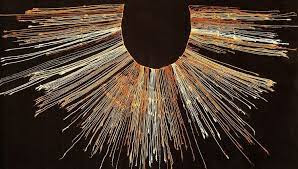


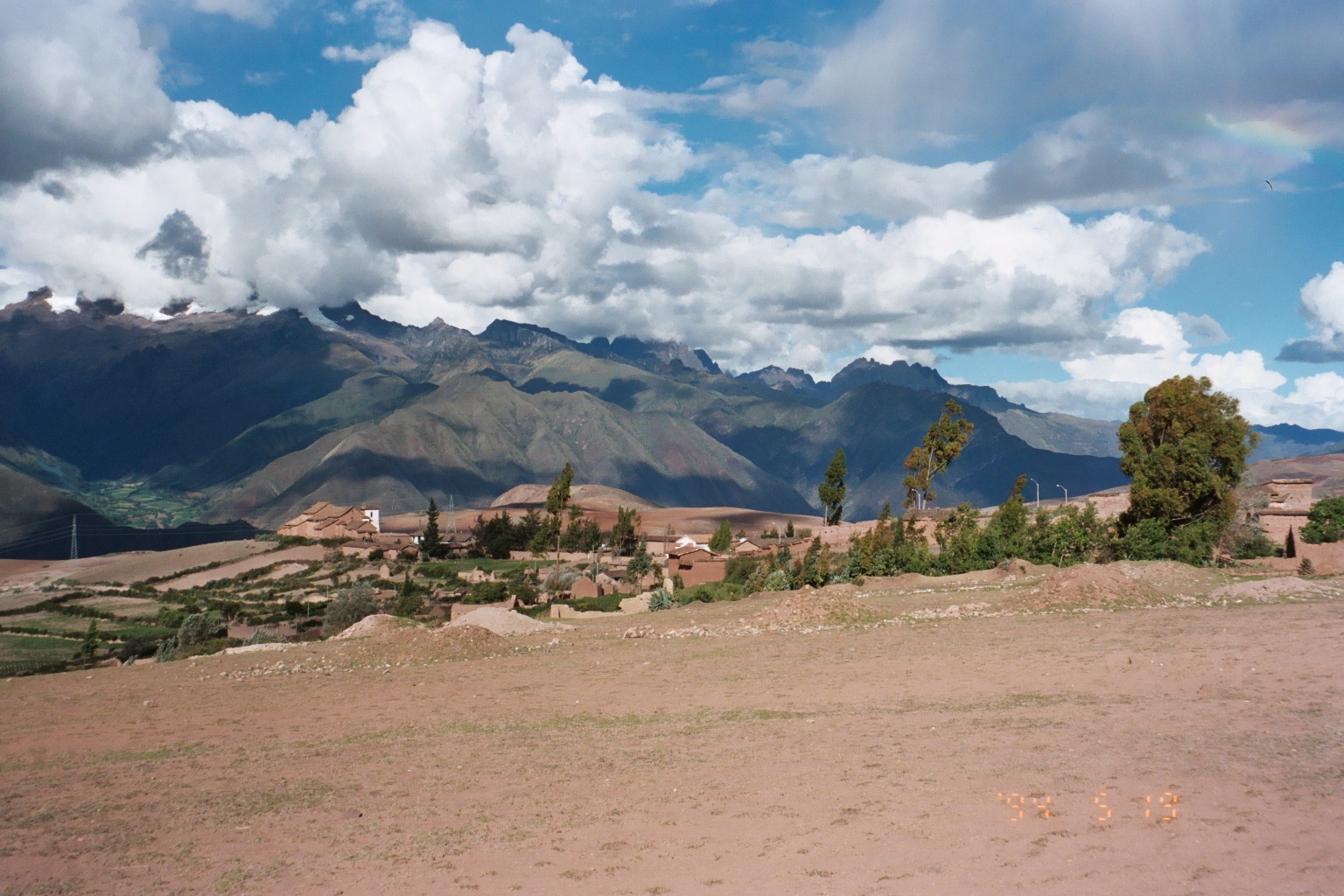


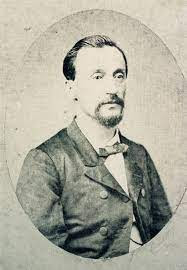


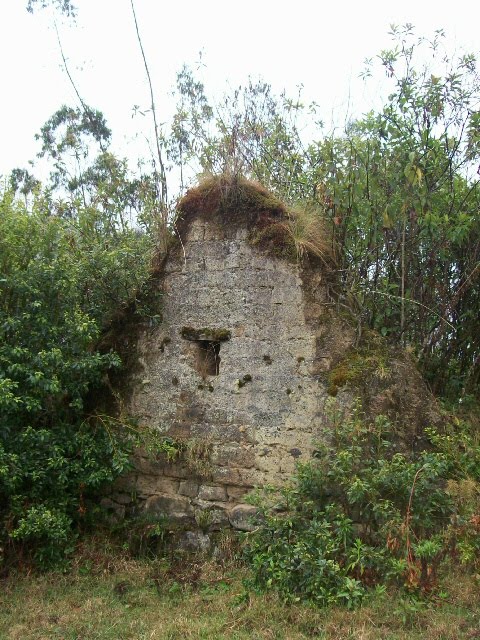 We, first, came upon the remnants of an old structure. Given the abundant moisture in this lush environ, the stone wall and window had been overtaken by plants and other growth, most notably moss.
  It was then, fascinatingly, that it hit me: we were in Vitcos, the ancient entryway into the distant retreats of the last realm of an empire: the Lost City of Vilcabamba.
  ...or then, circa 1440...
 Howbeit, prior to reaching the much-anticipated grounds of the Vitcos ruins, Eddy located a few of his townmates. The three men, who oddly resembled the Three Stooges (albeit Andean-style), were on-duty security guards tasked with protecting the Rosaspata site.


 Given his experience in mechanics, José had numerous projects on which he worked. From exercise machines, to de-featherers for chickens, to filter systems for filling cars and trucks with engine-cleaning chemicals for his brother's company, among many others. Another avenue for José was acting as an ambassador to Peru for me. As touched on before, he showed me this country. He told me tales of history, society, and life only a passionate teacher would. He taught me about Peruvian music and showed me recipes for Peruvian food. He guided me through the streets, the markets, various restaurants, and all of the museums of Lima, always with lessons and insights to give. In short, I'm indebted to this man for all that he's given me.


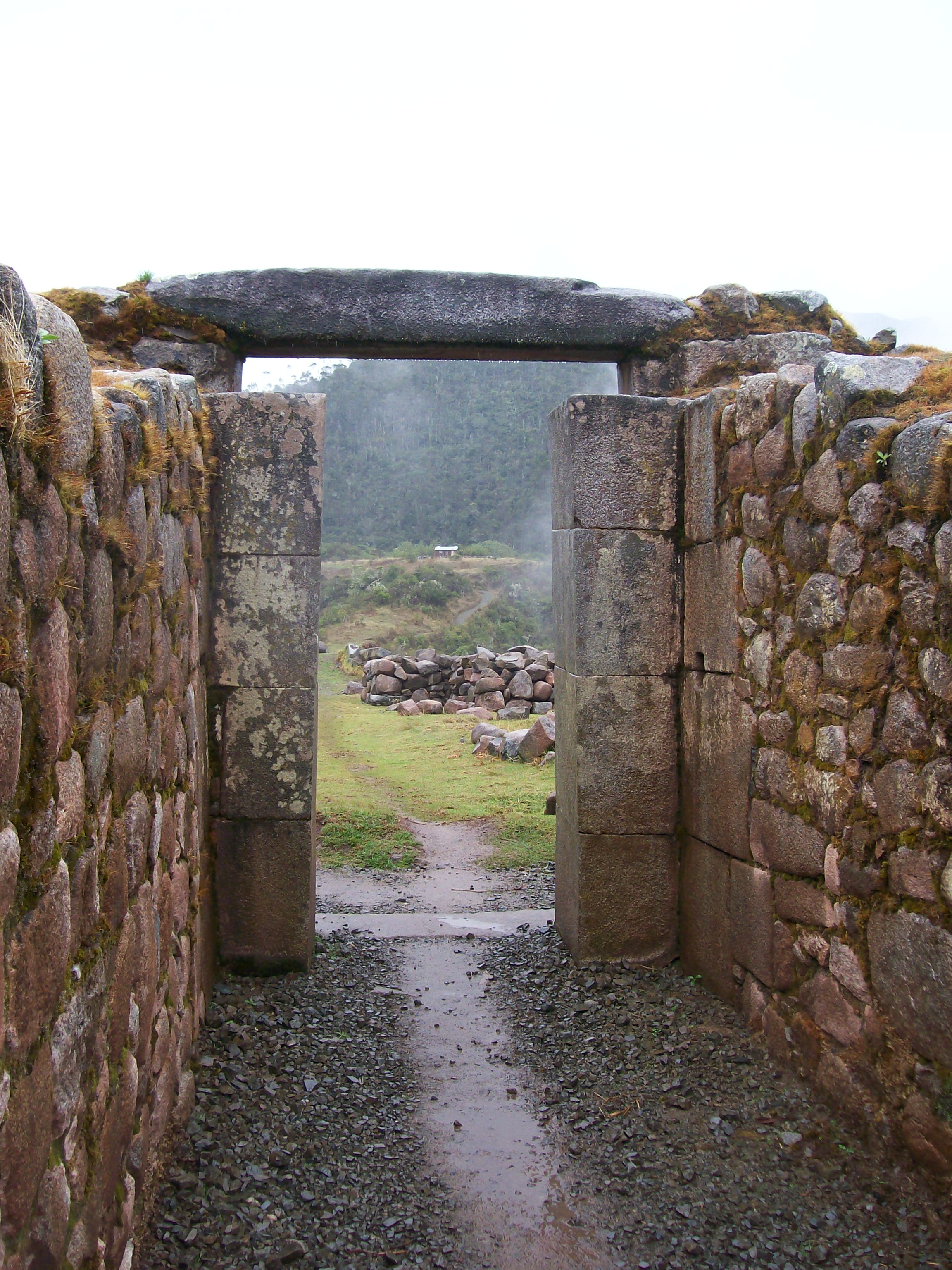


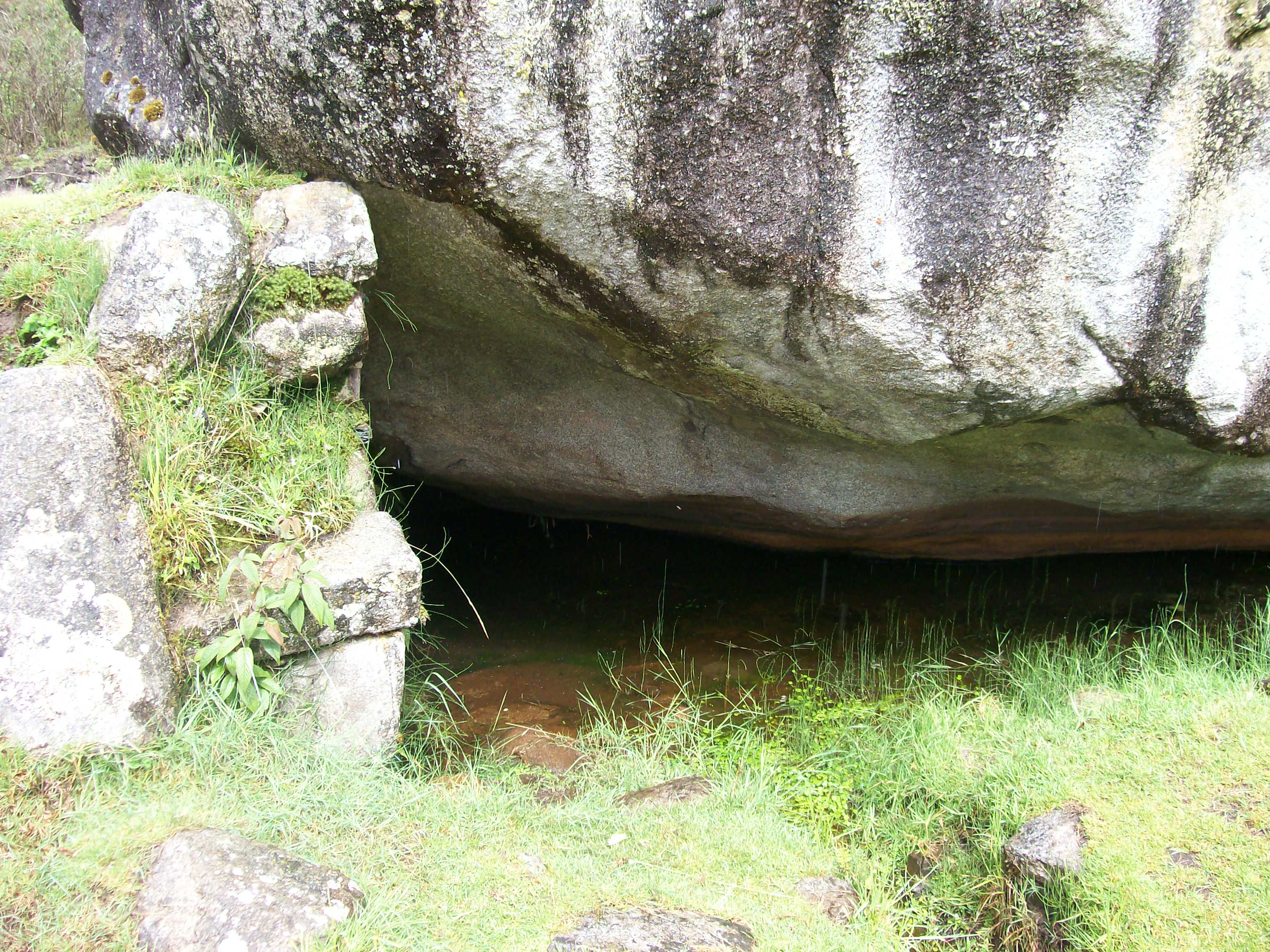


1 comment:
Not Bad Cus! Sounds almost eviable
Cheers
Mahoney
Post a Comment